
A while back I wrote a post for the first MFL lesson of the year. The one bit I didn’t include is classroom layouts. Over 15 years of MFL teaching, I think I have tried most of them. Here are some reflections if you are an ECT thinking about setting up your first classroom. Hopefully this saves you some years of experimentation.
Each has their pros and cons. Some of them will have more of one than the other. I’ll leave my favourite for last.
Rows

The traditional classroom layout in UK secondary schools I have visited tends to be desks in rows.
Pros:
- Sightlines for the teach ensures you can see almost everybody from front and back
- Students expect it and are familiar with it.
- Really hard for students to turn around and disrupt without you noticing.
- For MFL, it is really helpful for choral repetition as you can quickly see who is and is not participating.
Cons:
- If you need someone to leave your room, it can be quite disruptive getting them out.
- Entering the room into this layout can take some time as the student on the end of the row spends ages getting their bag unpacked while others regard them with looks of annoyance.
- For MFL, it means students will likely talk to the same person with the occasional changes due to absence. If their partner is not particularly adept or motivated to participate then they can lose out.
Horseshoe arrangement
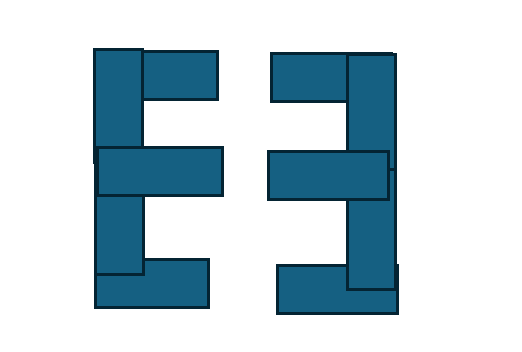
In a previous school and indeed at some I have interviewd at, I have seen this used. I tried it for a while as an NQT (meaning not quite there / newly qualified teacher, basically what ECT’s used to be called). Personally, I found it quite hard to manage as you would often see people at the edges trying to look around other students to see what was on the board.
Pros
- Easy access to every student’s work
- For MFL, students can have multiple talk partners similar to the primary style groups. E.g. “if you finish, talk to someone else close by.” They basically complete the same activity twice and get greater exposure to language whereas in some layouts they might be reluctant to complete the same activity twice.
- Suits the shape of some classrooms.
Cons:
- Student sightlines can be blocked by the middle desks.
- You could have some disruptive influences on opposite sides of the room who can easily distract each other whereas in a row layout, that would be mitigated.
- My expeirence is that these layouts leave very little space around edge of class.
- Students at the front can feel very “on display” as there are only a few of them.
- For MFL, some students might not see you modelling language as easily.
Primary school style groups
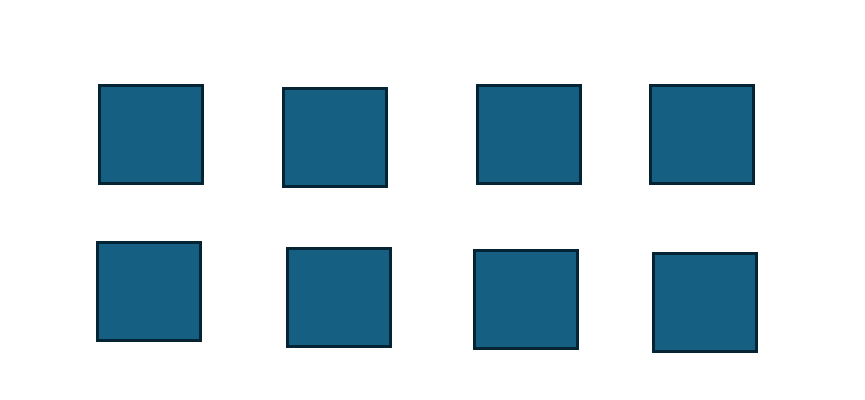
In my first school I had a very rectangular room with board and projector in the middle on one of the longer walls. I ran with this seating plan set up for quite a long time. I even knew one teacher who would put all their PP students in certain seats in a layout like this.
Everything I’m about to say also applies to L shape style layouts.
Pros:
- You can access every kid and their work very easily
- Students like the fact that they don’t just have to sit next to one person.
- In a school or groups with a strong culture of behaviour you can simply suggest that when a speaking activity has finished, they carry on with someone else on the table.
- For MFL, you can run different types of speaking activity such as no snakes no ladders very easily as you immediately have 3-4 players.
- Facilitates this approach with a hard class (see teams idea point 6).
- Distribution of resources very easy as you just drop them on desk in fours.
- Box in middle could contain a glue stick, spare pens, mini-whiteboards to save time.
Cons:
- There will almost always be a student with their back to you.
- Behaviour management needs to be strong as pupils more likely able to see each other across room.
- Sightlines for the pupils when they need to look at the board are not always ideal.
- There are very few positions in the room where you can see everyone.
Isolated partners
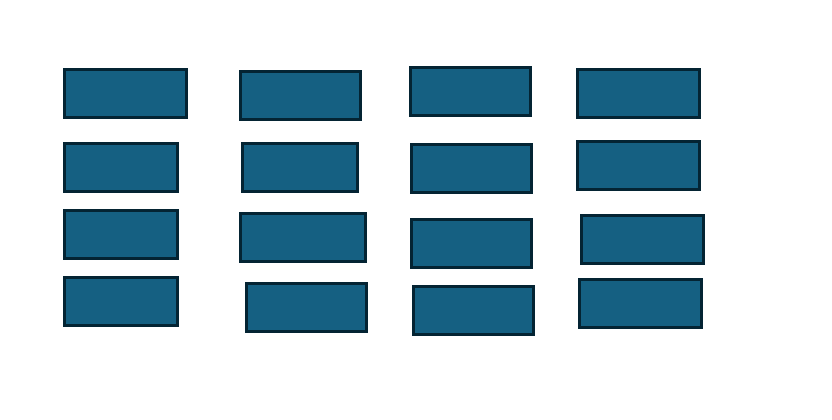
This is a variation on rows. A number of rooms in our school are like this. I’ve taught plenty of lessons with it. It’s not my favourite setup but it works. Sometimes the aisles can be quite narrow with this approach.
Pros:
- Like any classroom with rows it is easier to see all students
- You can spread out the disruptive influences to the corners.
- Student sightlines of the front of the room are pretty good.
Cons:
- Paired speaking tasks might not work effectively if you have two students who resolutely refuse to work together.
- Distribution of resources can be slower in a room like this.
- I find with a layout like this that you redesign seating plans more regularly as pairings don’t always work.
Rows with splits
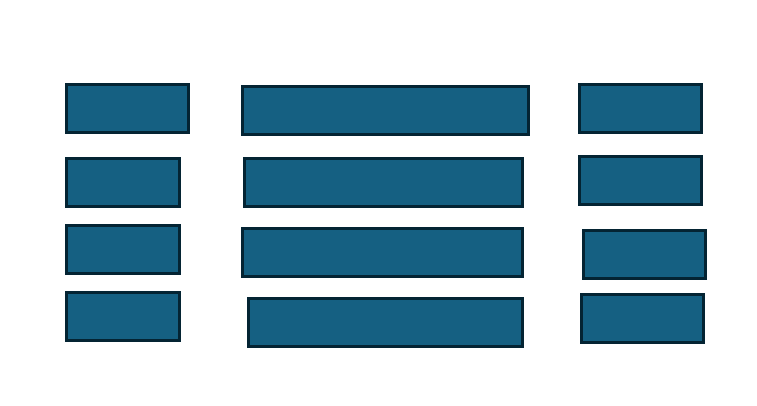
This was the layout of my first classroom and my current classroom. Probably the one layout I keep coming back to.
Pros:
- Slightly wider aisles supports students with mobility issues.
- Row approach still allows for easy distribution of resources.
- Desks at the side allows you to put particular students at the sides (e.g. disruptive) or SEND students who might prefer a slightly quieter part of the classroom to learn in.
- Sightlines for the teach ensures you can see almost everybody from front and back
Cons:
- If you put the wrong mixture of students in a part of the room then a certain row or section can feel quite dominant.
- Depending on size of room, you cannot always access the middle rows so easily.
We’ve looked at how your classroom could be laid out.
Some random thoughts about seating plans
- Policies – Some schools will have policies around this e.g. boy/girl or know where your disadvantaged kids are sat etc. Sometimes this isn’t always practical e.g. 16 boys 4 girls in a class. If you make a choice regarding seating that goes against a whole school policy then be sure you are able to justify it.
- Alphabetical order – I’ve always tended to avoid alphabetical order as many teachers do it and I remember sitting next to the same 3-4 kids a lot in early secondary school. When you don’t like them that much, it’s not fun.
- Don’t let them sit where they want – At the start of the year, it slows down learning names. It undermines the rules and routines you want to establish and also sets you up for behavioural struggles. Been there, seen it, struggled, changed it.
- Don’t always use the good kid next to the tricky kid approach – Whilst it can help, you risk turning that good kid off languages. You risk losing a capable options student because they were not sufficiently challenged most lessons as the person next to them had no interest in learning. If you are doing this and I can completely understand why, perhaps give the seating plan a shake up after Christmas and move them around.
- Don’t be afraid to change it but don’t change too often – Sometimes a seating plan will not work and you got it wrong. That’s fine, change it, reset your expectations. Changing it too often can upset some students who particularly struggle with change such as those with autistic spectrum disorders. If you find you are changing it regularly, what other actions could you take to improve behaviour in the class? Do you need to consider phone calls home, greater use of the rewards policy, support from a senior colleague, set or group changes? If you have a rowed approach, could you just swap a row? If you have a primary school style groups approach, can you swap some tables?
If you have made it this far then all the best for the start of the year.

Leave a Reply