Effective Retrieval Practice in A-Level German Lessons

It’s been a long while since I studied A-level German, however I would argue the starters to those lessons constituted some of the most effective and efficient retrieval practice in languages I have ever received. They set me up very well for university and I can still remember the verb conjugations over 20 years on. We had five German lessons a week. This post will explain how four of them began. The other one was a vocabulary test on our “5 a day” from that German student staple: Wort für Wort.

This is a very German-centric post and I can hear Germanists out there saying “es ist an der Zeit” (“it’s about time”). I hope it’s useful and thought provoking. I have tried applying the same in Spanish but I cannot quite get the musicality and rhythm to work, although the processes beyond that stage would probably be applicable to other languages

How it worked:

Our teacher – who I should at this point say was brilliant – would begin the lesson saying “ein paar Verben” (a few verbs). We would suggest a number of verbs ranging from the weird to the actually useful in a sentence. She would add in some that linked with the lesson we were about to do or a lesson that had recently been done and the infinitives would be written down the side of the whiteboard. Weak verbs would be marked with a (w) next to them. Occasionally, where time might have been tight, we were left the verbs from the year above and used those.

We would chant our way through the verbs (working from left to right). There was definitely a rhythm that built up and it even worked with separable ones. I’m aware some teachers prefer to skip the present ones where they don’t change but for the rhythm, I prefer to leave them in.

denkendenktdachtegedacht
esseniβtgegessen
springenspringtspranggesprungen
hörenhörthörtegehört
absagensagt absagte ababgesagt

Next, we would be tested with some quick fire whole class responses on modal verbs.

I can / I want / I must or have to / I like / I should / I’m allowed to

These would also be dropped into the imperfect.

I was able / I wanted / I had to / I liked / I ought to have / I was allowed to

We would then move to “silly sentences” which more often than not included ,weil ,obwohl and other subordinating conjunctions. These sentences often incorporated class members, their interests and quirks. On reflection, I believe this was also used an opportunity to see if recent grammar had stuck such as cases, adjective endings and prepositions.

Quite often the subjunctive (Konjuntiv II) would make an appearance at this point with hätte, wäre and a past participle. Using the verbs above the sentence would likely be “I would have jumped out of the window, if I had thought quicker” or “i would be ill, if i ate the food because it contains gluten.” I can also remember the Konjuntiv I making an appearance to challenge one of the top students in our class (not me) shortly after we had learnt it. Being a skilled teacher, she gave him some reported speech including a genitive and adjective endings.

10-15 minutes of an hours lesson four out of five times a week meant that we did not struggle for verbs or conjugations come the exams. Even if you were not the one cold-called to do a silly sentence, you could be immediately pounced upon if the person doing it had struggled and stopped. You had to be constantly thinking and ready to answer.

EverydayMFL was meant to be a place to share my ideas and there are more of those to come. This post is a tribute to an inspirational teacher that taught me A-level German for two years and probably developed my passion for languages more than most other teachers I have had. She is sadly no longer in teaching but still works with young people as a life/image coach.


5 Things to Try Tomorrow

The whole idea behind these posts is five simple things you can do in your classroom with minimal preparation tomorrow.

Adam Boxer’s Tick Trick (adapted to MFL)

This arose from a post on X by Adam Boxer (you can find his website here). I started using this with my classes for translation tasks. It’s devastatingly simple to add into a lesson: “If you have that bit on your answer, give it a tick on your board.“ You can even convert it into TL with more simplistic language “If you have A, correct. If you have B, correct.” I used it to break sentence translations down into chunks of languages so that students were being rewarded for the bits that they were getting right. The current AQA GCSE does a similar thing where 2/3 chunks correct might equal a mark.

Photo by Photo By: Kaboompics.com on Pexels.com

The power of underlining.

Recently, our department has begun experimenting with sentence builders. I currently share some groups and wanted to check how much of the sentence builder my class actually knew and could reproduce because when you see them every other lesson, it is inevitably harder to track their progress. Being a fully-signed up fan of mini-whiteboards, I chose 5 sentences from the sentence builder for my class to reproduce in Spanish. In this case, the sentence builders described a house. Each sentence was different, used adjectives with the highest surrender value (that is to say applicable across multiple contexts) and students could attempt an extra sentence from the previous sentence builder if they finished quickly. I asked students to turn their sentence builders over and try to produce the sentences from memory. If they peeked, looked up a word or phrase then I asked them to underline that phrase on the sentence builder. It gave me quick intel as to how much each student could remember.

AI seedling image

Seed-planting for GCSE

One of my Year 9 class this week asked a question about GCSE. It was one of those “let’s slow the lesson down by getting the teacher to talk about something” moments. I quickly weighed up the pros and cons and thought let’s take the opportunity to sell GCSE MFL to this mixed ability group. We have not begun our options process yet but they had some thoughts that needed unpacking.

Do I have to take it?

What is foundation / higher?

My sister says it’s ****** hard?

Do i really have to talk for 12 minutes?

What if i don’t want to teach / translate? Is it worth it?

It’s always worth reminding students that they have been preparing for their language GCSE since Y7. The words that they learn then are equally likely to make an appearance and the topics in Key Stage 3 often map to the GCSE ones. When the foundation reading text says “does Ximena enjoy her history lessons?”, they learnt that in Year 7. I sometimes think we are not so different from maths in that our GCSE is the culmination of everything learnt so far.

Photo by Yan Krukau on Pexels.com Grumpy Smurf picture was copyrighted

Grumpy Time

Not my idea at all and full credit goes to Gianfranco Conti for this one. Having seen that my class had used the sentence builder mentioned above to write about where they live (more ideas for this topic here), I asked them to produce me an answer that was entirely grumpy. Having not done this for a few years, none of my students had written a grumpy answer before so we had a brief moment about adding in adverbs of degree (sometimes MFL teachers and resources refer to these as quantifiers). We noted down a few to add in to sound significantly more grumpy. Students then produced some extremely grumpy sentences and seemed to enjoy it rather than the generic “write about where you live.”

Photo by Binyamin Mellish on Pexels.com

Spot the difference with AI

You might notice we have been teaching a fair bit of “in my house” stuff recently from the post above. This idea continues that theme I asked ChatGPT to produce me an image containing two houses and specified what rooms i wanted in each (after a disastrous first go where we had staircases to nowhere). In the end, I ended up using both images! One for a simple writing activity where students wrote “In house A there is but in house B there is not…” The disaster house came in useful as an extension where with a few adjectives given students could write “there is a useless staircase”, “there is a garage upstairs which is stupid.”

A cautionary note on this one. ChatGPT only allows you a certain amount of images per day also since then I have also learnt that AI image generation has a significant water footprint.

Lastly, if you are starting to look for Christmas MFL ideas then…

Here’s 9 ideas

Here’s 9 more ideas

Also a relatively new blog from Beth M is well worth a look. I remember Steve Smith being kind enough to mention mine in the early days which raised my viewing numbers. I hope this will do the same.

Everyday Mini-whiteboards

Quite why Mini-whiteboards tend to divide opinion is a bit of a mystery to me. A colleague once observed my lesson with a well-regarded speaker who often leads CPD around the country. My colleague informed me later that this speaker had said that the best way to improve my lesson would be to “bin” the mini-whiteboards. Had I not used them at that point then I wouldn’t have an accurate idea of what they learnt that lesson and indeed if they had mastered the verb conjugations I was trying to teach. Conversely, another senior leader (and now successful Headteacher) would not teach science without having them to hand.

Adam Boxer writes an excellent blog about Ratio (a concept from Lemov’s Teach like a Champion). I believe mini-whiteboards to be one of the best ways of increasing ratio in the classroom. I have a few principles when it comes to using them.

Principles:

– Everyone writes

– Everyone tries

– Everyone hides their answer until it is asked for

Logistics

I don’t have a classroom and teach in wide range of different rooms. I carry around a box with everything I need to teach. Here is how I manage:

  • Stock up on a box of 10 new pens at the start of – and halfway through – each half-term. No-one throws away a pen without my say so. “If I can read it from the front, it works.”
  • Hand out the whiteboards while students are doing the starter task. Do not hand out pens until you plan to use them.
  • Give out and/or get students to give out pens and rubbers. Rubbers are 1 between 2. It saves time and also means they are less likely to lose them as the other person needs it too! Some students prefer the blazer sleeve cleaning method.
  • Always insist on trying a pen that a student claims “is not working”. Often this is a misconception and what they are really trying to say is that it’s not a perfect jet black.
  • Always give a clear instruction of what you want to see on the board. Challenge any non-compliance such as doodling etc.
  • Always count down giving long enough for those students that need it. Sometimes it can help to have a particular student in mind as a guide and start the countdown when they are closer to finished.
  • No-one shows an answer until countdown is over and everyone shows their answer.

Whiteboard Activities

Obviously, you can use a whiteboard to translate both ways and practise verb conjugations. You can use them to draft sentences for work. I often like to have them on the desks so when students ask for words I can simply write them down. With the new new GCSE, you can use them to practise for the dictation activities. I would imagine these are regular occurrences for the pro mini-whiteboard MFL teacher.

Wikipedia Commons

Environmentally friendly time-saving battleships.

To save paper, printing and copying out time. Draw a 5×5 grid on the mini-whiteboard. Shade in the top row and first column. Have students add boats in a non-shaded area. Put your battleships game on PowerPoint slide. Explain that the top row and first column match the shaded ones. A quick model on the board where some students attempt to destroy the ships you have obviously put in there and they will be well away.

Noughts and Crosses translation practice.

Wikimedia Commons

Both students in a pair divide both their boards into a 3×3 grid. Have a corresponding grid on the screen with some translations. Students play noughts and crosses. They have to translate correctly to get the X or O. If there is any dispute then they look it up in vocab lists/knowledge organisers etc. The second board is for the inevitable rematch.

Starts and Ends

I tend to use this activity when teaching opinions with reasons. Students get the start or end of a sentence. They have to finish it however they can. It’s quite good for seeing what they can spontaneously produce, what has stuck and what they can do under pressure.

  • Me gusta ir al cine … (I like going to the cinema)
  • Me encantan las matemáticas (i love maths)
  • porque es mi asignatura favorita (because it’s my favourite subject)
  • aunque me da miedo (although it scares me)

Occasionally, with this activity, I tell students I will give them a score of 1,2,3 depending on how impressed I am with the sentence. This generally has the effect of them suddenly showing they know even more. If they get a score over 10 (keeping track on their boards) they may get a positive point.

Sharks + Icebergs

This is good for practising lots of small chunks. I’ll be honest, I came up with this activity at some point in the past 6-7 years. Soon after trying it with a class, I realised it owes a lot to Language Gym’s rather superb Rock Climbing. Where it differs is that you are not making one long sentence, merely practising short chunks and you don’t have the blood-curdling “aaaaaaaaaaaaaaaaargggghhh” when the man falls off the wall. You do however find some kids rather gleefully removing limbs from the stick man (should I be worried about them?)

Setup:

Students: The board needs to be portrait. Divide the board into a 7 x 3 grid. 7 rows, 3 columns. Students shade a map from one end to the other (see diagram). One shaded box per line. On the back of the board they draw a stick man.

Teacher: On your board/projector screen you will need a set of 21 short sentences using language the students have been learning.

Front of board (facing student):

  ///////////////////////////////////////// 
 /////////////////////////////////////////  
  ///////////////////////////////////////// 
   /////////////////////////////////////////
  ///////////////////////////////////////// 
   /////////////////////////////////////////
  ///////////////////////////////////////// 

Back of board (facing away from student):

Wikimedia commons

Students try to guess their partner’s path across the icebergs (shaded bit) avoiding the sharks (unshaded). Each time they guess wrong, their partner removes a limb from stick man. The winner comes when either someone has made it across the icebergs, or their partner has neither body or head. You can still win if you make it to the other side like the Black Knight in Monty Python. As long as something is left, you are in the game.

Wikimedia Commons. It is surely a crime that Dara never got to properly participate in “Scenes we’d like to see”

Future Tense Scenes We’d like to see.

Copied from the popular game show mock the week, this works best with the future tense. Pick carefully the class you use it with. Students tend to overcomplicate here, restrict them to the language they have been learning.

Things that Mr /Mrs … will never do..

Things that His Majesty will never do

Things I am not going to do at the weekend

Unexpected things that … is going to do this evening

Environmentally friendly strip bingo

Early in my MFL career I was introduced to strip bingo. I admit I tend not to use it too much however it is very simple to hold a whiteboard portrait, write down 5 phrases and rather than tearing off the strips, students simply cross off the phrase that is at the top or bottom of the list. Lots of paper and time saved. Mini-whiteboards can also work well for any form of bingo game to break up a lesson.

5 Things to try tomorrow

These may already form part of your everyday teaching repertoire but here are five activities to try tomorrow.  Each has a differentiation and challenge added.

Quiz Quiz Trade

Everyone I know seems to understand this one differently.  I have seen it used in MFL and English in different ways.  It can probably be applied to other subjects too.  Here’s how I make it work in my classroom.

  1. Get the mini-whiteboards ready
  2. Project on screen 3 questions students have been learning.
  3. Students pick one of the questions and write it on their board.
  4. Students go around the room.  They must ask a question, answer a question and then swap whiteboards.
  5. They must perform 5,6,7,8 swaps before heading back to their seat.

Differentiation: You can differentiate this by getting students to write the start of an answer on the other side of the whiteboard.

Front of whiteboard:   ¿Qué llevas normalmente?

Back of whiteboard:    Llevo…

Challenge: You could have students put a word on the back of the whiteboard that has to be incorporated into the answer.   You could increase the variety of questions used or vary tenses used by questions.

Rewards: whilst the students are doing this, go around, listen and note down the ones who are going for it.  Reward them at some point in a manner of your choosing.

MM Paired Speaking

MM are the initials of the excellent teacher who showed me this.  It is an information gap activity but I like it as it practises speaking, listening, reading and writing.

  1. Students divide page into 3 columns
  2. Column 1 – write days of week in TL leaving 2-3 lines in between each
  3. Column 2 – pupils draw picture that represents vocab they have been learning such as places in town.
  4. Column 3 – leave blank.
  5. Project on board a question such as ¿Adónde vas el lunes? (where do you go on Monday?).  You could also project a model answer “el lunes voy al cine” (Mondays I go to the cinema).
  6. Model the activity with a keen student.  This stage is crucial for the activity to work well.
  7. Fiona asks Shrek where he goes on each day of the week.  When Shrek answers, Fiona uses her final column to write down exactly what he says.
  8. Shrek and Fiona swap roles.

Differentiation: Weaker students might need this printing out on paper.

Challenge:  You could increase the complexity of the sentence demanded by insisting pupils add an opinion.  This could be done by adding a column in between 2 and 3.

Car Race Quiz

I resurrected this little gem this week.  I cannot find the original car race powerpoint but you will find similar powerpoints here by the same author.  Car race, horse race or (at Christmas) race to Bethlehem should work.  For those of you big on knowledge organisers, this could be a different way to test them.

  1. Have a list of questions ready to test everything in a unit from key vocabulary to how to form various tenses or structures covered.
  2. Divide class into teams
  3. Teams take it in turns to answer.
  4. If they are right then click the car/horse/wise man (whichever you choose to download) and they will gradually move towards the finish line.  If a team is unable to answer, pass it to another team.
  5. Winners are first to the finish line.

Differentiation:  This can come through the questions you ask and how you tailor the activity to the students in front of you.

Challenge: you could turn this activity into a translation challenge.  First group to produce correct translation of a particular phrase gets to move their car forward.

Song gap fills

I don’t do these too often but a colleague of mine did one with a class recently.  Find a song and take out a variety of vocabulary.  You could look for words with a particular phoneme that you want students to practice or remove some verbs you have learnt recently. They listen twice or three times trying to put in the missing words and then you show them the lyric video for them to check their answers.

It is best done last lesson of the day or you will be hearing it all day.  Whilst my colleague suggested Kevin y Karla (check their Youtube channel out),  This one was a hit with my year 9s:

Differentiation: depends on the quantity words you take out.

Challenge: have two versions with words removed.  Remove significantly more from one version, or equally put the wrong words in and students correct them.

12 sided dice topic revision

If you have a set of these then great.  If not then tell students to roll a six sided die twice and add the numbers.

Set 12 tasks on the screen that link to the topic you have been studying. Give each task a points score according to complexity.

1 Simple vocabulary recall task

2 Explain grammar structure

3 Translate something

4 Make a sentence including …

etc

Differentiation: you could pair up students who are at a similar level.  You could turn it into a rally-coach task (the more advanced student does their own task but coaches a weaker individual to help them achieve).

Challenge: depends on the complexity of tasks set

5 things to try tomorrow

Image result for five

Here are 5 things that worked for me this week.

Voki.com

I had forgotten about this website until one of my pupils said “I know the words I just don’t know how to pronounce them when I’m practising at home”.  My internal, unvocalised reaction to this comment – a comment  innocently dropped after 4.5 years of Spanish – is probably best summarised by the picture below:

Image result for anger

In hindsight, my internal monologue should have focused on the positive “when practising at home”.  However, it was at this point that Voki came to mind.  Whilst not perfect, it does offer text to speech conversion.  It also can help occasionally with individual Spanish words.  Once you have set the voice to Spanish and the accent to a relatively clear one (our preference was for Javier).  Just remind the pupils they don’t need to sign up to use it, and also not to get distracted on creating avatars.

Imemorize 

For learning answers to questions, this is a particular favourite.  The address is as follows:

http://imemorize.org/download.html

It allows students to learn sentences and hide words to check their recall.  The activities are scaffolded quite well.  It would depend on the student who uses it as to how effective it is.

Students used to find this helpful in the days of controlled assessment.  One has also thanked me for “saving” their GCSE drama coursework.

No snakes, no ladders (Idea from Gianfranco Conti / Dylan Viñales)

Image result for snakes and ladders

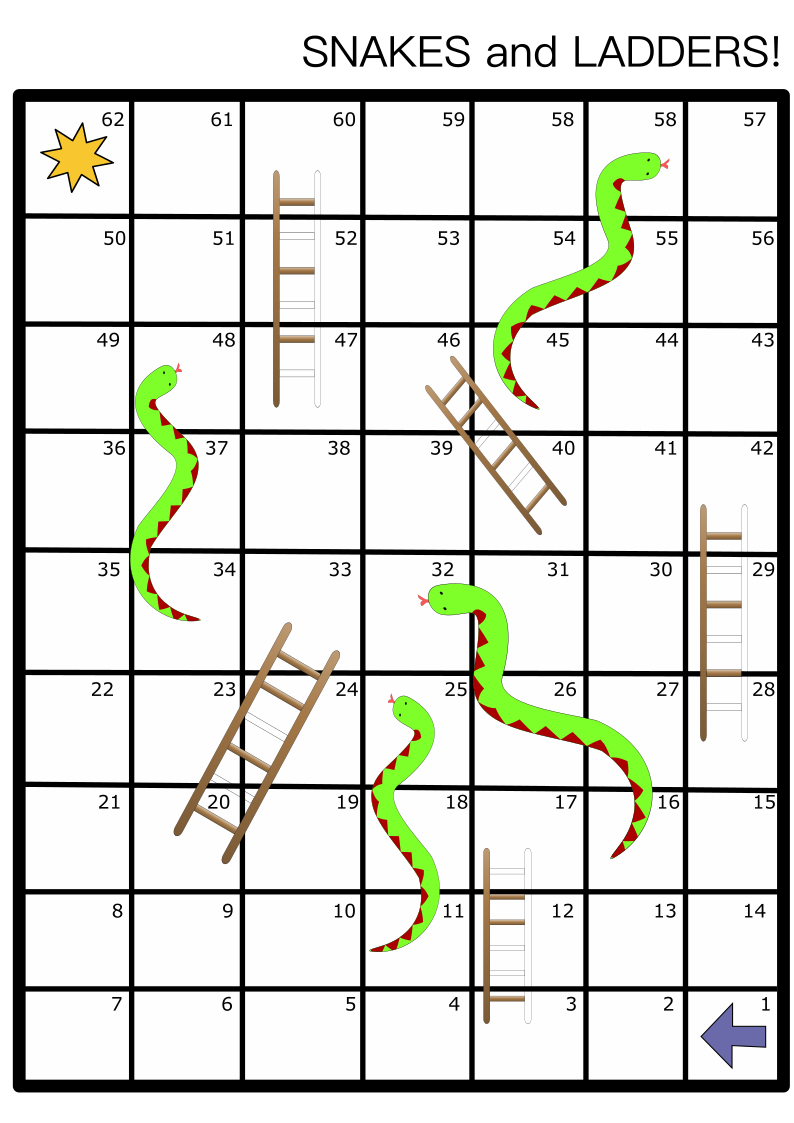
Secondary MFL facebook groups such as: Secondary MFL Matters, Secondary MFL in Wales, New GCSE 9-1 resources, Global Innovative Language Teachers and others) have taken over my news-feed.  They allow some superb sharing of resources and ideas.  However, lots of activities appear briefly and then disappear: balloon towers, one pen&one dice.  This is one I want to keep.  It involves speaking, listening, reading and translation.  Students play in threes – 2 players and a referee. This is a refreshing change to the majority of MFL games, which seem to require a partner.  Full instructions for No Snakes, No Ladders can be found here.

Treasure Hunt

Treasure chest

This is a slight variation on the MFL standard of battleships.  Gives students a slightly larger grid (6×6) and tell them to hide some treasure somewhere in the grid.  This variation worked in 98% of the pairs in my class.  Sadly there was a kid who guessed it first time! 36 different squares!  What were the chances?!  I made sure that they had a rematch.

Quick Speaking Feedback

This next suggestion is a little bit embryonic.  It is something I have tried with two classes and am still considering how it might work best.

There is a huge focus in UK schools on feedback, DIRT and responding to marking.  The vast majority of DIRT I have seen on Facebook Groups and the TES relates purely to written work.  I’ve written about that here.

I started to consider how I may give short quick feedback on speaking, a skill I believe to be substantially more important than writing.  With two year 8 classes, I went around asking them to read a longer paragraph from a textbook page (Mira 2 or Listos 2).  Whilst they were reading out loud, I scribbled one quick sentence in their book regarding their pronunciation.  Some of the notes looked like this:

Speaking Feedback

  • Check “ci/ce” in middle of words – should sound like “th”  eg: “vacaciones”, “francia”
  • Remember ll = y
  • Superb today, nothing to correct!
  • Remember silent h when starting a word, otherwise fine.

To save time and workload, I wrote one sentence per student.  It did not take long to go through the class.

For those of you wanting students to respond to it then there were two ways I tried to engender this.  Firstly, I modelled the sentence and then they repeated it back to me.  This helped some to understand how it should sound.  Secondly, I wrote a list of 4-5 words in their book that I wanted them to say containing the same sound.  Lastly, in light of everything I had heard, I planned a lesson around J and G in Spanish.  This youtube clip was helpful in that lesson.  It took the focus off of me and gave them plenty of examples.  In that lesson I read out a list of words and students corrected me if I made a mistake.  We had races of words involving Js and Gs along with trying a few tongue twisters corporately and individually.

What I noticed from this was that some students got a substantial confidence boost.  Their ability to pronounce words was better than they perceived it to be.  Others appreciated the quick feedback.  Some appreciated being able to respond to the feedback without a lengthy redraft of a piece of work.  They also appreciated the lesson working on the J and G.

I’m still mulling over where to take this and what to do to refine the process but it was well received by the students and did appear to have a positive effect.


Teaching the weather

Weather phrases in foreign languages are odd.  I have never really understood quite why “il fait” or “hace” makes more sense than “it is”.  However, we have to teach them so here are a few ways to make it more interesting.

Predict the weather

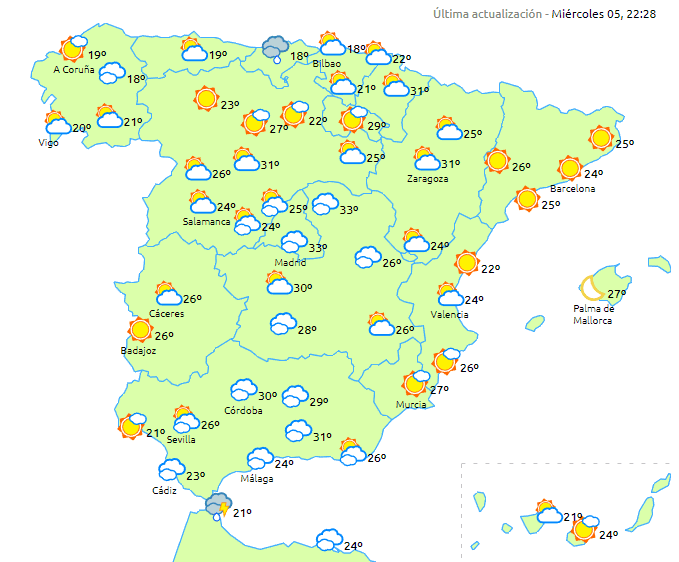
As a plenary activity students write 5 sentences predicting the weather in various locations on the day of your next lesson.  As a starter in the subsequent lesson, they check if they were correct / incorrect / bit of both.

The maps on El Tiempo.es are really good for this.  See exhibit A belowweather

Photo Response

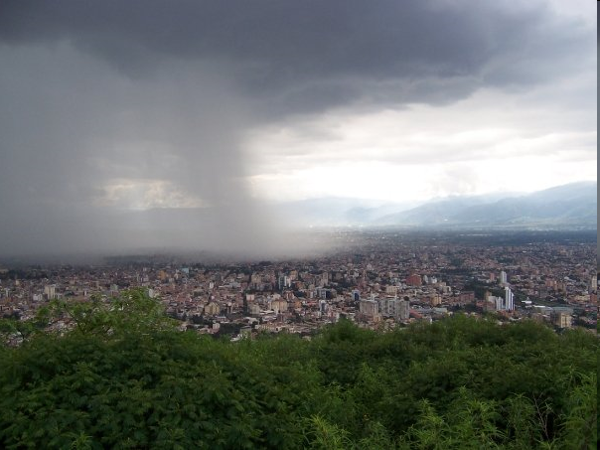
Show students some photos and have them write sentences quickly on mini-whiteboards.  If you use Spanish speaking countries you can generate quite a bit of interest as pupils will inevitably ask “where is that?”  Exhibits below include Peru in the height of summer and Bolivia during rainy season.  That falling grey mass is rain, not a tornado, as one of the kids thought.

perubolivia

Today at Wimbledon / Euros / World Cup Scripts

Students in year 7 cover present and future tense.  It will take a little bit of revision of verbs but they should be able to produce the following using the near future

va a jugar        va a ganar        va a perder        va  a llover

va jouer            va gagner         va perdre           va pleuvoir

They have hopefully covered simple time phrases such as “today”, “tomorrow”, “later on”.

All of this leads to being in a position to present a TV programme.  Students need to produce a script for the Today at Wimbledon programme.    Click here for the theme tune, which will remain in your head for hours afterwards.  They should include

  • Weather today
  • Who plays who today
  • Weather tomorrow
  • Who is going to play who tomorrow
  • Opinions on who is going to win or lose.

 They then perform this and can peer-assess each other on whatever criteria you set.  Personally I would go for the following with scores out of 5 for each:

  1. Fluency – does it flow? Can they sound natural?
  2. Confidence – do they come across confidently?
  3. Communciation – can they make themselves understood?
  4. Pronunciation – How strong is their knowledge of phonics?

Translation Tandems

This idea came from Greg Horton on a CPD course about 2 years ago.  He used it for vocabulary tests so this is a small tweak.

Hold an A4 piece of paper portrait.  Divide the piece of A4 paper. into 2 halves down the middle.

¦   ¦   ¦

Students write sentences alternating between English and TL.   Students then fold the piece of paper down the middle and sit facing each other.  They have to translate whatever sentence their partner reads out into the other language.  This is a great activity to practise translation both ways.  It does require a fair bit of pre-teaching so that it is challenging but not demotivating.

Mira 1 Rap

Mira 1 has a listening text that might be a song or a poem.  It can be found on p103 and works rather well as a rap.  Challenge your class to turn it into one.  A good rap backing can be found for free at this link here on TES.  If you have VLC media player then you can alter the playback speed and slow it down if needed.

Real life listening

I experimented the other day.  I listened to a weather report on eltiempo.es and the guy was super fast.  I picked out 10-15 words that my students might pick up from the video, and then added some more that were not there.  I challenged them to listen and see how many of my words on the board they would find.  I was pleasantly surprised with the results, and so were they.

If you have managed to read this far then this weather report did make me chuckle.


GCSE: Technology and Social Media

Photo Credit: Apex Web Firm Flickr via Compfight cc

Photo Credit: Apex Web Firm Flickr via Compfight cc

I’m learning new words with this topic!  Here are a few:

  • delizar – to swipe
  • tuitear – to tweet,  hotly debated – should it enter the Spanish language or not?
  • unidad de red – cloud storage

So how do you teach it to tech savvy teenagers?  I’ll be honest.  I haven’t cracked it and I’m teaching the module at the moment.  I’ll add to the ideas below if I stumble on anything useful.

Translation challenge

Divide students into A and B before revealing a slide with these:

Translations A Translations B
5 Sentence in Spanish here Sentence in English here
10 Tougher sentence in English here Tougher sentence in Spanish here
15 Equally tough sentence in Spanish here Equally tough sentence in English here
20 Horrible sentence in English here Horrible sentence in Spanish here (present subjunctive anyone?)

Student who gets the highest points score wins.  They can start wherever they like.

A3 Answers B2 Responses and C1 sentences

This is an adaptation of an idea from the brilliant Rachel Hawkes.  You give the kids questions like the ones below but tell them that you want an A3 answer.  The kids then have to include those things in the answer to the question.

¿Para qué usas Facebook?

¿Tienes un blog?

¿Cuántas seguidores tienes en Twitter?

A use perfect tense                                            1 use a linking word that is not “y”

B use a sentence containing lo/la                 2 use an opinion without the word “gusta”

C use present tense                                           3 include a time phrase

D use opinion                                                      4 include an item of vocabulary from last lesson

5 lines up

Whilst this is not in anyway linked to the internet topic, it is something I am experimenting with.  All learners rule off their page 5 lines up from the bottom.  This new section of book is for any new vocabulary.  This could be something they ask me for, something they find in the dictionary, or a new word encountered in a reading or listening text that they plan to look up later.  It has the advantage of allowing them a means of retaining the new language and also shows it linking to the learning that took place in that lesson.  Hopefully that should mean that words heard once or seen once, are not simply forgotten.  My hope is that by processing it a few more times that they will retain it.  It might also foster some independence.

Language Gym Verb Trainer & Boxing

The topics in the AQA book have a hefty amount of grammar (perfect tense, verbs with prepositions, por/para and the present continuous).

The Language Gym website has a great verb trainer but also in the “games room” section there is a boxing game on technology. It is a nice way to consolidate and extend vocabulary.  It could be very effective in the practice phase of a lesson or equally as a consolidation homework.  The rock-climbing game is really clever although I feel terrible when I get it wrong and hear the “aaaaaaaaaaahhhhhhhhh” sound.

Photo Credit: <a href="https://www.flickr.com/photos/36647280@N07/29104615800/">beyondhue</a> Flickr via <a href="http://compfight.com">Compfight</a> <a href="https://www.flickr.com/help/general/#147">cc</a>

Photo Credit: beyondhue Flickr via Compfight cc

How long can you keep it  up for?

This one is all about conversation.  Give groups of 3-4 students a series of cards with questions and maybe some support via a speaking mat if needed.   Nominate a starting student.  Explain that student 1 can question any of students 2,3, and 4.  After 2,3 or 4 has answered then they have 3 options.  The first is to ping the question back at person one.  The second is to ask someone else the same question.  The third is to ask another question of someone else.  Tell the group they have to keep the conversation going as long as possible.  Write up on the board the amount of minute and half-minutes they have managed to keep the conversation going in Spanish.  I think some teachers call this group talk.  It may well be that but I want the focus to be on the time aspect.  They tend to feel more confident and sit taller when they realise they have just managed 5 minutes in Spanish together.

Perfect Tense – “Have you ever…?”

The AQA book uses the internet topic to introduce the perfect tense so once the students have got the concept then you could get them generating a series of 5 questions for their partner on any topic.

¿Has jugado … ?

¿Has probado …?

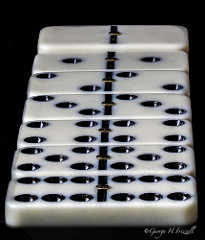
Tarsia Puzzles & Dominoes

Photo Credit: <a href="https://www.flickr.com/photos/111950422@N04/29791627590/">toonarmy59</a> Flickr via <a href="http://compfight.com">Compfight</a> <a href="https://www.flickr.com/help/general/#147">cc</a>

Photo Credit: toonarmy59 Flickr via Compfight cc

Tarsia is one of my favourite activities but does take a while to set up.  It is a good plenary or starter to recap something you have taught in a prior lesson.  You will need a printing and photocopying budget!  Clicking the link will take you to the website where you can download the program.  It allows you to make activities such as dominoes.  You can also make triangles of little triangles where all the vocab must match in both languages.  Maths teachers use it for formulas.   Remember to set the form of entry to “TEXT” or it will crush your letters together.  If you can trust your students with scissors then they can chop them.  If not, employ the skills of your tutor group and bribe reward them for their efforts.

2 options for use:

  1. English – Spanish vocabulary matching  “deslizar” = “to swipe”
  2. English word – Spanish definition “Youtube”= “Sitio para videos”  “desinstalar” = “proceso de borrar app”.

¡No te metas a mi facebook!

Resources for this lesson can be found here

Lyric video here

If the lesson plan and resources on TES are not enough then how to exploit songs can be found in the Teacher’s Guide section of Frenchteacher.net

Spanish Text Lingo

I believe the kids call them “group chats” now but teach them some basic Spanish phrases for this purpose.  See if the students can work out any of the following:

  • grax – gracias
  • tqm – te quiero mucho
  • bss – besos
  • komotás – ¿Cómo estás?
  • de nax – de nada
  • 50538 – I’m not telling you this one.  Turn your phone upside-down and read it

Verb Tables / Verb Stars

There is a lot of good grammar in this topic if you are following an AQA scheme of work so make use of it as an opportunity to teach them verb tables and how to use them.

descargar – to download

descargo    descargüe    voy a descargar    he descargado   etc

Whilst I am not a massive fan of learning styles theories, I appreciate that some learners prefer to lay out information in different ways.

Lists – colour-coded subdivisions:

Descargar

Present:  descargo

Past: he descargado / descargüe  / descargaba

Future: voy a descargar / descargaré

Make sure students stick to the same colour coding or they are simply going to cause themselves confusion.

Brainstorm / Star

Put infinitive in the middle and add others around it.  To make it more asthetically appealing putting a star around the infinitive is useful.

How many different ways can you use that infinitive?

There are many verbs in Spanish that precede an infinitive.  Students could use those as well.  Germanists will know what I mean by Modalverben.

Puedo / Quiero / Tengo que / Debería / Me gustaría etc