Since my PGCE, I’ve always thought that games have a place in MFL teaching and learning but they must have a purpose. That purpose could be: the practice of vocabulary or structures, practising spontaneity or revision of vocabulary.

Variations on Sentence Stealer
It always amazes me how Sentence stealer started in Kuala Lumpur and has made its way to classrooms across the UK and Australia and probably further afield. I’ve played it with a variety of classes in different schools and it always seems to go down well. I have come across one or two obstacles in playing with trickier classes
- One student gives others their cards so that they win at the end
- Students use a mixture of English and Spanish “do you have joo-ey-go al football?”
- Some students don’t talk enough
Here are a few variations I have tried to counter this:
Pink writing – While the students make their cards. Write out four using a pink pen (or any colour they are not using). Slip them into a couple of students piles. Winners are now the ones that have the pink writing ones at the end or the ones with the most cards.
English = lose a card – While students are completing the activity, I walk around. If I hear English, I take a card from them.
Sudden death round – 1-2 minute timer (dependent on class size). Each student starts with one card. They continue to play as normal but as soon as they lose their card they return to their seat. Hint to students that the more they talk the less likely they are to be out quickly.

The 10 phrases game
Made this up after a game of 1 pen 1 dice earlier this week. Write ten phrases or chunks on the board. The more advanced the group, the longer the chunks can be. Colour the sentence complements in red (complement = word phrase or clause necessary to complete expression)
Juego al fútbol
Escucho musica
Student A: reads through the sentences trying to finish them in a different way.
Student B; counts how many they manage.
When finished they swap, but here’s the thing…
Student B cannot use any phrases student A has already used.
The game forces students to use what they know. The intention is to move them away from saying what they want to say and instead saying what they have learnt.

The Algo Game
Every now and again, you rediscover a game that works. The “algo” (something) game is one such example. You can find full instructions here (with pictures) and here (bit further down). This activity is great for reading aloud practice and practice of chunks. I can see it being particularly useful with the reading aloud element of the new GCSE. In the past, I have gone with a point per correct word. It motivates them to focus on listening and transcribing what they hear.

Points for sentences
This came from a lovely MFL teacher called Deborah who ran some training for us back in the days of controlled assessments. It works for both speaking and writing.
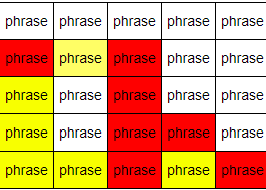
| Verbs 5 | Verbs 5 | Time Phrases 5 | Conjunctions 10 | Showing off 20 |
You can imagine the kind of things that will fill the grid. You can also vary the requirements e.g. “weil” and “obwohl” might score more than “und” and “aber”. Students have a minute or two to make as many sentences as they can.
Student A: just talks and makes sentences
Student B: listens and notes down their points
Swap
Winner is the person with the highest points score. You can then also set it as an end of lesson writing task. The Nice Man Who Teaches Languages (whose blog is well worth a look) has written about getting students to write sticking to what they have learnt and they know from their repertoire. This activity helps with that as students stick to the phrases there as they score points.

Two truths and two lies
One of the easiest activities to do on the spot, likely inspired by the BBC programme “Would I lie to you?” Minimal Prep, maximum effectiveness. This came towards the end of a lesson on negatives in Spanish using the theme of sports and free time. It is easily adaptable to food, clothes, healthy living etc.
Students write two sentences that are true for them and two that are not. Most students do this in the order you say. Make sure they read them out loud to their partner in a different order!!! It’s then up to their partner to spot the fact from the fiction.




























.jpg)





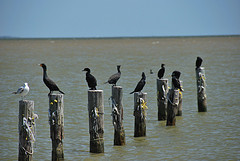
 Great way to build vocabulary. If you have access to dictionaries, picture dictionaries or Usborne’s first thousand words. Get students to find 5 of something so they broaden their vocabulary. Try to avoid them getting hung up on finding the duck!
 Talk or write about a topic without using certain words. In the cases of one or two students, I’m going to declare war on the next individual who uses interesante, aburrido, bueno, malo, emocionante.





 Everyday MFL