A Quiet MFL – enabling quieter and introverted students to thrive in a languages classroom

This post has been inspired by reading Jamie Thom’s “A Quiet Education”. Quotes are taken from the book. You can find more of his thoughts on Twitter @teachgratitude1.

As I have drafted and redrafted this blog over this year, I think it is fair to say that in places the lines between properly “introverted” and “quiet” do blur occasionally.

As a former Head of Year and an MFL teacher, Jamie Thom’s book piqued my curiosity. I quickly did an internet test assuming that as an MFL teacher, I would likely be an extrovert. It turns out I’m an ambivert. That explained a few things! As I began to read, I began to reflect on my practice and ask myself the following questions:

  • Do I understand how introverts feel in my lessons?
  • Am I allowing introverts to thrive in my Spanish lessons?
  • Am I enabling introverts to thrive in my Spanish lessons?
  • What do I need to do differently?

Introversion is not new. The earliest occurrence of the word is estimated at 1640AD and the term was popularised by Carl Jung, Hans Eysenck and other psychologists. Jamie Thom writes “introversion is mistakenly correlated with shyness…in fact, they [introverts] can be hugely skilled in social situations,, and as powerful observers they can be effective empathetic listeners.” This contrasts with the Cambridge dictionary definition “someone who is shy, quiet, and prefers to spend time alone rather than often being with other people.” Carrigan (1960) writes “An introvert can be defined as being someone who gets their energy from being in their own company, having time to ‘recharge’ on their own. Someone who is introverted may appear to be withdrawn and shy, although this may not always be the case.” A reasonable internet search suggests introverts prefer to process thoughts internally, are sociable around those they know well, can feel drained by people and tend to be more reserved with their thoughts and emotions.

To the introverts reading this, I apologise if any of the content comes across as patronising, or not reflective of your experience. It has been a really hard balance to strike while writing. Please feel free to use the comments section below to add your thoughts.

How does an introvert feel in an MFL classroom?

I think it’s unfair to speak for introverts, particularly when I am not one. This is quite a long quote from Charlotte on Quora and does not explain entirely the MFL experience, however it is quite illuminating:

“The biggest problem I had as an introvert in school was being overlooked by the teachers. I have many feelings of bitterness and resentment towards my old school and much of it can be laid at the door of the teachers and how they perceived me and my introversion.

After a couple of years of high school, I could easily predict what my school reports and teachers at parent’s evening would say:

“Charlotte is very quiet… Charlotte needs to join in with class discussions… Charlotte should raise her hand more often when the teacher asks questions…”

I knew that the teachers wanted me to speak up in class and “come out of my shell” (I hate that phrase) and I knew that I was more than capable of it. I wasn’t shy, I just didn’t want to, simple as that. Thankfully, my parents didn’t see this as a problem. I was a well-behaved, intelligent child.

I’m pretty sure that because of my ‘quietness’ and reluctance to join in with group/class activities, I was often overlooked by the teachers at school. All of the ‘cool’ things were handed out to the outgoing, extroverted kids, which seemed to reinforce the idea that being introverted was undesirable.

Jamie’s book contains similar anecdotes and stories. My main takeaways from Charlotte’s experiences that we can apply to MFL are as follows:

  1. Introverts can feel overlooked.
  2. Introverts may not want to participate but we risk conflating their non-participation with lack of interest or lack of effort.
  3. Extroverted students are more likely to be rewarded.
  4. The worst thing we can do is criticise a introverted/quiet student for being quiet. They are essentially being themselves.
  5. In a world where we placed a lot of stock on being whoever you want to be, why are we trying to force introverts to be extroverted?

I think that the five points above are also relevant for our quieter students who may or may not be introverts.

How can we enable introverted students and quieter students to thrive in Spanish lessons?

Hopefully, understanding something of the experience, we progress to our next question: is our current practice enabling introverts to succeed? Here are some things I have tried:

Planning in speaking tasks in blocks

A number of articles about introversion highlight what we might call “people energy”. They speak of a need for some form of break after energy draining social situations. In an MFL classroom it is possible to do a lot of interaction based activities. It can be good to separate these out. For example, if doing a survey activity around the class, could students return to seats and using some sentence starters summarise their findings? Or some reflection questions around meta-cognition?

Supplemting “cold-calling” with mini-whiteboards.

I could write a whole post about mini-whiteboards and their uses. In fact, I wrote that one before publishing this one! Lemov’s “cold call” (i still can’t stand that phrase) rightly placed an emphasis on teachers finding out what a student knows. We should know what they have learnt! I don’t believe “cold-call” is always the best way to know. I have 25-30 students in my classroom at any one time. I cannot know what all of them are thinking and I know a fair few will freeze up if anything that sounds like cold-call is mentioned. Mini-whiteboards – with some routines around their use to avoid cheating etc – helps me to know what those students know without a high stakes one off question.

Offer opportunities to “show off” that are not so public

My school uses Ipads. I could write a whole post about my love/hate relationship with Ipads and one is currently in production. One thing they are good for is giving students a space to show off what they can do where no-one else is watching and receive private feedback. We use apps such as Onenote, Formative or Socrative. Onenote allows you to see students’ workbooks and you can very quickly write a comment on there. Formative – an extremely powerful quizzing app – allows the sending of feedback on any question you set. “This was the best answer in the room” is a phrase that rarely fails to bring about a smile from a more introverted student. The student probably wouldn’t want it highlighting in front of the group but they know. There is also the opportunity to quietly demand more from them. Both Onenote and Formative would also allow the submission of audio that could be recorded out of the classroom.

Socrative is a reasonably intuitive quizzing app. While it does not have the feedback capabilities of the other two, it does allow you to anonymize answers to a question and display all the answers on the screen. You can then go through who has produced what on the screen and give feedback without the need for highlighting particular students. They will know what they have written.

NombreRespuesta
hiddenEn mi tiempo libre yo jugar futbol y ver tele.
hiddenMe gusta escuchar musica y jugar con mis amigos.
hiddenEn mi tiempo libre hago los deberes y dormir mucho.
hiddenYo voy al parque y juego videojuego.
hiddenMe gusta leer libros y ver peliculas en mi casa.
hiddenEn mi tiempo libre yo tocar la guitarra y cantar.
hiddenYo ver Netflix y comer comida.
hiddenMe gusta nadar y correr en el parque.
hiddenEn mi tiempo libre juego al futbol y escucho musica.
hiddenYo salgo con mis amigos y vamos al cine.

Private Praise

This could take any form. Live marking, a quick email home, a comment in a book, a quiet word in a lesson, a stamp in an exercise book. Recognise the effort being made. Maybe it’s the first time that your quietest student decided to put up their hand and answer or speak a sentence out loud in front of the class. Whatever it is, make sure it is meaningful. Simply psychology write: “introverts” reflective attitude and curiosity help them to strategically devise solutions and plans in their heads before acting upon them.” If you are giving feedback then make sure it has that double whammy of authentic specific praise and where appropriate provokes thought about a way forward. They may contemplate it more than some students.

Prior Warning

With the most introverted or quiet students, I will often have one-to-one conversations with them to let them know that some level of participation is coming. One line I like to use is…

“Part of my job is to know how good your Spanish is and that includes speaking. At this point in the lesson, I’m going to ask you to… does that sound ok?”

9 times out of 10 the answer is yes. This could include asking them to have a conversation or paired speaking task with their partner while I listen, ask for an answer to a question later (and name exactly which one you will call on them for), ask them to read a short piece/paragraph out loud so I can check their pronunciation. They don’t have to “perform” in front of the group and you get the opportunity to assess their speaking.

Our lessons regularly have a phase of the lesson where there is some focused speaking activity. Occasionally, I might ask a student “do you feel like you could give it a shot today?” This is generally after a lesson or two of practising the same material. I rarely find the answer is “no”. For the ones that freeze up most, I tend to ask them to do it with me.

Quiet work vs silent work

I’ve seen a lot of lessons where teachers request silence but then allow occasional chatter. It often starts with a “but i was just asking … for a pen”, however the pen soon spills over into everyday chatter. I’ve found it useful over the years to differentiate between quiet work and silent work. Silent work I save for written work where I want pupils to produce from memory, concentrate or for listening tasks. If I request silent work, then I will sanction. Quiet work can happen when grammar activities are being completed. Either way, there are sufficient periods of calm and the classroom is not chaotic. Ultimately, everyone both extroverted and introverted have a chance to concentrate and succeed.

Conclusion

Ultimately, our job as teachers is to build a relationship with every student and not just the ones that shout the loudest, dominate our attention or occupy our time. Hopefully, this has sparked off some thoughts as you read. Maybe there is a department meeting where the discussion can be “how can we help introverts and/or our quietest students to thrive?” Consider that each teacher in that discussion will have in mind at least one pupil per class. Could your next meeting lead to something quietly transformative for those students? Consider the class you will teach tomorrow. Who is dominating? Who needs some space creating (possibly not publicly) to shine?

5 MFL Games I have been playing this week

Since my PGCE, I’ve always thought that games have a place in MFL teaching and learning but they must have a purpose. That purpose could be: the practice of vocabulary or structures, practising spontaneity or revision of vocabulary.

Variations on Sentence Stealer

It always amazes me how Sentence stealer started in Kuala Lumpur and has made its way to classrooms across the UK and Australia and probably further afield. I’ve played it with a variety of classes in different schools and it always seems to go down well. I have come across one or two obstacles in playing with trickier classes

  • One student gives others their cards so that they win at the end
  • Students use a mixture of English and Spanish “do you have joo-ey-go al football?”
  • Some students don’t talk enough

Here are a few variations I have tried to counter this:

Pink writing – While the students make their cards. Write out four using a pink pen (or any colour they are not using). Slip them into a couple of students piles. Winners are now the ones that have the pink writing ones at the end or the ones with the most cards.

English = lose a card – While students are completing the activity, I walk around. If I hear English, I take a card from them.

Sudden death round – 1-2 minute timer (dependent on class size). Each student starts with one card. They continue to play as normal but as soon as they lose their card they return to their seat. Hint to students that the more they talk the less likely they are to be out quickly.

The 10 phrases game

Made this up after a game of 1 pen 1 dice earlier this week. Write ten phrases or chunks on the board. The more advanced the group, the longer the chunks can be. Colour the sentence complements in red (complement = word phrase or clause necessary to complete expression)

Juego al fútbol

Escucho musica

Student A: reads through the sentences trying to finish them in a different way.

Student B; counts how many they manage.

When finished they swap, but here’s the thing…

Student B cannot use any phrases student A has already used.

The game forces students to use what they know. The intention is to move them away from saying what they want to say and instead saying what they have learnt.

The Algo Game

Every now and again, you rediscover a game that works. The “algo” (something) game is one such example. You can find full instructions here (with pictures) and here (bit further down). This activity is great for reading aloud practice and practice of chunks. I can see it being particularly useful with the reading aloud element of the new GCSE. In the past, I have gone with a point per correct word. It motivates them to focus on listening and transcribing what they hear.

Points for sentences

This came from a lovely MFL teacher called Deborah who ran some training for us back in the days of controlled assessments. It works for both speaking and writing.

Verbs
5
Verbs
5
Time Phrases
5
Conjunctions
10
Showing off
20


You can imagine the kind of things that will fill the grid. You can also vary the requirements e.g. “weil” and “obwohl” might score more than “und” and “aber”. Students have a minute or two to make as many sentences as they can.

Student A: just talks and makes sentences

Student B: listens and notes down their points

Swap

Winner is the person with the highest points score. You can then also set it as an end of lesson writing task. The Nice Man Who Teaches Languages (whose blog is well worth a look) has written about getting students to write sticking to what they have learnt and they know from their repertoire. This activity helps with that as students stick to the phrases there as they score points.

Two truths and two lies

One of the easiest activities to do on the spot, likely inspired by the BBC programme “Would I lie to you?” Minimal Prep, maximum effectiveness. This came towards the end of a lesson on negatives in Spanish using the theme of sports and free time. It is easily adaptable to food, clothes, healthy living etc.

Students write two sentences that are true for them and two that are not. Most students do this in the order you say. Make sure they read them out loud to their partner in a different order!!! It’s then up to their partner to spot the fact from the fiction.

Effective Retrieval Practice in A-Level German Lessons

It’s been a long while since I studied A-level German, however I would argue the starters to those lessons constituted some of the most effective and efficient retrieval practice in languages I have ever received. They set me up very well for university and I can still remember the verb conjugations over 20 years on. We had five German lessons a week. This post will explain how four of them began. The other one was a vocabulary test on our “5 a day” from that German student staple: Wort für Wort.

This is a very German-centric post and I can hear Germanists out there saying “es ist an der Zeit” (“it’s about time”). I hope it’s useful and thought provoking. I have tried applying the same in Spanish but I cannot quite get the musicality and rhythm to work, although the processes beyond that stage would probably be applicable to other languages

How it worked:

Our teacher – who I should at this point say was brilliant – would begin the lesson saying “ein paar Verben” (a few verbs). We would suggest a number of verbs ranging from the weird to the actually useful in a sentence. She would add in some that linked with the lesson we were about to do or a lesson that had recently been done and the infinitives would be written down the side of the whiteboard. Weak verbs would be marked with a (w) next to them. Occasionally, where time might have been tight, we were left the verbs from the year above and used those.


We would chant our way through the verbs (working from left to right). There was definitely a rhythm that built up and it even worked with separable ones. I’m aware some teachers prefer to skip the present ones where they don’t change but for the rhythm, I prefer to leave them in.

denkendenktdachtegedacht
esseniβtgegessen
springenspringtspranggesprungen
hörenhörthörtegehört
absagensagt absagte ababgesagt

Next, we would be tested with some quick fire whole class responses on modal verbs.

I can / I want / I must or have to / I like / I should / I’m allowed to

These would also be dropped into the imperfect.

I was able / I wanted / I had to / I liked / I ought to have / I was allowed to

We would then move to “silly sentences” which more often than not included ,weil ,obwohl and other subordinating conjunctions. These sentences often incorporated class members, their interests and quirks. On reflection, I believe this was also used an opportunity to see if recent grammar had stuck such as cases, adjective endings and prepositions.

Quite often the subjunctive (Konjuntiv II) would make an appearance at this point with hätte, wäre and a past participle. Using the verbs above the sentence would likely be “I would have jumped out of the window, if I had thought quicker” or “i would be ill, if i ate the food because it contains gluten.” I can also remember the Konjuntiv I making an appearance to challenge one of the top students in our class (not me) shortly after we had learnt it. Being a skilled teacher, she gave him some reported speech including a genitive and adjective endings.

10-15 minutes of an hours lesson four out of five times a week meant that we did not struggle for verbs or conjugations come the exams. Even if you were not the one cold-called to do a silly sentence, you could be immediately pounced upon if the person doing it had struggled and stopped. You had to be constantly thinking and ready to answer.

EverydayMFL was meant to be a place to share my ideas and there are more of those to come. This post is a tribute to an inspirational teacher that taught me A-level German for two years and probably developed my passion for languages more than most other teachers I have had. She is sadly no longer in teaching but still works with young people as a life/image coach.

5 things to try tomorrow

You may have been wondering about the lack of posts over the past year and a half. Teaching another subject (I can add Python to my Spanish, German and KS3 French), some health issues and raising a toddler (who is awesome) has meant that the blog has had to take a backseat. Fortunately, there are plenty of good blogs out there. If you haven’t come across MFL Craft, Frenchteacher, the nice man who teaches languages or many of the MFL Facebook groups, Threads communities etc then definitely open up some of those in a new tab.


5 things to try tomorrow.


In the early days of my MFL there were forums on the TES website (anyone remember those??). One contained “minimal preparation, highly effective” activities. It probably had a role in inspiring some of this blog and the number of posts titled “5 things to do tomorrow.” I think edu-language over time has changed a bit so I will characterise these five as “low effort, high impact” and the first one counts as two 😉

Clipboard / mini-whiteboard

best free whiteboard pic out there, obviously yours will be smaller

Recently on Twitter/X, a simple clipboard shook the education world (or the small subset thereof that exists on Twitter/X). The writer of the post suggested walking around with a clipboard and making notes during class. This ground-breaking practice is something I had been doing for the past 2-3 years and maybe longer; I can’t quite remember when it started. I humbly suggest you do it with a mini-whiteboard/mini-board (the chipboard type as they are easier to write on). By doing so you have just probably saved a tree and also you nearly always have a whiteboard pen on you. So what could you possibly be noting down?

1) Mispronunciations
2) Misconceptions
3) Random name generation
4) Rewards
5) Sanctions

Ultimately, it is up to you. If you don’t currently do it then give it a go. Today, walking around I picked up that my year 7s couldn’t manage “hermoso” (they all pronounced the “h”) or “increíble” (they almost all added a non-existent “d”). Was my modelling poor? I don’t think so but it gave me useful intel to correct them. In addition to picking up things like this, I can note pupils to reward and/or sanction. To save time I sometimes use little codes; you will develop your own. What it might look like is crudely drawn below:

=====================

| + Jack Kate James John Charlie |
|+ Desmond Michael Walt |
| hermoso incredible |
| |
| W JulietteT, Bernard DF |

=====================

===========

| 1 4 6 7 2 3 8 5 |
| 2 4 6 8 1 3 5 7 |
| 8 7 6 5 4 3 2 1 |

===========

I occasionally use something like the above for random name generation. I teach 6-7 different rooms so it doesn’t take much to adapt the layout. On the board at the front of the room, I will write “front, middle 1, middle 2 , back” (in target language). I will then quickly write out the numbers 1-6 or 1-8 depending on how many students there are in a row on my board in a random order. After cold-calling one student, they will then select (in TL) “front number 3” or “back number 2” to pick the next person. As much as I love a wheel of names (Vincent Everett has a completely different use of wheel of names which is well worth a look – not sure if it is him doing the voiceover but his idea), it does save some time. Maybe you already do this and I’m aware a good percentage of Twitter keep it in their heads. I prefer to have something to refer to.


Live-marking – underline, question, double tick and bad English.

Live-marking seems to be one of those newer buzzwords. We have finally moved away from triple marking, deep marking etc or hopefully are in the process of moving away from some of the more heavy duty marking practices that have dominated the 2010s. While students are writing answers to questions, I will circulate and do one of the following:


• underline/highlight something that needs sorting that I think they can sort
• circle something and ask the student question out loud that forces them to think
• double tick any particularly nice Spanish that no-one else is using

It isn’t rocket science and you’re probably already doing it. If not, give it a whirl. It is quick, simple, effective feedback.

Live marking however does not just need to be for writing. I will circulate while students are speaking and if needed borrow their exercise book. I will write the word they are struggling to say with a “bad English” version next to it or immediately underneath. For example: “increíble” = “in cray ee blay” or “divertido” =” dee v-air tee doh.” It allows the pupil to be successful and serves as a very simple aide-memoire. I find very few students relapse with pronunciation after this little intervention.

Positive Post-Parents evening email

Occasionally on parents evening you do not see the students you want to see. Often those students are the trickier ones. However, sometimes you do not see a student who is performing well and deserves recognition. It might be that they were involved in something extra-curricular. It does not take long to write a quick email like the one below and from experience the vast majority of parents welcome it. It can be quickly done in a PPA the next day or day after.

Dear Parent
I’m sorry I didn’t get the opportunity to see you at parents evening. I just wanted to drop you a quick email to say how impressed/pleased/encouraged I have been by …’s effort/progress/attainment in Spanish this year. Their participation / effort / speaking / written work is of a really high standard / excellent / showing some promise. Please pass on how pleased I am with them and they are a credit to you.
Kind regards
Teacher

If you’re not a fast typist, then most modern versions of Word have a dictate mode that is decent. Like all dictation software it will inevitably struggle with some pronunciation so do check before sending.

If you’re considering this approach for the trickier students then I would suggest a phone-call is an infinitely better approach. If you’re relatively new in your career and need to do this then seek out a supportive Head of Department or Head of Year for advice on how they might approach this kind of phone-call.

3x TL Phrase to use

We almost all play a game in our language lessons at some point. Whether it is the classic battleships, sentence stealer a la Conti, Steve Smith’s Alibi or some from EverydayMFL.

I propose pre-teaching three target language phrases before the game. These could fall into different categories. The table below gives you a few ideas. You can convert them into TL.

Game phrasesHorror PhrasesGloating phrasesMoving along phrasesDelaying
Your turnI can’t believe you just did thatI winCome onWait a sec
You firstYou’ve got to be kidding meI win againHurry upWait a moment
My goWhat are you doing?I’m the best/championIt is my turn yetSo…. Errrm…

Some games might lend themselves to specific vocabulary. For example, in battleships your three might be “hit”, “miss”, “sunk”.

You might have a hard to motivate set so if you feel your class are less likely to engage with this then get their partner to tick every time they hear one used. If their partner doesn’t hear any of them, then they don’t win.

The Obligatory World Cup Post.

File:Qatar Airways (FIFA World Cup 2022 Livery).jpg - Wikimedia Commons

If you’re looking forward to enjoying the World Cup (2 weeks to go) then you’re probably a football fan or  have Brazil, Spain, England (yep, I said it) or France in the staff sweep-stake. If you’re not enjoying the World Cup then chances are you’re not a fan of football, or the staff sweep-stake left you with Morocco or Qatar.

The World Cup does lend itself to a variety of activities to revise material you have likely covered this year…

Recapping clothes and colours

This is one of my favourite ways to teach adjective endings. Football kits lend themselves to this task as the link explains. This could also be achieved with the flags of the countries.

Developing opinions and reasons

crystal-ball-14785249855CZ

CCO Public Domain

Why not get each member of your class to write a prediction? You could even involve yourself in this, particularly if you’re still bitter about the sweep-stake.

I think that <insert country here> is going to win

I believe that <team that is not England> is going to win

In my opinion <probably Spain> is going to win

You could change this depending on the ability of the students. Students could add a reason for their opinion “because they have better players”.  You could use the “will” future in French and Spanish instead of going to. They could add superlatives “because Ronaldo is the best”. More advanced students could use a subjunctive: “I hope that”.  There is an opportunity to revise descriptions and opinions “I like … because he/she is talented.”  You could also teach some colloquial language.

Never ending debate

The opinions above can be turned into a never-ending debate (at least that’s the name I’m giving it for now).  This is based on something I hazily recall from a video I saw by Greg Horton a number of years ago where students did something similar with school subjects (apologies to Greg if I have in anyway misrepresented what was going on in the video- happy to amend if needed). It requires some structuring from the teacher.  Your slide/lesson resources will require the following:

  1. A sentence builder with opinions similar to the ones above about who is going to win.
  2. Some questions such as “do you think … have a chance?”
  3. Some positive, negative, neutral opinions in your sentence builder.
  4. Some colloquial phrases “no way”, “not in a million years”

Put students into 3s or 4s. 

Student A (to student B): Who do you think will win?

Student B: “I think … is going to win because…”  “What do you think student C?”

Student C: “No way!  I think … is going to win because”

Student A: “not in a million years, … is going to win because”

There are 36 teams in the world cup, you should be fine to keep going for a while!

Ways I have found to make this more effective is to do the following:

  1. Firstly, this one only works first time!  Secondly, choose well.  Get one student from each group and tell them that if the group is still talking French/German/Spanish after 2mins to silently raise their hand.  You reward any groups with hands raised.
  2. Tell students you are walking around and will reward anyone speaking really good French/Spanish/German.  Write the names silently on a whiteboard and tell them afterwards.  It’s a handy reminder to the rest that had they been doing it too, they would have had the reward.
  3. Tell one student in the group to be deliberately controversial.  “Yes Morocco are going to win the world cup because…”
  4. Gradually remove/disappear parts of the sentence builder.
  5. Put a timer on the screen.  If students are still talking in TL when timer hits zero then there is a reward.

How are you going to watch the final – future tense revision.

Students produce their plans for the day of the final. There is an opportunity here for a short piece of writing involving time phrases, opinions, reasons and the future tense. If they are not planning to watch it at all then it is still good future tense practice.  This is a great opportunity to teach some more complex structures such as “after having done…” or “before watching…”

Consequences Activity

Students write their name at the bottom of a piece of paper. They write a sentence at the top, fold it towards themselves and pass it on. They keep going until all the sentences have been written. It can produce something amusing. Watch the kids closely (you know the ones I mean).

In the morning I’m going to…

For lunch, I’m going to…

In the afternoon, I’m going to

For dinner, I’m going to..

After having eaten, I’m going to…

… and … are going to be in the final.

Phonics Practice

Image result for seleccion de peru

This is one I have used a number of times. I always wonder why students can pronounce any footballer but then get every other word with the same sound patterns wrong!

For Spanish teams, pick one of the South American sides. Far harder. Most of the Spanish team will be well known to your kids whereas Costa Rica or Honduras’ first elevens will not be well known.

Recap target sounds with students. For Spanish this may be G, J, CE, CI, LL among others. For French this might be silent endings or other sounds. For Germany this could be sounds with umlauts, “ch” endings or double vowels.

Option 1: students announce the team to their partner as if they were on TV reading out the lineup.

Option 2: students race through the team trying to beat their partner to the end.

Option 3: teacher goes through lineup and students have to spot the mistakes made and correct them.  You could do this as a Conti style “faulty echo”.  With faulty echo I tend to have students write “la primera” and “la segunda” on each side of a whiteboard.  They show me after hearing both versions of the word and keep a points count going on their board.

Song Activities

I think England could have stopped at that John Barnes rap or Footballs Coming Home

Sergio Ramos was involved in this beauty…

How to exploit it…?

Well, I had some ideas but then found this superb guide on Frenchteacher.net Anything I write would simply be repeating the list.

Or use their Euro 2016 effort…

If you are a bit sick of the football, or your class is, then do the same with the song “Así Soy” It worked wonders with my Year 10 class.

Comparatives/Superlatives Revision

Image result for greater than

The world cup is an opportunity to revise comparatives and superlatives. Who is better, worse, faster, slower, uglier, less talented, more talented? Who is the best, worst, most irritating? There is a TES worksheet from a previous tournament that just needs a little bit of updating, based on who didn’t make it this year.

Player Biography / Description

Image result for david de gea spain save

Mira 3 has a section on biographies of famous people.  Viva 2 does a similar page on musicians. Why not do the same with footballers. There is an opportunity here to practise the past tense with “he played for”, “he signed for”, “he was born in”. There is an opportunity for the present tense “she plays for”, “she is a defender”. I’m sure you can come up with even more ideas.

Georgia Stanway completes move from Manchester City to Bayern Munich | The  Mail

Whilst this post is predominantly about the World Cup, England quarter final hero and goalscorer Georgia Stanway has just joined Bayern Munich.  A quick proofreading of this post shows that there has been a lot of French/Spanish emphasis so far so this is for the German teachers.

  • You could put together a reading text covering past career, present situation and future hopes.
  • You could use this text from FCBFrauen with an emphasis on cognates.
  • You could use it as a listening text.  There is a “Text Vorlesen” option.  It is a little stilted.  Whilst I would normally advocate slowing listening texts with beginners, I’m not sure you would want to in this case.

Read some tweets

Image result for twitter

The vast majority of international teams are on Twitter, as are their players. You could screenshot a few and use them as a translation task. Example below:

Listening Bingo

Image result for barry davis commentator

Give students a selection of football related terms. You could record yourself commentating over a video clip, you could mute the clip and improvise on the spot, or use the original commentary (with advanced level)

Option 1: students select 5 terms and you play bingo. First person to hear all 5 wins.

Option 2: students have a list and tick off as many as they hear. People who get the correct number win.

5 Things to try tomorrow

pay-634910_960_720

My new years resolution of at least one post a month has not been kept.  Sorry if you stopped by in April looking for some MFL inspiration.  However,  here are 5 activities you can try with your classes tomorrow…or after the weekend!

4 in a row translation practice

pexels-photo-2249531.jpeg

Photo by Miguel Á. Padriñán on Pexels.com

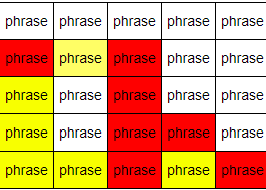
This was inspired by a game on my old Nokia (the only one they made that didn’t have Snake on it).  Pupils draw a 5×5 grid on miniwhiteboards.  You project a 5×5 table of phrases they must translate.  The winner is the first to score 4 in a row.  It’s like connect 4 but you can start anywhere.  The translations could be into English, or into the target language.  My preference is for the latter.  This works well when when you want to do some structured production before moving on to something more creative afterwards.  The example below shows a close battle between two students.

table game

Considerably richer than you…

money pink coins pig

Photo by Skitterphoto on Pexels.com

This was inspired by a Harry Enfield sketch in which a character often pointed out to others that he was considerably richer than them.  Having recently taught house and home this works rather well.  Jed makes a basic statement such as “in my house I have …”.  His partner Leo then has to better the statement in some way.  This could be as simple as turning it plural or extending it.

Jed: “In my house I have a garage.”

Leo: “In my house I have 2 garages with a ferrari.”

 Jed: “In my house I have a bathroom.”

Leo: “In my house I have 4 bathrooms and a swimming pool..”

Scattergories

writing notes idea class

Photo by Startup Stock Photos on Pexels.com

This is a good revision activity if you need a quick activity for year 11.  10 categories on a slide and then give them a letter to begin with.  Pupils have 1 minute come up with ideas.  If someone else in the class has the word then they get no points.  If no-one has it then they get a point.  This can be done in teams or alone.  An example list is below.

  1. animals you wouldn’t have as pets
  2. School subjects
  3. Colours
  4. Weather
  5. Hobbies
  6. Festivals
  7. Adjectives
  8. House
  9. Holiday
  10. Food

Slowing listening on Windows Media Player or VLC

slow signage

Photo by Song kaiyue on Pexels.com

Students often find listening texts tough.  Some of the textbooks I have used over the past few years are exposing Year 7 to near-native speaker speeds and then give them a tricky activity to do!  A decent textbook that we often use had a good listening activity for practising directions but with a low ability year 8 group.  Groups like these often see listening as a test.  I slowed the track down to 0.7-0.8 of the speed.  It seemed to work, they found it slightly easier to pick out the language they were hearing and complete the activity.

In Windows Media Player, open any track. At the top there is are: file | view | play |   Under “view” you should see “enhancements” and then “play speed settings”.

If using VLC, then it is even easier.  Under playback look for “speed” and it has “slow” and “slower” options.

You will need to use your judgement for when this is appropriate.

Vocabulary Championship

man wearing blue suit jacket beside woman with gray suit jacket

Photo by rawpixel.com on Pexels.com

With exams approaching, I gave my foundation year 11 group a series of vocabulary tests consisting of common words from the exam board’s minimum vocabulary list.  We mark them, write in any that they didn’t know, glue them in books for revision later and then I collect in the scores.  There are prizes awarded as follows:

  • Top score in a single lesson
  • Top 3 at the end of the week
  • Top 3 scores of fortnight (this may not be the same three as end of first week)

The scores then reset from zero for the following week.  Each lesson, I would hint at the themes/topics for the next test.  Some students really will surprise you with their efforts.


Developing Target Language Teaching

hello-1502369_960_720.png

Every now and again on Facebook groups such as Global Innovative Language Teachers, Secondary MFL Matters and Secondary MFL in Wales, a discussion will arise surrounding the use of target language.  Almost all responses advocate regular use of the target language.  My first Head of Department would emphasise how target language use needed to be “judicious”.  By that he meant appropriate to the group and well-thought out by the teacher.  A brief search of the aforementioned Facebook groups suggests anything in the region of 70-80% of teacher talk should be in the target language.  Some teachers also make the point that any target language in class needs to be comprehensible to the majority of students.  This is illustrated most clearly by a story Rachel Hawkes tells of how a student developed the misconception that everything had to be done in ten days.  The teacher in her story was checking her class had understood tasks by using the Spanish phrase: “entendéis.”

 Almost every MFL blog out there has a post on target language so here is a small selection for your perusal.

Frenchteacher.net

Musicuentos

Gianfranco Conti

Ideal Teacher

Rachel Hawkes

You may well ask why I’m writing a post on target language use if it has been done already.  I wondered that for a while too!  This post is very much about developing teacher target language use.  This post is primarily for three types of people.

  1. PGCE trainees and NQTs getting to grips with using the TL in the classroom.
  2. Experienced teachers teaching another language, with which they are less familiar.
  3. Teachers who wish to increase their TL use.

This post draws on some experiences that I have had over the years.  I was once a PGCE trainee and an NQT.  I have had to teach a third language.  There have also been times where the amount of target language has dropped with a particular group and I have needed to raise it.  Here are some ways to get started:

Script the lesson

On my PGCE, I remember filling out 2-3 page lesson plans detailing all the things I was going to do.  Thankfully, my plans are shorter now.

Scripting interactions that I intend to have with a class can bring about some real improvements in TL use.  For a while I had to teach my weakest language (French).  To ensure that the students were getting a decent diet of TL, some scripting was necessary. By scripting the various aspects of the lesson: welcoming, admin (books out etc), instructions for activities, vocabulary to use during activities and finishing the lesson, I was able to give them that.

This approach does mean more work and is not always practical to do every lesson.  However, I think it pays off.  Over time the students grow accustomed to it and it becomes habitual for you.  It can have a beneficial effect in your strongest language too.  You may find that you can condense instructions, deliver more comprehensible input and also better integrate the language that students have learnt recently into your teaching.

person uses pen on book

Photo by rawpixel.com on Pexels.com

Yellow box

I was told by my previous Head of Department that a teacher he worked with had a yellow box painted on the floor of their classroom.  When in the yellow box, she would only speak TL .  Students realised that they needed to listen carefully when the teacher was in that position in the room as that is where instructions came from.  My former Head of Department said that teacher was one of the best at using the TL in a classroom that he had ever seen.  Your site team, SLT, caretaker or cleaner may have issues with this approach, masking tape may suffice!

close up photo of brown textile

Photo by rawpixel.com on Pexels.com

Count the instances.

This is exactly what it says.  Count the instances where you use target language and when you use English. If the emerging picture is more favourable towards target language then great, aim to build on it!  If not, then there is work to do!  If you are a PGCE trainee or NQT, a mentor could do this for you.  They could also look at the times English was used and suggest some changes to make.

pexels-photo-899318.jpeg

Photo by Mat Brown on Pexels.com

Ask for help.

When teaching French, I was fortunate to have two very supportive colleagues who would occasionally help me out with pronunciation, words I was unfamiliar with or aspects of French culture.  There is nothing wrong with asking for help, after all it means the students benefit!  Another way to develop is a non-judgemental peer-observation  Could an experienced colleague watch part of your lesson and offer some feedback on  your pronunciation or TL phrases you could use?

adult architect blueprint business

Photo by Pixabay on Pexels.com

Have a list

For a while I had a list of TL phrases in my weakest language stuck by my desk.  The textbook also had a great list in the back of the book!  Pick a new phrase or two you would like to use.  Try and get it into every lesson over a two or three week period.  You could put them at the top of a planner page for a week or so and try to use them.

notebook

Photo by Suzy Hazelwood on Pexels.com

Listening activities

Listening activities traditionally come from textbooks but there is nothing to stop you devising your own.  It increases the amount of TL the pupils hear from you.  It is great pronunciation practice if you’re teaching a language you are less familiar with.  You can then pitch the listening at an appropriate pace.  You are free to remove the asinine additions where the people on the recording share a normally unfunny joke and your class are wondering: “what just happened?!”

Conclusion

Like any aspect of teaching, target language use can be improved.  Forming habits is tough (as anyone who has started using a gym will know).  It takes time.  Jason Selk from Forbes makes the point that Serena Williams did not stop practising her serve after 21 days, assuming she had it cracked.  She kept going and still does.  It is the same with us.  Teaching is a craft and to be a master of that craft takes time and deliberate practice.  Hopefully the ideas above play a small part in helping you develop, refine and improve your teaching.

GCSE: Marriage/Partnership/Relationships

46716767621_6a166a6735_m

Photo Credit: The Quiet One Harumi Flickr via Compfight cc

I doubt the above picture will ever be the subject of a “qué hay en la foto?”, however it’s copyright free so feel free to use it in your lessons!

It is definitely time for another post on GCSE topics, which is another way of saying it’s half-term and I have some time to write.  Having covered GCSE topics such as school, the environment, technology, customs and festivals and social issues charity and volunteering, it was time to look at the marriage and relationships topic.

AQA calls it marriage/partnership.  Edexcel calls it “relationships”, as does Eduqas.  This topic is one that I believe requires a degree of sensitivity when teaching.  I have always found it useful to pre-warn students when there are upcoming lessons on this topic.  For some, family relationships, divorce and arguments are the last thing they want to talk about because they are living through it.  The last thing you want is to dredge up unpleasant memories or experiences.

I’ve tried a variety of activities to make this topic more enjoyable for students and will share a few below.  Before starting this topic, it is really worth considering what you want your students to be able to say at the end and how it might be assessed.  You might think “well I do that all the time”.  However, are we thinking in terms of grammar, chunks of language or set phrases?  From a brief look at AQA’s speaking sample assessment materials.  Students should be able to…

  • give their opinion on marriage and appropriate age to marry
  • to explain a cause of divorce
  • talk about their ideal partner
  • state whether you believe marriage is important

You could also imagine how the topic is likely to appear in writing, listening and reading.

Here are some activities I have tried with groups on this topic.

Word Family Matchups.

Give students a list of nouns, verbs and adjectives.  They should all have very similar meanings eg: “love”, “to love”, “loved”  or  “girlfriend/boyfriend”, “to go out with”, “dating”.  Students have to match all three.  I found this was a good start to the topic as most students started picking up the spelling and meaning links between the phrases and gave them a good base of vocabulary for future lessons.

Synonyms match up around the room.

Give students a list of words.  Around the room you will have synonyms with a TL definition.  Students have to work out which synonyms go together.  This is best done with higher level groups after pre-teaching some basic vocabulary around the topic.

Ideal partner modal verbs

This topic is ideal for revising modal verbs (most common verbs).  If you are a fan of Sentence Builders à la Conti, there is plenty of potential here.  I’ve put two examples below.  Feel free to adapt them to French/German/Spanish/Italian etc.

I want                              to meet          a man              who         is                     adjective

I would like                                            a woman                         can be           adjective

I hope

Or

My ideal partner          should be                    adjectives

would be                     more adjectives

would have                 nouns

You can then do various games and mini-whiteboard activities based on these.

Consequences ideal partner.

I have used the above phrases in a consequences style activity.  Give out A4 paper, one between two.  Fold in half lengthways and chop.  Students put their name at the bottom of the paper.  Give them a sentence to create.  They write it at the top, fold towards themselves and pass it on.  Give them another sentence.  Repeat until most of the paper has been used and then return to original owner.  The original owner now has two jobs.  Job 1: translate what has been produced.  Job 2: write out a version correcting  anything they deem not to suit them.  For example, if their piece of paper says “my ideal partner would have brown hair” and they would prefer otherwise then they need to change it.

This vocabulary would also lend itself to a trapdoor activity!

Starts and Ends

I have always found this a good pre-writing activity to see how much students can produce independently.  Give them the start of a sentence that they must finish or the end of a sentence that they need to start.  It goes some way to mitigating the tension that arises when a student is asked to produce 40-90 words on this topic.

Mi novio ideal ______________________________

_____________________________________________ me hace reír

Semi-authentic Texts

I have a love/hate relationship with authentic texts.  With some topics I love them (food, restaurants etc) and find them helpful.  With some topics I cannot seem to find any that would better what is in the textbook.  This is where you can create your own (highly patterned and flooded with language you want them to learn, naturally).  I recently had some success with Fake Whatsapp.  Rather than an authentic text where you cannot select the language, here you can, in a way that looks authentic.  Add in some French textspeak, German textpspeak, or Spanish textspeak if you dare.

How can you turn this into something about relationships?  Let’s return to our earlier bullet points:

  • Your opinion on marriage: Produce a short conversation between two people discussing it.
  • What is the right age for marriage?  Produce a conversation between two people about a friend getting married.

Do every roleplay and photocard on this topic you can find

My experience of the new GCSE so far shows me that when students are confronted with a roleplay or photo card on school, free time, holidays or healthy living then they are largely fine.  When confronted with one on marriage or family relationships.  They panic.  In class I would make sure we have a go at these topics and trust them to be ok with holidays and school.  As there is only one of you and potentially 20-34 students in your room.  I have found some success using the following process for doing roleplays and photocards in class.  I have copied it verbatim from another blogpost on marking here.

  • Teacher shows students mark scheme and script for roleplay.
  • One student is selected to conduct the roleplay.  Teacher plays role of student
  • Roleplay is then performed by teacher and student (in reversed roles).
    • Teacher (as student) produces a roleplay that can be described as a omnishambles full of mistakes, hesitation, use of English, use of Spanglish, use of French, adding O to any English word to make it sound Spanish.
    • Teacher (as student) produces a half-decent roleplay that ticks some boxes but not all.
    • Teacher (as student) produces a roleplay that would knock the socks off the most examiners.
  • After each the students are asked to give numerical scores.  The AQA mark-scheme is extremely helpful in this as for each element of the roleplay there is a score of 0, 1 or 2.  Their language says “message conveyed without ambiguity” or “message partially conveyed or conveyed with some ambiguity”.  In short:  2 = job done   1 = partly done  0 = was it done?   Students are then asked to give a score out of 5 for quality of language.  The teacher can guide them towards this one a bit more.
  • Students then have silent prep time for a roleplay on the same theme but with different bullet points.  10-12mins.
  • Students conduct the roleplay in pairs with script on projector screen.  After which, they assess their partner’s performance.  When they switch over, you need to switch the unpredictable question to something else!  Or generate a new task for the other.
  • They need to repeat this so that they have two sets of scores.  They can then calculate an average.  By doing so, hopefully any overly generous or overly harsh marking is minimised.

Example:

Joe gives Martina   2+2+1+1+1   /10   +3   /5     = 10/15

Kelsey gives Martina 1+2+1+2+2  / 10      4/5     =12/15

Average = 11/15

GCSE: Current and future study

After a far longer break than planned, EverydayMFL is back.  Prior to this hiatus, I had worked my way through a number of the less desirable GCSE topics to teach.  After going through  global issues, customs and festivals and charity and volunteering.  I decided school and study should be next.  Kids have mixed feelings about the topic.  Teachers might also have mixed feelings.  It comes with some nice easy grammar in Year 7 but then it is less fun to talk about in Year 11.

Here are a few ways to make the school topic fun.

Who’s the greatest?

2312158825_139a87e4a2_m

Photo Credit: jtfmulder Flickr via Compfight cc

Flowcharts are used heavily in other subjects but rarely in languages.  I’ve often used one set out as follows to allow students to give their opinions on the best teacher.  It is also great CPD as you can find out the one they genuinely believe to be the best and then learn from them.  Quite often the one described as a “legend” is different from the one they feel they learn best from.

                                             Opinion phrase

Teacher

is the most …

because (positive reasons)                 because (negative reasons)

although he/she can be

positive adjectives                                 negative adjectives

You could achieve a similar effect with a writing frame but I think the flowchart gives a slightly different feeling of progression.

At the end you could get them to apply it to a different topic.  Whilst the phrasing is slightly artificial, it should show the students that the same structure can be applied across topics.

I think that <insert sport here> is the most … because … although it can be …

Hogwarts Conditional

hogwarts-2404482_1920.jpg

The majority of students still appreciate the Harry Potter books.  This allows you to teach conditional clauses: “if I went to Hogwarts, I would study …”  “If I were at Hogwarts, my favourite teacher would be…”

List of subjects here if you need them.

Alternatively …

If I were the boss

boss

Again teaching conditional clauses, you would be surprised how many students want to talk when they are given a writing frame on school improvement.

“If I were the head, I would…”

“If I had the choice, I would…”

“If I could, I would…”

Clause structures & Descriptions

Early in year 7 students are likely to have learnt how to describe people. It is often worth revisiting in year 10-11 but I have tried to do it with more advanced clause structures:

  • Not only…but also
  • Both … and …
  • Neither … nor
  • Regardless of whether … is …, I think that …
  • He/she can be … but can also be …
  • In spite of being … , he/she is also …

Germanists can have a field day here with “weder…noch…”, “egal, ob…”,  “zwar…aber…” and “sowohl…als auch”.  I’m sure French and Spanish teachers can come up with a few.

Describing your school

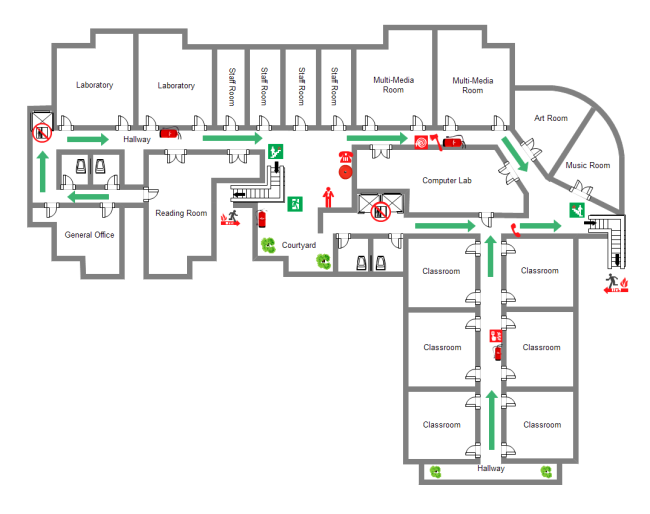
Image result for school floor plan

This has got to be one of the most tedious bits to teach.  I cannot imagine many students enjoy relating the facts that their school has classrooms, modern science labs and a small playground.  Here is an activity to make it ever so slightly more interesting:

Teacher gives half of the class mini-whiteboards.  The other half are given cards containing a description of a school (parallel text in both languages).  Starting in the top corner students draw in the rooms as they are told where they are.  The whiteboard is then passed to the other person to check.  They then rub out any wrong rooms and read those parts again.

You will need two sets of descriptions so that both people can have a go.

This could also be done as a whole class listening task.  You could even do the school you are in and get students to spot the mistakes you make.

After School Clubs

Image result for fencing

Again, another topic to enthuse…

Essentially from this you want students to come away with a structure such as: “después del instituto”, “después de haber terminado mis clases”, “après avoir fini mes cours”, “am Ende des Tages” combined with the preterite/passé composé or perfekt tense

Have students look up some slightly more interesting activities in advance of this lesson.  Fencing, bungee jumping, quidditch, gaming.  They can then practice the structure you want them to learn.  I can imagine some quite creative efforts once you add in TMP (Germanists only).

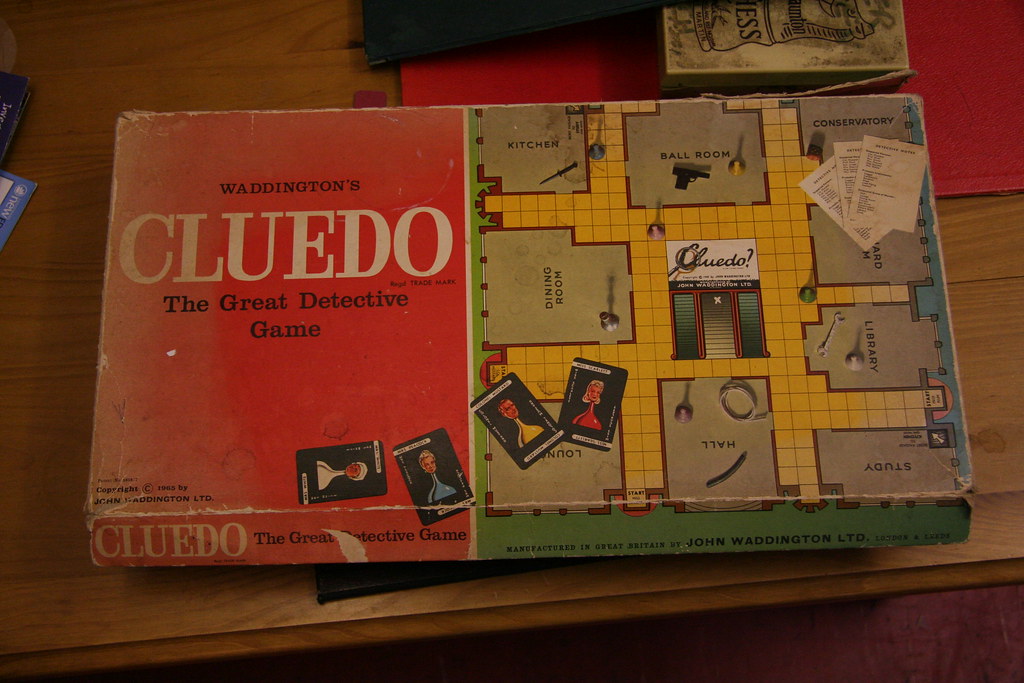
Future plans Cluedo

Image result for cluedo

ah…the good old days

I was introduced to “who killed Santa” cluedo in my NQT year by two super language teachers I worked with.  The structure can largely be applied to anything.  Another popular language teaching website calls it mind-reading.

Give students the following table on a slide.

They pick three phrases and write them on a mini-whiteboard or in books.  The student guessing needs to read out the verbs at the top and the infinitives.  The person with the three answers can only tell them how many they are getting right.

I want to… I’m going to… I would like to
infinitive chunk
infinitive chunk
infinitive chunk
infinitive chunk
infinitive chunk
infinitive chunk
infinitive chunk
infinitive chunk
infi YOU nitive
infi GET nitive
infi THE nitive
infi IDEA nitive

This is great as you can recycle quite a lot of language and also three ways of talking about the future at once.


5 Things to try tomorrow

These may already form part of your everyday teaching repertoire but here are five activities to try tomorrow.  Each has a differentiation and challenge added.

Quiz Quiz Trade

Everyone I know seems to understand this one differently.  I have seen it used in MFL and English in different ways.  It can probably be applied to other subjects too.  Here’s how I make it work in my classroom.

  1. Get the mini-whiteboards ready
  2. Project on screen 3 questions students have been learning.
  3. Students pick one of the questions and write it on their board.
  4. Students go around the room.  They must ask a question, answer a question and then swap whiteboards.
  5. They must perform 5,6,7,8 swaps before heading back to their seat.

Differentiation: You can differentiate this by getting students to write the start of an answer on the other side of the whiteboard.

Front of whiteboard:   ¿Qué llevas normalmente?

Back of whiteboard:    Llevo…

Challenge: You could have students put a word on the back of the whiteboard that has to be incorporated into the answer.   You could increase the variety of questions used or vary tenses used by questions.

Rewards: whilst the students are doing this, go around, listen and note down the ones who are going for it.  Reward them at some point in a manner of your choosing.

MM Paired Speaking

MM are the initials of the excellent teacher who showed me this.  It is an information gap activity but I like it as it practises speaking, listening, reading and writing.

  1. Students divide page into 3 columns
  2. Column 1 – write days of week in TL leaving 2-3 lines in between each
  3. Column 2 – pupils draw picture that represents vocab they have been learning such as places in town.
  4. Column 3 – leave blank.
  5. Project on board a question such as ¿Adónde vas el lunes? (where do you go on Monday?).  You could also project a model answer “el lunes voy al cine” (Mondays I go to the cinema).
  6. Model the activity with a keen student.  This stage is crucial for the activity to work well.
  7. Fiona asks Shrek where he goes on each day of the week.  When Shrek answers, Fiona uses her final column to write down exactly what he says.
  8. Shrek and Fiona swap roles.

Differentiation: Weaker students might need this printing out on paper.

Challenge:  You could increase the complexity of the sentence demanded by insisting pupils add an opinion.  This could be done by adding a column in between 2 and 3.

Car Race Quiz

I resurrected this little gem this week.  I cannot find the original car race powerpoint but you will find similar powerpoints here by the same author.  Car race, horse race or (at Christmas) race to Bethlehem should work.  For those of you big on knowledge organisers, this could be a different way to test them.

  1. Have a list of questions ready to test everything in a unit from key vocabulary to how to form various tenses or structures covered.
  2. Divide class into teams
  3. Teams take it in turns to answer.
  4. If they are right then click the car/horse/wise man (whichever you choose to download) and they will gradually move towards the finish line.  If a team is unable to answer, pass it to another team.
  5. Winners are first to the finish line.

Differentiation:  This can come through the questions you ask and how you tailor the activity to the students in front of you.

Challenge: you could turn this activity into a translation challenge.  First group to produce correct translation of a particular phrase gets to move their car forward.

Song gap fills

I don’t do these too often but a colleague of mine did one with a class recently.  Find a song and take out a variety of vocabulary.  You could look for words with a particular phoneme that you want students to practice or remove some verbs you have learnt recently. They listen twice or three times trying to put in the missing words and then you show them the lyric video for them to check their answers.

It is best done last lesson of the day or you will be hearing it all day.  Whilst my colleague suggested Kevin y Karla (check their Youtube channel out),  This one was a hit with my year 9s:

Differentiation: depends on the quantity words you take out.

Challenge: have two versions with words removed.  Remove significantly more from one version, or equally put the wrong words in and students correct them.

12 sided dice topic revision

If you have a set of these then great.  If not then tell students to roll a six sided die twice and add the numbers.

Set 12 tasks on the screen that link to the topic you have been studying. Give each task a points score according to complexity.

1 Simple vocabulary recall task

2 Explain grammar structure

3 Translate something

4 Make a sentence including …

etc

Differentiation: you could pair up students who are at a similar level.  You could turn it into a rally-coach task (the more advanced student does their own task but coaches a weaker individual to help them achieve).

Challenge: depends on the complexity of tasks set

GCSE: Customs & Festivals

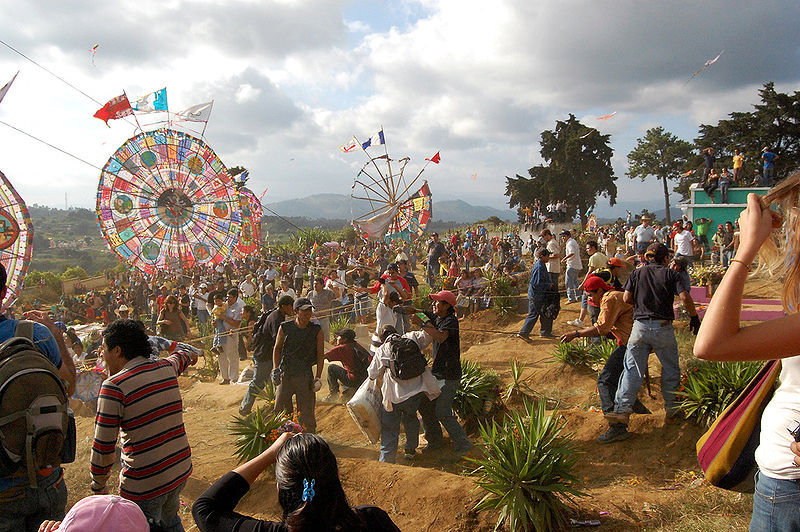
800px-Santiago_Sacatepequez_Kite_Festival

Picture of Santiago Sacatepequez by gringologue [CC BY-SA 2.0 (https://creativecommons.org/licenses/by-sa/2.0)%5D, via Wikimedia Commons

The Spanish speaking world is full of a variety of festivals.  From the perilous San Fermín to the picturesque Fiesta de los Patios en Córdoba or contemplative Semana Santa.  If you look further afield you will find El Día de Los Muertos/El Día de La Muerte,  and El Yipao in Colombia.

AQA refers to this topic as “customs and festivals in Spanish speaking countries/communities”.

Pearson/Edexcel refer to it as “celebrations and festivals”.

WJEC refer to it as: “festivals and celebrations”.

The ideas discussed in this blog and inevitably the language used will unavoidably favour the exam board I’m currently preparing my students for.  Nevertheless the ideas themselves should be applicable to any exam board and adaptable to languages other than Spanish.

It is worth considering how a module like this one might be examined.  It could be tested by all four skills

  • Speaking: any of the three elements could include something related to this topic.  Your sample assessment materials should give you an idea.
  • Writing: write about a festival/celebration you went to or would like to go to
  • Listening: listen to an account of Carnival and answer questions (AQA SAMS)
  • Reading: same as above but text on page

Here are some activities I have tried over the course of teaching this module.

The VLOG

This was an idea from a colleague of mine and one of the best MFL teachers I know.  The ultimate aim is that students produce a VLOG (video-blog) in which they describe a Spanish festival.  A growing number of the students I teach want to be “Youtubers” so they welcomed this idea.  Students were told they can appear in the VLOG if they choose or they could do something similar to Tio Spanish.  The main rule was that it was them doing the talking.  The structures I wanted the students to be using included the following:

it celebrates, it takes place in, it is, there is/are, you can see, you can, it starts, it finishes, it lasts, it is one of the most … , it has, it involves, it includes, I would like to go, because it looks, i would recommend it because it is.

Part 1: 2-3 lessons of controlled listening, reading, speaking and writing practice ensued trying to recycle these structures as much as possible.  I had been reading quite a bit over half-term and wanted to try out some new ideas.  One source of ideas was The Language Teacher ToolkitThe Language Teacher Toolkit.  Another was the Language Gym Blog.   A number of these formed part of the lesson and I wrote a number of texts that recycled the target structures above.

Part 2: I took the students to the ICT room.  They researched key details about a festival from a selection I had produced.  No-one did La Tomatina because that was on the scheme of work for subsequent weeks.  After that students produced a script using as many of the target structures as possible.

Part 3: They handed in their scripts, which I marked.  They then corrected and improved it based on feedback they were given so that their VLOG recording is grammatically sound.  As part of this, they also had to underline any words that they felt were tricky to pronounce.   Those that finished this redrafting process worked with me on how to pronounce the words.  Others were directed to Voki.  Whilst not perfect, it will do the job.

Part 4: Students are currently recording their vlogs.


Festivals that match interests.

Sometimes it is worth investigating a little more to find out some more festivals out there.  UK textbooks tend to emphasise la tomatina or navidad.  I think the former because it captures the imagination and the later because students can relate to it.  One student was quite motivated by the fería de caballos in Jerez.  Another really enjoyed looking into la mistura peruana (Peru’s food festival).  Día de amistad (South America) was perceived to be a great idea by another student and they wondered why we don’t have it here.

PaseoPrincipal-FeriaJerez-MIN-DSC04582

Android Game

This was a way of practising the key vocabulary around festivals.  Here’s how it works:  Frodo draws 9 dots on a whiteboard in a 3×3 pattern.  Frodo then joins up 4-5 of the dots consecutively like an Android phone password.

6917000655_ac16a092e0_b

On the screen have 9 squares with phrases in.  These correspond to the 9 dots.

Sam’s job is to crack Frodo’s password.  Sam says the phrases on the screen trying to guess where Frodo’s password starts.  Frodo can only respond “si” when Sam has guessed the first one.  Even if he has said other parts of the pattern up to this point, he must get the first one.

The main aim here is repetition of vocabulary and familiarisation with the target structures.  You should advise students beforehand not to use their actual phone password.  You would think it might not need saying, but it does.

Trapdoor with lives

Trapdoor seems to be a staple of MFL teacher PowerPoints on TES.

trapdoor

Danielle was kind enough to let me use this example of trapdoor. You should visit her site: Morganmfl

The prevailing methodology seems to be that students restart when they get it wrong and go back to the beginning.  A slight twist I have tried recently is giving students a number of lives.  They then have to reach the end alive.  This means that they have a greater chance to use all of the vocabulary on the activity.  I tend to base the number of lives on 1-2 guesses per section.

For festivals I used the idea of a past tense account of the festival including the following vocabulary:

I went to, we went to, my friends and I went to, we participated in, we threw, a lot of, we ate, we drank, it was, we are going to go again, because it is, we are never going to go again,

Mastermind with lives

Image result for mastermind board gameAgain using the same principal as the trapdoor activity above.  Students have to guess what their partner is thinking.  They can only tell their partner how many they get right.  Place a table on the board with 3-4 columns.  The original game to the left uses four.  Personally, I prefer three for MFL lessons.  One student writes the target phrases in their book.  The other tries to guess the phrases that they have written.  This can be made quicker by giving students a number of lives.  It also means both students are likely to get a go.  Students seem to enjoy this one.

TL Questions and TL answers

La_Tomatina_2014

By Carlesboveserral [CC BY-SA 4.0 (https://creativecommons.org/licenses/by-sa/4.0)%5D, from Wikimedia Commons

This module has been great for training students to respond to target language questions with target language answers.  Using the AQA book, we covered la tomatina.  I wrote text about la tomatina from the point of view of “Marcos” who attended la tomatina.  There were then 8 TL questions with relatively simple answers in the text.  Part of the activity was to train pupils to look for language that is similar to the verbs in the question.

If this is the answer, what is the question

In the subsequent lesson, I jumbled up the TL questions and TL answers and asked students to match them.  The answers were on the left of the slide and questions on the right.  To increase the level of challenge in this activity, you could have students create the questions themselves.

Four Phrases One festival

Have four boxes of text on the screen.  Three of the boxes all partly describe a festival.  The final box should have some details that do not correlate with the others.  Students need to work out the festival as well as which box does not help them.  The idea behind this was to give them practice of filtering out the distractors when looking at higher level reading texts.  Depending on the level of your class you can make this as subtle as you feel is right.

Dice

I’m not quite sure where I would be without a set of 6 sided and 12 sided dice in lessons.  Aside from the rather popular “one pen one die” activity, you can do a variety of things.

Improvisation – students make a sentence based on prompt.  You could add a minimum word count to stretch them.

  1. Where was the festival?
  2. What was it about?
  3. What did you see?
  4. How was it?
  5. Who did you go with?
  6. What did you like most?

Roll, say, translate – Hugh rolls the dice and says the sentence.  Zac translates into English.

  1. se celebra en abril
  2. tiene lugar en Sevilla
  3. hay muchas casetas
  4. empieza dos semanas después de la Semana Santa
  5. la gente baila sevillanas, bebe manzanilla y come tapas
  6. Quiero visitarla porque parece bonita

etc

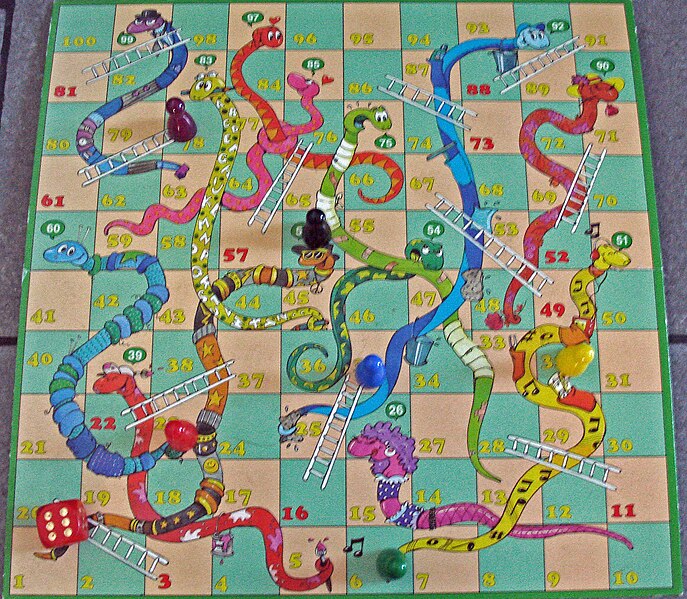
Extreme Snakes and Ladders

File:Snakes and ladders1.JPG

By Druyts.t [CC BY-SA 3.0 (https://creativecommons.org/licenses/by-sa/3.0)%5D, from Wikimedia Commons

I’ll be honest with you; it is not extreme but the name seems to have an effect on classes.  Find a snakes and ladders board.  Set sentence-making challenges for anyone who lands on a number ending in 1,3,5,7,9.  You could also add a snake stopper and ladder allower.  These should be tricky tasks.

1  Where was the festival?

3  What was it about?

5  What did you see?

7  How was it?

9  Who did you go with?

Snake Stopper: make three sentences about a festival that includes the words … , … and …

Ladder Allower: Describe a festival you wouldn’t go to and why

If you have managed to read this far then well done!  Feel free to tweet any ideas to @everydaymfl or leave a comment below.


5 things to try tomorrow

Image result for five

Here are 5 things that worked for me this week.

Voki.com

I had forgotten about this website until one of my pupils said “I know the words I just don’t know how to pronounce them when I’m practising at home”.  My internal, unvocalised reaction to this comment – a comment  innocently dropped after 4.5 years of Spanish – is probably best summarised by the picture below:

Image result for anger

In hindsight, my internal monologue should have focused on the positive “when practising at home”.  However, it was at this point that Voki came to mind.  Whilst not perfect, it does offer text to speech conversion.  It also can help occasionally with individual Spanish words.  Once you have set the voice to Spanish and the accent to a relatively clear one (our preference was for Javier).  Just remind the pupils they don’t need to sign up to use it, and also not to get distracted on creating avatars.

Imemorize 

For learning answers to questions, this is a particular favourite.  The address is as follows:

http://imemorize.org/download.html

It allows students to learn sentences and hide words to check their recall.  The activities are scaffolded quite well.  It would depend on the student who uses it as to how effective it is.

Students used to find this helpful in the days of controlled assessment.  One has also thanked me for “saving” their GCSE drama coursework.

No snakes, no ladders (Idea from Gianfranco Conti / Dylan Viñales)

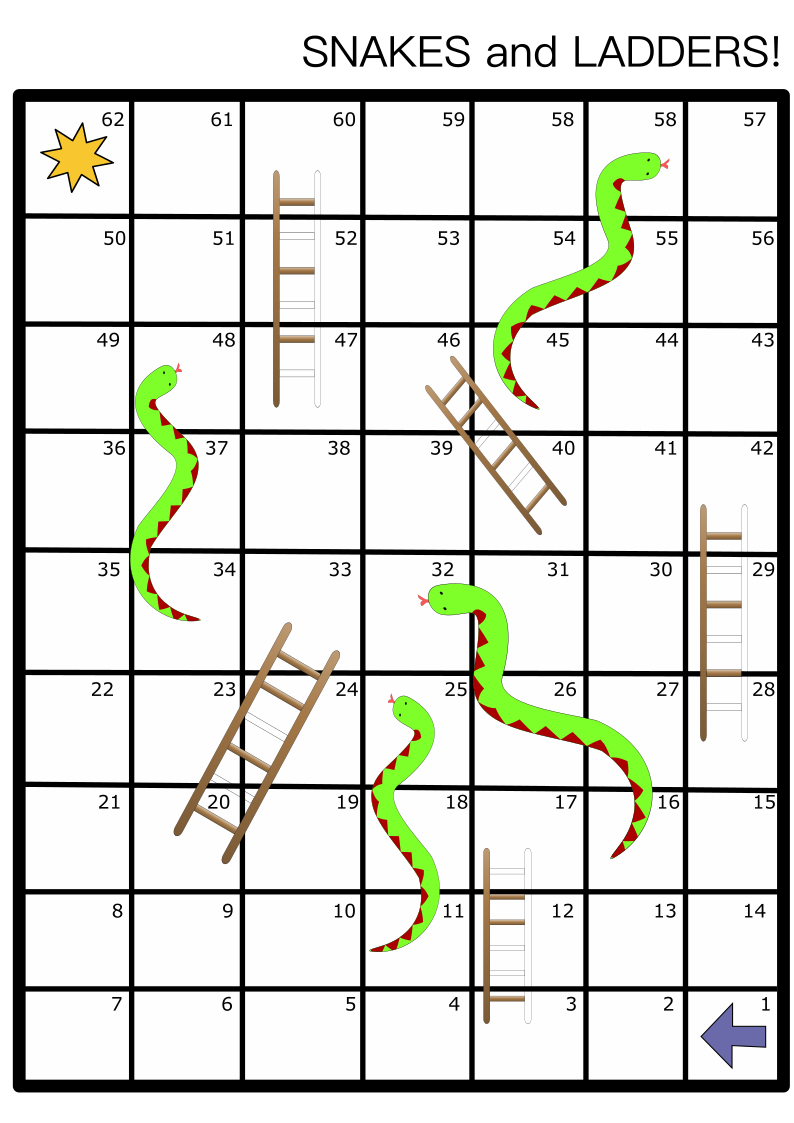
Image result for snakes and ladders

Secondary MFL facebook groups such as: Secondary MFL Matters, Secondary MFL in Wales, New GCSE 9-1 resources, Global Innovative Language Teachers and others) have taken over my news-feed.  They allow some superb sharing of resources and ideas.  However, lots of activities appear briefly and then disappear: balloon towers, one pen&one dice.  This is one I want to keep.  It involves speaking, listening, reading and translation.  Students play in threes – 2 players and a referee. This is a refreshing change to the majority of MFL games, which seem to require a partner.  Full instructions for No Snakes, No Ladders can be found here.

Treasure Hunt

Treasure chest

This is a slight variation on the MFL standard of battleships.  Gives students a slightly larger grid (6×6) and tell them to hide some treasure somewhere in the grid.  This variation worked in 98% of the pairs in my class.  Sadly there was a kid who guessed it first time! 36 different squares!  What were the chances?!  I made sure that they had a rematch.

Quick Speaking Feedback

This next suggestion is a little bit embryonic.  It is something I have tried with two classes and am still considering how it might work best.

There is a huge focus in UK schools on feedback, DIRT and responding to marking.  The vast majority of DIRT I have seen on Facebook Groups and the TES relates purely to written work.  I’ve written about that here.

I started to consider how I may give short quick feedback on speaking, a skill I believe to be substantially more important than writing.  With two year 8 classes, I went around asking them to read a longer paragraph from a textbook page (Mira 2 or Listos 2).  Whilst they were reading out loud, I scribbled one quick sentence in their book regarding their pronunciation.  Some of the notes looked like this:

Speaking Feedback

  • Check “ci/ce” in middle of words – should sound like “th”  eg: “vacaciones”, “francia”
  • Remember ll = y
  • Superb today, nothing to correct!
  • Remember silent h when starting a word, otherwise fine.

To save time and workload, I wrote one sentence per student.  It did not take long to go through the class.

For those of you wanting students to respond to it then there were two ways I tried to engender this.  Firstly, I modelled the sentence and then they repeated it back to me.  This helped some to understand how it should sound.  Secondly, I wrote a list of 4-5 words in their book that I wanted them to say containing the same sound.  Lastly, in light of everything I had heard, I planned a lesson around J and G in Spanish.  This youtube clip was helpful in that lesson.  It took the focus off of me and gave them plenty of examples.  In that lesson I read out a list of words and students corrected me if I made a mistake.  We had races of words involving Js and Gs along with trying a few tongue twisters corporately and individually.

What I noticed from this was that some students got a substantial confidence boost.  Their ability to pronounce words was better than they perceived it to be.  Others appreciated the quick feedback.  Some appreciated being able to respond to the feedback without a lengthy redraft of a piece of work.  They also appreciated the lesson working on the J and G.

I’m still mulling over where to take this and what to do to refine the process but it was well received by the students and did appear to have a positive effect.


GCSE: Social Issues. charity and volunteering.

34013343663_dc8b93b064_m

Photo Credit: mypubliclands Flickr via Compfight cc

The new GCSE confronted teachers with some topics they may not have ever had to deal with in any great depth.  This post looks at ideas for teaching our GCSE students about volunteering, helping charities and good causes.

Before I start, you should be aware of the following:

  • AQA refers to “social issues” and refers to “charity/voluntary work.”
  • Edexcel calls it “bringing the world together” and names this topic “campaigns and good causes.”
  • WJEC simply refers to “social issues”.

I have done my best to put ideas that can be applied to all boards.  There will be a lean towards one in terms of the language used as that is what I am currently teaching.  There is certainly no intent to promote one above the other.

My enthusiasm for this topic stems from my year abroad.  I spent a year working in a home in Cochabamba, Bolivia, for kids who had lived on the streets, were orphans or suffered abuse at a young age.

Cochabamba, Bolivia

So how to teach the topic?  I have tried to include a mixture of listening, speaking, reading and writing activities.

Synonyms Match-ups 

Students need to learn a lot of words that they have not come across before.  Two of my go to starters are gap fills and match ups.  This week I came across a match-up of synonyms which was really effective.  Students matched up two sets of words looking for the words with the same meanings.

Narrow Reading: spot the difference

This is a phrase I learnt from Gianfranco Conti’s blog.  The philosophy behind narrow reading can be found here.  The idea I chose to use was called Spot the Differences.  I produced a text about working as a volunteer, copied it, pasted it twice and then made subtle changes.  Students had to say how each text differed from the other ones.  The vocabulary that differed included phrases I want them to know for subsequent lessons.  My experience was that students focused far more closely on the text rather than merely skim-reading it until they found the relevant detail.  Definitely a keeper for future classes.

Find the phrases

This is a stock favourite of all GCSE textbooks.  “Find the French/Spanish in the text for…”  I gave students texts based on some real charities that I had contact with.  The fact that these were real people, that I knew or worked with, seemed to motivate them more.  One website used to help produce this was Manos con Libertad , another was Mosoj Yan.  Both are Christian organisations that work with people in Cochabamba.  Whether you have a faith or none at all, these organisations do some great work with people in tough circumstances.  I used others as well but they don’t have websites!   The excerpts were written from the point of view of someone who worked there and talked about what they do.  Great opportunity to revise daily routine and reflexive verbs.

Textbook Speaking Grids

Questions verbs complement and other
details
etc 
tend quite  lots
to often  of
appear in this  stuff
here bit  here

Many textbooks often give a grid and a few questions and answers to use.  It is not the most exhilarating paired speaking task.  I got thinking about how to spice it up a bit.

Method 1: Points for going beyond the grid.  On your projector screen put a list of things that “go beyond the grid”.  Students work in pairs.

Student 1: Asks questions and notes down a score of anything that goes beyond the grid.

Student 2: Answers questions trying to add other tenses, verbs, conjunctions, adverbs etc

Method 2: Beat your partner.  If you have a tricky class you may wish to change the name here to prevent any wilful misinterpretation!  Every student notes down 5 phrases from the grid without their partner seeing.

Student 1: asks the questions.  This student receives 2 points each time the other uses on of their phrases.  Maximum of 10 but probability of phrases being used is lessened.

Student 2: answers the questions, trying to use their pre-chosen phrases.  This student receives one point per phrase used.  Maximum of 5.

Method 3:  Play a role.   The grid in the textbook involved the questions ¿trabajas como voluntario ahora? and ¿Qué haces exactamente?  along with a few others.  Students were given a card with a role.  They then had to pick answers using this perspective.  The roles included:

  • Charity Shop Assistant
  • Eco-warrior
  • Care Home worker
  • Aid worker in Haiti
  • Aid worker in Sierra Leone.

Ethiopia, Tribe, Africa, Culture, Omo, Tribal

Third World Diary

Mira 3 red does a brilliant diary of life for someone in the developing world.  If you have access to it great.  If not then use this site for inspiration.

You could produce a short diary script and then attempt any of the following:

  • You could display the script and read it out loud.  While you do this, miss out some words.  Make the students write down the ones you miss.
  • Use the desktop version of Imemorize  and enter your own quote.
  • Put your script into Cueprompter and have students read it out loud with you or alone.
  • You could have multiple choice parts put in the script and students have to write down the one you read out.  Por la mañana / tarde / noche me despierto a las siete y media / seis y media / cinco y media.
  • You could remove a whole sentence and have students fill it in as a dictation/transcription exercise.
  • You could even chop the text into pieces and give it to students to rearrange while you read it out loud.
  • Go to Voki.com and put it into their text-to-speech converter, setting the voice to Spanish.  Then challenge your pupils to see who can do a better job than Javier or Carmen!
  • Be creative, there are so many options when it comes to a listening text.

Students could produce their own diary as a homework task.  You could set a list of “ridiculous requirements” to challenge your high-flyers.  For example: 7 lines of text, 6 reflexive verbs, 5 conjunctions, 4 clock times, 3 french hens, 2 higher level phrases and one subjunctive just for good measure.

The website was also tweeted to me at some point.  I have yet to use it yet but it looks good, particularly if you are considering display work.

Newspaper Clipping Generator

Verbs & Infinitives

This chapter is a great way to practise all those verbs that are followed by an infinitive:

  • I’m going to raise money for..
  • I would like to donate to …
  • I can give £1 a month to
  • I’m thinking about going to…
  • I hope to help …
  • I want to work with …

A game of TRAMPA / TRICHER would be a great way to practise this.  Students take a piece of A4 paper and divide it into 8.  In pencil, on 4 or 5 of the sections they write a sentence like the bullet points above.  On the remaining 3 or 4 they write “Trampa” or “Tricher” (cheat).  Cards are then shuffled and dealt out among their table.  Students say what is on the card before putting it face down in the middle.  If the card says trampa they have to convince the other players there is a sentence on the card.  They do this by making a sentence up and placing the card face down.  If a student thinks another is cheating then they can call them on it.  If the student was indeed cheating; the cheater picks up the card.  If the student was falsely and wrongfully accused in a heinous miscarriage of justice; the accuser takes the cards.  Winner is the first person to get rid of all their cards.

If you have had any great ideas then please leave them in the comments section below:


5 Things to try tomorrow

It has been a manic start to term so I have not had much time to write.  There is a post in production on lessons learnt teaching the new GCSE.  It is a while since I have done one of these posts so here are 5 things that have worked in the past month.

Self-reflection questionnaires

Due to a residential, I missed the first few days of term.  One of the bits of cover work I left for my year 8 bottom sets was to answer 3 questions.

  1. What did you enjoy last year in languages?
  2. What did you struggle with most?
  3. If I asked them, what would your last teacher say about you?

I was predominantly interested in question 2.  The three most common answers were:

  • Memorisation of vocabulary, verbs etc
  • Speaking and pronunciation
  • Writing

It was a really worthwhile exercise as each student wrote down their biggest obstacle to being successful in languages.  It also gave an indication as to how they viewed the subject.  My planning for my first 8-9 lessons with them was largely influenced by the above three things and will continue to be.  I have kept their answer to the struggle question and will revisit it later in the year.

Core Language Sheets

Schools will have different names for these: knowledge organisers, language mats, helpsheets etc.  I have given each of my lower year 8 sets a A5 sheet with everything I want them to know by the end of the year.  Every other week between now and Christmas they will learn the vocabulary on this sheet and be tested on it in a variety of ways.  The sheet has been divided into 4 sections A,B,C,D.  This means homework can be “learn section B” and they will know which bit to focus on.  They are regularly encouraged to use it in their work and I believe that over time it will make a difference.  The year 9s,10s,11 have a similar sheet.  I have my own design based on material from Rachel Hawkes website but would rather not see it end up on the TES with a charge attached.  They are relatively easy to create, just pick all the things from the year that you deem to be important and condense on to a single page.

Phonics from the start

This came after a bit of reading of Rachel Hawkes’ website.  I spent the first lessons of the year with year 7 teaching phonics and pronunciation using resources from the website above.  I think it had a positive effect.  My personal favourite activity was one involving saying a word and students using parts of the words to spell it.  We did this with Spanish cities and also Spanish Mr Men.  This really had an palpable effect on confidence as pupils started to rely on the rules they had learned.  The downside is that year 7 classes get really giggly with “Don Pupas” (Mr Bump).

Find your match*

Puzzle, Cooperation, Together, Connection, Match

Reinforcing grammar through listening and speaking is infinitely more exciting than a standard gap-fill task or book work.  This idea came from Gianfranco Conti’s website.  I used this activity twice this week, once for the past and once for the future.  Once you have made a template in Word then the replace feature makes it really easy to change the phrases.  Gianfranco Conti’s original on the site has 12 boxes.  To adapt it to a class of 32, I simply printed it 3 times.  I told the students that if someone had the same name as them then they were not allowed to talk to them.  They were also not allowed to show their card to anyone.  Once they had found their match, they returned to their seats and translated their statements.  The students seemed to enjoy it.  ¡Gracias Gianfranco!

Android Game

Android, Cellular, Iphone, Mobile, Phone, Screen

This came from the aforementioned residential.  It is easy to get stuck in a rut with vocabulary and repetition activities but this was a new one.  It was based on students trying to cross an obstacle course.

Put 9 new items of vocabulary in a 3×3 grid on your projector screen.  Students draw 9 dots on a mini- whiteboard.  Then draw 5 consecutive lines like an unlock code on an android phone (see work of art below).  Their partner tries to crack their pin-code by saying the vocabulary.  The student with the code can only respond with “correcto” or “incorrecto”.  They then swap around.

android

Further reading:

Alphabet, numbers, days of the week  It’s that time of year again!

OFSTED handbook – If you’re facing it this year then it is always good to know what they are looking for.  Pages 47-49 should help most teachers.  Please look at the bit preceding the descriptors where it says the grade descriptors are not a checklist.


Making marking work

Photo Credit: BenjaminCookDesigns Flickr via Compfight cc

Time to get out the red pen

This post should probably start with a disclaimer.  My marking is not perfect.  I do my absolute best to make sure the pupils get the best feedback on their work but it will not always yield the seismic improvements that one might hope.

Before we discuss marking and feedback, I think it is worth pointing the reader towards this document produced by Sean Harford HMI.  Yes, he does work for “they-who-shall-not-be-named” but you really do need to read it.  You could also follow him on Twitter as he is quite good at busting the various OFSTED myths that fly around.

Over the past few years, I have seen a variety of marking policies in my own school and in visiting others.  Out there, there is a plethora of feedback and marking styles such as “comment only” marking, highlighter marking, DIRT time, group feedback, whole class feedback, flipped learning, self-marking online assessments, self-assessment, peer-assessment, raw scores, averages, levels, flightpaths, progress indicators, RAG etc.  Don’t worry, this post is not going to cover all of those!  Instead, here are three that have really worked for me, and my students, in the classroom:

Whole class feedback & Individual Feedback.

Whilst marking a set of books I will formulate a series of targets to be placed on a PowerPoint.  In the book, I will simply write something that the student did well along with T1, T7, T8.  There is an example below.  The following lesson will probably follow this pattern:

1) Whole class feedback or starter activity relating to an issue most struggled with.

2) DIRT time – students have opportunity to act upon individual targets.  Extension tasks available for those who finish.

3) Remaining time refreshing material from previous lesson or preparing for subsequent lesson.

The activities in part 1 above could be…

  1. Grammar exercises
  2. Spot the errors / Correct the errors (anonymously lifted or amalgamated from work marked)
  3. Match present and past tense verbs so that students are clear which is which.
  4. Spot the correct sentence from a choice of 3.

An example of what students will see in part 2 above is below.  I have found that the “what it means” and “what to do” leaves no room for excuses of “I don’t get what I have to do”.

feedforward

Feedback needs to be about improvement and development, not simply error correction. That is my hope behind targets 2,4,6.  However, where some heavy error correction is needed, then I still want them thinking about it (see T1,T3).

T5 allows me to challenge, and insist on improvement of, any poorly presented pieces that I may not notice from across the room during the lesson.

T7 allowed me to work with one to one with a student who was miles ahead of the rest of the class and teach them something they can add to their work.

T9 was to give a student time to catch up on work missed through no fault of their own.

This approach massively shortened the time I spent marking and still allowed me to deal with misconceptions and give specific, personalised feedback that led to definite, visible improvements.

Highlighter Marking

Mentioned in a full length post  a while back, I still think this is one of the best ways for boosting confidence of students.

Underline an entire piece of work in two highlighter pens.  Green if it’s good.  Yellow if it needs work.  Immediately a student can see what is good and what is not.  If the overwhelming picture is green then it can be a massive confidence boost.  If they realise that the yellow is a repeated error, then we are on the road to eradicating it.  If there is a substantial amount of yellow then maybe a rewrite is in order.  Sometimes the yellow would not be underlining anything, to demonstrate that there was a need to add something.  To show students bits of their work that were particularly good such as a wenn clause (German), a reflexive verb in the passé composé (French), or use of the imperfect subjunctive (Spanish), I simply double-ticked those parts.  

I have tried to demonstrate the visual impact below:

Gestern Abend habe ich mit meiner Famille ins Kino gegangen.  Dort wir haben “Fast and Furious 14” gesehen.  Es war toll.  Ich mag Actionfilmen, weil sie sind spannend

Advantages include how well it combines with marking codes and it is speedy. Disadvantages include that one needs a constant supply of highlighter pens or felt-tips!

Self/Peer Assessment

Peer assessment is something I struggle with in MFL.  Sometimes I find that the students do not have enough knowledge to effectively assess the work of another.  You find comments such as “great use of connectives”, when there were none in the work at all.  I think it works best when the students have sufficient knowledge to draw upon, or with a reasonably restrictive mark-scheme. 

I have tried a little bit with the new GCSE roleplays.  The following pattern yielded some success.

  • Teacher shows students mark scheme and script for roleplay.
  • One student is selected to conduct the roleplay.  Teacher plays role of student
  • Roleplay is then performed by teacher and student (in reversed roles).
    • Teacher (as student) produces a roleplay that can be described as a shambles full of mistakes, hesitation, use of English, use of Spanglish, use of French, adding O to any English word to make it sound Spanish.   
    • Teacher (as student) produces a half-decent roleplay that ticks some boxes but not all.
    • Teacher (as student) produces a roleplay that would knock the socks off the most examiners.
  • After each the students are asked to give numerical scores.  The AQA mark-scheme is extremely helpful in this as for each element of the roleplay there is a score of 0, 1 or 2.  Their language says “message conveyed without ambiguity” or “message partially conveyed or conveyed with some ambiguity”.  In short:  2 = job done   1 = partly done  0 = was it done?   Students are then asked to give a score out of 5 for quality of language.  The teacher can guide them towards this one a bit more.
  • Students then have silent prep time for a roleplay on the same theme but with different bullet points.  10-12mins.
  • Students conduct the roleplay in pairs with script on projector screen.  After which, they assess their partner’s performance.  When they switch over, you need to switch the unpredictable question to something else!  Or generate a new task for the other.  
  • They need to repeat this so that they have two sets of scores.  They can then calculate an average.  By doing so, hopefully any overly generous or overly harsh marking is minimised.

Example:

Joe gives Martina   2+2+1+1+1   /10   +3   /5     = 10/15

Kelsey gives Martina 1+2+1+2+2  / 10      4/5     =12/15

Average = 11/15  

Teaching the weather

Weather phrases in foreign languages are odd.  I have never really understood quite why “il fait” or “hace” makes more sense than “it is”.  However, we have to teach them so here are a few ways to make it more interesting.

Predict the weather

As a plenary activity students write 5 sentences predicting the weather in various locations on the day of your next lesson.  As a starter in the subsequent lesson, they check if they were correct / incorrect / bit of both.

The maps on El Tiempo.es are really good for this.  See exhibit A belowweather

Photo Response

Show students some photos and have them write sentences quickly on mini-whiteboards.  If you use Spanish speaking countries you can generate quite a bit of interest as pupils will inevitably ask “where is that?”  Exhibits below include Peru in the height of summer and Bolivia during rainy season.  That falling grey mass is rain, not a tornado, as one of the kids thought.

perubolivia

Today at Wimbledon / Euros / World Cup Scripts

Students in year 7 cover present and future tense.  It will take a little bit of revision of verbs but they should be able to produce the following using the near future

va a jugar        va a ganar        va a perder        va  a llover

va jouer            va gagner         va perdre           va pleuvoir

They have hopefully covered simple time phrases such as “today”, “tomorrow”, “later on”.

All of this leads to being in a position to present a TV programme.  Students need to produce a script for the Today at Wimbledon programme.    Click here for the theme tune, which will remain in your head for hours afterwards.  They should include

  • Weather today
  • Who plays who today
  • Weather tomorrow
  • Who is going to play who tomorrow
  • Opinions on who is going to win or lose.
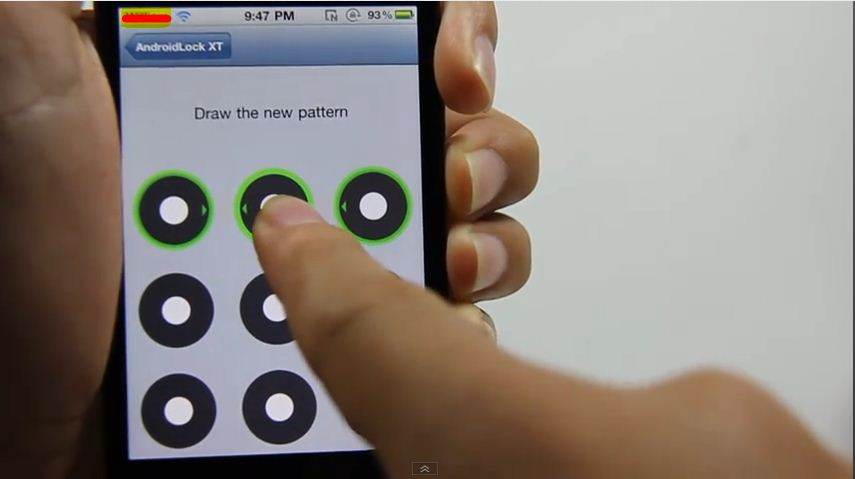
 They then perform this and can peer-assess each other on whatever criteria you set.  Personally I would go for the following with scores out of 5 for each:

  1. Fluency – does it flow? Can they sound natural?
  2. Confidence – do they come across confidently?
  3. Communciation – can they make themselves understood?
  4. Pronunciation – How strong is their knowledge of phonics?

Translation Tandems

This idea came from Greg Horton on a CPD course about 2 years ago.  He used it for vocabulary tests so this is a small tweak.

Hold an A4 piece of paper portrait.  Divide the piece of A4 paper. into 2 halves down the middle.

¦   ¦   ¦

Students write sentences alternating between English and TL.   Students then fold the piece of paper down the middle and sit facing each other.  They have to translate whatever sentence their partner reads out into the other language.  This is a great activity to practise translation both ways.  It does require a fair bit of pre-teaching so that it is challenging but not demotivating.

Mira 1 Rap

Mira 1 has a listening text that might be a song or a poem.  It can be found on p103 and works rather well as a rap.  Challenge your class to turn it into one.  A good rap backing can be found for free at this link here on TES.  If you have VLC media player then you can alter the playback speed and slow it down if needed.

Real life listening

I experimented the other day.  I listened to a weather report on eltiempo.es and the guy was super fast.  I picked out 10-15 words that my students might pick up from the video, and then added some more that were not there.  I challenged them to listen and see how many of my words on the board they would find.  I was pleasantly surprised with the results, and so were they.

If you have managed to read this far then this weather report did make me chuckle.


GCSE: Technology and Social Media

Photo Credit: Apex Web Firm Flickr via Compfight cc

Photo Credit: Apex Web Firm Flickr via Compfight cc

I’m learning new words with this topic!  Here are a few:

  • delizar – to swipe
  • tuitear – to tweet,  hotly debated – should it enter the Spanish language or not?
  • unidad de red – cloud storage

So how do you teach it to tech savvy teenagers?  I’ll be honest.  I haven’t cracked it and I’m teaching the module at the moment.  I’ll add to the ideas below if I stumble on anything useful.

Translation challenge

Divide students into A and B before revealing a slide with these:

Translations A Translations B
5 Sentence in Spanish here Sentence in English here
10 Tougher sentence in English here Tougher sentence in Spanish here
15 Equally tough sentence in Spanish here Equally tough sentence in English here
20 Horrible sentence in English here Horrible sentence in Spanish here (present subjunctive anyone?)

Student who gets the highest points score wins.  They can start wherever they like.

A3 Answers B2 Responses and C1 sentences

This is an adaptation of an idea from the brilliant Rachel Hawkes.  You give the kids questions like the ones below but tell them that you want an A3 answer.  The kids then have to include those things in the answer to the question.

¿Para qué usas Facebook?

¿Tienes un blog?

¿Cuántas seguidores tienes en Twitter?

A use perfect tense                                            1 use a linking word that is not “y”

B use a sentence containing lo/la                 2 use an opinion without the word “gusta”

C use present tense                                           3 include a time phrase

D use opinion                                                      4 include an item of vocabulary from last lesson

5 lines up

Whilst this is not in anyway linked to the internet topic, it is something I am experimenting with.  All learners rule off their page 5 lines up from the bottom.  This new section of book is for any new vocabulary.  This could be something they ask me for, something they find in the dictionary, or a new word encountered in a reading or listening text that they plan to look up later.  It has the advantage of allowing them a means of retaining the new language and also shows it linking to the learning that took place in that lesson.  Hopefully that should mean that words heard once or seen once, are not simply forgotten.  My hope is that by processing it a few more times that they will retain it.  It might also foster some independence.

Language Gym Verb Trainer & Boxing

The topics in the AQA book have a hefty amount of grammar (perfect tense, verbs with prepositions, por/para and the present continuous).

The Language Gym website has a great verb trainer but also in the “games room” section there is a boxing game on technology. It is a nice way to consolidate and extend vocabulary.  It could be very effective in the practice phase of a lesson or equally as a consolidation homework.  The rock-climbing game is really clever although I feel terrible when I get it wrong and hear the “aaaaaaaaaaahhhhhhhhh” sound.

Photo Credit: <a href="https://www.flickr.com/photos/36647280@N07/29104615800/">beyondhue</a> Flickr via <a href="http://compfight.com">Compfight</a> <a href="https://www.flickr.com/help/general/#147">cc</a>

Photo Credit: beyondhue Flickr via Compfight cc

How long can you keep it  up for?

This one is all about conversation.  Give groups of 3-4 students a series of cards with questions and maybe some support via a speaking mat if needed.   Nominate a starting student.  Explain that student 1 can question any of students 2,3, and 4.  After 2,3 or 4 has answered then they have 3 options.  The first is to ping the question back at person one.  The second is to ask someone else the same question.  The third is to ask another question of someone else.  Tell the group they have to keep the conversation going as long as possible.  Write up on the board the amount of minute and half-minutes they have managed to keep the conversation going in Spanish.  I think some teachers call this group talk.  It may well be that but I want the focus to be on the time aspect.  They tend to feel more confident and sit taller when they realise they have just managed 5 minutes in Spanish together.
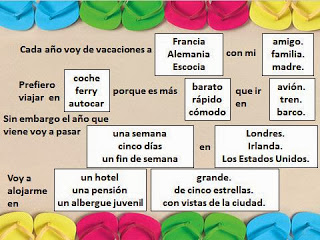
Perfect Tense – “Have you ever…?”

The AQA book uses the internet topic to introduce the perfect tense so once the students have got the concept then you could get them generating a series of 5 questions for their partner on any topic.

¿Has jugado … ?

¿Has probado …?

Tarsia Puzzles & Dominoes

Photo Credit: <a href="https://www.flickr.com/photos/111950422@N04/29791627590/">toonarmy59</a> Flickr via <a href="http://compfight.com">Compfight</a> <a href="https://www.flickr.com/help/general/#147">cc</a>

Photo Credit: toonarmy59 Flickr via Compfight cc

Tarsia is one of my favourite activities but does take a while to set up.  It is a good plenary or starter to recap something you have taught in a prior lesson.  You will need a printing and photocopying budget!  Clicking the link will take you to the website where you can download the program.  It allows you to make activities such as dominoes.  You can also make triangles of little triangles where all the vocab must match in both languages.  Maths teachers use it for formulas.   Remember to set the form of entry to “TEXT” or it will crush your letters together.  If you can trust your students with scissors then they can chop them.  If not, employ the skills of your tutor group and bribe reward them for their efforts.

2 options for use:

  1. English – Spanish vocabulary matching  “deslizar” = “to swipe”
  2. English word – Spanish definition “Youtube”= “Sitio para videos”  “desinstalar” = “proceso de borrar app”.

¡No te metas a mi facebook!

Resources for this lesson can be found here

Lyric video here

If the lesson plan and resources on TES are not enough then how to exploit songs can be found in the Teacher’s Guide section of Frenchteacher.net

Spanish Text Lingo

I believe the kids call them “group chats” now but teach them some basic Spanish phrases for this purpose.  See if the students can work out any of the following:

  • grax – gracias
  • tqm – te quiero mucho
  • bss – besos
  • komotás – ¿Cómo estás?
  • de nax – de nada
  • 50538 – I’m not telling you this one.  Turn your phone upside-down and read it

Verb Tables / Verb Stars

There is a lot of good grammar in this topic if you are following an AQA scheme of work so make use of it as an opportunity to teach them verb tables and how to use them.

descargar – to download

descargo    descargüe    voy a descargar    he descargado   etc

Whilst I am not a massive fan of learning styles theories, I appreciate that some learners prefer to lay out information in different ways.

Lists – colour-coded subdivisions:

Descargar

Present:  descargo

Past: he descargado / descargüe  / descargaba

Future: voy a descargar / descargaré

Make sure students stick to the same colour coding or they are simply going to cause themselves confusion.

Brainstorm / Star

Put infinitive in the middle and add others around it.  To make it more asthetically appealing putting a star around the infinitive is useful.

How many different ways can you use that infinitive?

There are many verbs in Spanish that precede an infinitive.  Students could use those as well.  Germanists will know what I mean by Modalverben.

Puedo / Quiero / Tengo que / Debería / Me gustaría etc

Pupil Premium & MFL

262986323_b35abe6dfc_m

We’ll start with some words from Number 10 Downing Street:

“The Coalition Government introduced the Pupil Premium in 2011 to provide additional school funding for those children classed as having deprived backgrounds, and also those who had been looked after (by a local authority) for more than six months. The Service Premium was also introduced for children whose parent(s) are, or have since 2011, served in the armed forces.” Source Material for super keen readers.

Regardless of whether you agree with the idea of the Pupil Premium and the considerable emphasis placed thereupon, it is here to stay.  I have to be honest that over the past few years I have had mixed feelings and a lot of questions about it: what about children who fall ever so slightly above the threshold?  What about students with parents in the forces that actually do not access the funding and do not want it?  Can it make that much of a difference?  Are we in danger of over-emphasizing it?  One headteacher’s blog wrote about the disadvantage gap being a chasm.  It is a complex issue but not one we should shy away from.

Earlier today our SENCO shared this picture:

It reminds me that my job is a teacher is to ensure that every pupil has a chance to achieve.  For some those boxes in the picture will equate to extra funding from Number 10 and for others the boxes are the process of scaffolding and lesson planning.  For some pupils the boxes symbolise my teaching, my feedback and my attention or time spent with them.  Feedback has been covered here, support and scaffolding for lower ability has been covered here and here.  Today we are looking at the Pupil Premium.

Why Pupil Premium Students struggle:

Pupil Premium encompasses a variety of different situations.  It should never be confused or used as a synonym for low ability or behavioural difficulties.  Both might be true but they are not always the case.   I have done my best to list the struggles and the type of student in the table below.

Type of Pupil Premium Student Explanation
Free School Meals Eligibility for free-school meals is used as an indicator of poverty. It may be that such students eligible come from homes that do not support their education in terms of material resources, or in terms of assisting with homework.  Other needs might be more basic in terms of uniform, cleanliness or communication skills.
Service Children Children with parents in the armed forces are often eligible for the pupil premium. In my experience this presents slightly different issues in terms of T&L. Some students will be anxious as a result of the situation the parent is in and the infrequency of contact. Other students may need no help at all as the other parent works and provides for them.  There is a wide spectrum of need when it comes to this type of student.
Children in Care Inevitably these students will have varying issues. Much depends on the reason these students are in care, and at the same time, the quality of care they are currently receiving. Children in care are often quite well supported but struggle in other areas possibly in terms of development, communication and social skills, or mental health.
Ever 6 This refers to the fact a student may have been eligible for the pupil premium in the past 6 years.  It is worth knowing as whilst the student may no longer be eligible; there may still be needs that require meeting or they may only have moved slightly above the threshold for FSM.

What is suggested to be effective?

Having read OFSTED’s report on how schools are using the pupil premium.  They mention a number of ideas but many relate to SLT and governance.  The following are their suggestions for the classroom:

  • Effective teaching and learning for pupil premium students – just teach great lessons everyday.
  • Target support effectively.  How are you moving students forward?  What support do they have?
  • Know the desired outcomes for PP students, not always age related but higher.
  • Know your pupils.
  • Deploy your TA effectively  (see previous blog post here).
  • Enhance their thinking, study and revision skills (see blog on revision here).

They also say the following:

“Where schools spent the Pupil Premium funding successfully to improve achievement, they never confused eligibility for the Pupil Premium with low ability, and focused on supporting their disadvantaged pupils to achieve the highest levels and thoroughly analysed which pupils were underachieving, particularly in English and mathematics, and why.”  

Having read around the subject it appears there is a “no excuse” campaign going on.  Social deprivation, familial background, home situation, low attendance and level of need are not excuses (see 2013 presentation by OFSTED here).

In short, the pressure is on…

Photo Credit: Jack Zalium via Compfight cc

What can we do in MFL?

There are a lot of questions below designed to provoke thought and hopefully action.

Photo Credit: youflavio via Compfight cc

Photo Credit: youflavio via Compfight cc

Data tracking – Analysing data has become a necessary part of the job.  Whilst we may find it tedious, it is a means to an end.  The end should be answering the following kinds of questions:

  • Are your pupil premium students where they should be?
  • Are they attaining in line with their targets (grades 5-9, positive progress 8 score, FFTD, or whatever you use)?
  • If they are not attaining then you need to be asking why?
  • Is the underachievement isolated to MFL or is it more widespread?
  • Where are they achieving?  Why?
  • How can you use that knowledge to your advantage? What has that teacher or department done?  What are they currently doing?
  • Could another member of staff give a pupil a bit of encouragement that causes them to see your subject differently?  Is their tutor/head of year/achievement leader (or whatever your school calls the role) pushing them to achieve in all subject areas?

Targeted Questioning  

Some teachers would advocate a system of no-hands-up whereby any questions are directed at PP students first and then at other key groups (underachievers, more able, SEND, disengaged boys).  On a seating plan I do have key individuals highlighted and will more often direct my questions towards them.

Others might add on to this the idea of “no opt out” where the kid is not allowed to say “I don’t know”.  It is entirely up to you how to run your classroom.

Quality first marking/feedback.

A suggestion from another school was to mark all PP books first in the pile as you are freshest and most alert.  It is hard to dispute the logic if that is true for you.  Personally, I find my marking gets better after the first three or so.  I would need to adapt that strategy slightly.  I do have some issue with the ethics of this approach, as every student should be receiving decent feedback from me.  There are also students out there who may not be in receipt of the Pupil Premium but actually fighting battles at home on a par with, or worse than those who are classified as disadvantaged.  It is up to you as a teacher to differentiate accordingly.

Seating plans – Some of my colleagues advocate seating all PP students in the same seat in their room so they always know who they are.  Others advocate sitting them at the front of your classroom to enable them to seek help.  Yet more suggest surrounding them with pupils who can positively influence them.  It is up to you as a teacher to decide and you probably have your own views, but we have to know who they are and we have to be able to answer the question: how are you catering for their needs?

Strengths/weaknesses analysis – this was quite a useful exercise with my year 11s.  Looking at the data I had, their performance in class and their books.  What are their strengths and weaknesses as far as language learning was concerned?  Do they know what their strengths are?  Are they playing to them and working on their weaknesses?  One of the issues with the new GCSE is the many elements: speaking, listening, reading, writing, translations, photocards, roleplays, target language questions, target language answers, 40 words, 90 words and 150 words.  What bits are they doing well?  What do they need support with?  I have seen teachers on some MFL Facebook groups looking for “quick wins”.  Actually, could it be a case of looking at the individual pupils and picking one area they need to develop that is going to make the most telling difference in terms of marks?

Resourcing in school – This could be hotly debated and there is a strong argument from both sides.  Lend them equipment or don’t lend them equipment, it’s up to you.  Similarly the  issue is the same with books, do you let them take it home?  Much also depends on the individual pupil.  For some pupils you will never see the book or pen again, others will have it back in the subsequent lesson.  Perhaps for those who persistently struggle the school could supply a pencil case that could be picked up from a central point and returned at the end of the day?  Rewards could also be used to ensure its return.

Bought resources

  • Revision guides?
    • A note on guides – having examined a few I am leaning towards CGP.  I just feel their explanations and layout are more accessible.
  • Revision workbooks?
    • Some exam boards offer these full of past paper style questions.
  • Photocopiable booklets from TES?
  • Learning websites such as samlearning.com and Vocabexpress.
  • Twilight sessions.
  • Revision sheets with QR codes containing links to good sites.
  • MFL revision conferences (one school in Peterborough did this – found via google)
  • Half-term revision sessions.

With all of this there is a caveat: you need to evaluate how effective and helpful it was.  This is very much something OFSTED and the DofE are looking at.  It is no longer simply a question of how are you using the money.  The assumption is you are using it; the question is what effect is it having?

Resourcing the student with strategies and techniques

Do your PP students know how to revise effectively?  I hear from year 11s various comments on learning styles and about highlighters and gel pens however the research shows these to be largely ineffective.  If you are curious about how to make revision more effective then I suggest the following:

The Guardian – The Science of Revision – excellent article with links and research to back up.

EverydayMFL – GCSE Revision – Here’s one I made earlier, nothing like a bit of shameless self-promotion!

Classteaching – quality advice and backed up by research.

Anything to prevent the eventuality below:

screen-shot-2012-12-07-at-2-35-48-am

Relationship – Some students need someone to believe in them in spite of their home background.  They need that person who sees them for who they are and what they can become.  They need someone who sees them as a work in progress and who will not give up on them.  They need you to be the person who appreciates them just as they are, but cares too much to leave them that way.  I am not saying you have to be their best buddy but you can be the role-model, support and guide to life that they have lacked.

“Carpe diem, seize the day boys, make your lives extraordinary.”

Photo Credit: Macro-roni via Compfight cc

Photo Credit: Macro-roni via Compfight cc

Teaching Assistants – Teaching assistants can be the unsung heroes and heroines of your classroom if deployed properly.  These are the questions you need to be thinking through:

If you have one then what is their remit in your classroom?

  • Do you direct them or leave them to it
  • Do they have a seating plan and know who they are meant to work with?
  • Do they have an order of pupils?
  • Could you promote independence by asking TA to move on after 1-2 minutes with a student?
  • Do they elicit or explain?
  • Do they guide to the answer or give the answer?
  • How well resourced is your TA?  Do they have your schemes of work?  Do they see a lesson plan or do you brief them on what is going to be taught?
  • Who is working harder: your PP student or your TA?
  • Could you get some planning time with a TA attached to a particular student?

Parents – Not all PP students have difficult family situations so get the parents onside.  Be careful not to patronise.  It is very easy to assume certain things when the label PP is on a seating plan or class list.  Parents evening is an excellent opportunity to build relationships, develop that link between school and home and facilitate learning and progress.  One parent recently asked me “what can they be doing outside of school as I don’t speak any languages?”  2-3 minutes later she left armed with strategies and places to find resources to help.  In terms of cost, it was minimal but there is a huge potential yield.

Marking Meetings – One of my colleagues recently suggested this at a meeting.  I’m quite keen to try it.  It used to be the norm when I was in school.  Certain teachers would call you up to their desk and go through your book marking it with you while the class were working their way through exercises. Would a pupil premium student benefit from some live feedback and a discussion of misconceptions?  Equally, this could apply to all pupils but if you’re going to work through a group, why not start with some PP students?

5493116929_662ed7e0bf_m

Photo Credit: Jellaluna via Compfight cc

Any great ideas?  Leave them in the comments section below!

5 Things to try tomorrow

5 Things to Try Tomorrow

Image by Cool Text: Logo and Button GeneratorCreate Your Own Logo

I’m snowed under with marking, reports and grades at the moment.  So here’s 5 ideas which helped me procrastinate, which you may like to try tomorrow…

Target Language Answers

How do your pupils respond at the end of starters, reading activities, listening activities?  I’ve started getting my classes to use the following:

  • creo que es …A,B,C etc
  • pienso que es
  • podría ser …
  • Estoy seguro que es …

It’s a simple way of drilling in key phrases and it keeps the lesson in the target language. I thought it might slow things down but it hasn’t.  Even better is that students are using them and they are appearing in their work.

Dice

Such a simple thing but so versatile.  Get a set of 6 sided or 10/12 sided dice.  Try any of the following:

1    me gustaría trabajar                                 con animales

2   mi amigo le gustaría trabajar                 en una oficina

3   mi profesor debería trabajar                   como domador de leones

4   no me gustaría trabajar                            al aire libre

5    mi mama debería trabajar                      con la gente

6   mi papa debería trabajar                          como profesor estresado

Or 

1    Give an opinion about … using ich denke, dass

2   Give an opinion about .. using gefallen

3    Give an opinion about … and add a weil clause

4   Give an opinion about … using gern

5   Give an opinion about …. that adds a sentence in another tense

6   Give an opinion about  … using meiner Meinung nach

Or vocabulary revision

1/2  Partner names 5 words on topic of …

3/4 Partner gives 5 adjectives on topic of …

5/6 Partner gives 5 verb phrases on topic of…

or create your own…

“Hide your whiteboards.”

The credit for this one goes entirely to a trainee teacher who gets better and better with every lesson.  She insists that students keep mini-whiteboards under their chins once they have written and then they raise them on her instruction.    Copying other people is one of my pet hates and this eliminates it and also forces the “less motivated” (bone idle) to work harder and produce something or it’s really obvious.

 DIRT mats.

cooltext170479354004015

Our school has introduced DIRT time.  One pupil suggested it be called “time for improvement, reflection and development” but then realised that “TIRD” had a slightly unappealing ring to it.  During that time, my focus needs to be on the students with genuine questions about how to improve their work.  The rest need to get on.  These mats are editable and really easy to adapt.  Despite the fact they are aimed at KS1 and KS2 they can be adapted and used with all years.  My experience so far is that the younger years like the Pixar one and my 10s & 11s feel that the force is strong with the Star Wars versions.


Hands up listening

This came courtesy of Nick Mair on a course.  It is incredibly versatile and quite effective in terms of assessing the skill of listening.  It also shows you who your best listeners are.

The teacher talks in the target language.  Students have 3 options: left hand , right hand, both hands.  You assign something to each hand.  Maybe it is “opinion”, “reason”, “two tenses used”.  Or “sensible”, “idiotic”, “mixed”.

Here are two examples using Mira 1, which would lead to students putting both hands up.

  • “En mi casa hay un salón, un comedor y una cocina.  Había un baño en el jardín.”
  • “En mi casa hay un salón, un comedor, una cocina y un baño.  Arriba hay un dormitorio, el dormitorio de mis padres y el dormitorio de mi tortuga.”


Credit to www.cooltext.com for the cool text effects.


Everyday Homework

Leading headteacher Tom Sherington writes on his blog “great teachers set great homework”.  In fact, he dedicates an entire blogpost to it.  I thought I would do the same but with an MFL slant.  I’m sure I have set some good homeworks and some bad ones in my time.  Below is a buffet of homeworks.  It will allow you to add to your plate the ideas you like, whilst avoiding those that you don’t.

One of the best bits of the blog mentioned above is this:

“The research by Hattie et al shows that homes make more difference to learning than schools. So, take away homework and what do we have? Essentially, homes with the greatest cultural capital, typically more affluent and middle class, will just fill the gap with their own family-education as they always have. They’ll be fine. Meanwhile, children from families where home-learning is scarce or simply doesn’t happen are left without structure or resources to fall back on. The same inequalities that give children such different learning orientations from pre-school persist. I’d argue that homework for all is a basic element of an educational entitlement; it is a leveller – provided that schools offer support for ‘homework’ to be done anytime, any place.” – Tom Sherrington September 2nd 2012

So, how can Everyday MFL teachers such as you and I make sure that learning continues outside the classroom?  Just as feedback and marking should drive learning forward; homework should do the same!

Vocabulary learning

Photo Credit: <a href="https://www.flickr.com/photos/10332960@N03/24239940353/">sardinista</a> via <a href="http://compfight.com">Compfight</a> <a href="https://creativecommons.org/licenses/by-nc-nd/2.0/">cc</a>

Photo Credit: sardinista via Compfight cc

Well that was obvious wasn’t it!  As MFL teachers, we know the value of vocabulary learning but how can you ensure that they have actually learnt it.  One method I have used in the past particularly with lower ability learners or year 7s is the look, cover, write, check sheet.  You can find an example on the TES here.  There is also one that I would recommend with your weakest students at this link.

Sites such as Languages Online, The Language Gym, Linguascope, Memrise, Duolingo, Pons Vocabulary Trainer all have their place and role to play.  The Language Gym focuses quite heavily on conjugation.  This excellent with the advent of the new GCSE and the greater focus on being able to manipulate language.  Memrise I  like as it forces the students to type the vocabulary and produce it, rather than simply reading.  I’m a big fan of the phrase “reading is not revision” so this site is right up my street!  Languagesonline is also excellent.  The only issue I have with these sites is you cannot see which students have done the work!  I believe Vocabulary Express does allow such things but have yet to try it.

Rachel Hawkes suggests that students should achieve a certain amount of points from a selection of activities to prove they have done their homework, using a variety of different techniques.  Too many students will simply stare at the words and assume that some osmosis will occur unless they are given specific tasks to do.

I tend to teach the students as much as possible about how to learn vocabulary early on.  Look, cover, say, write, check can be very effective.  Flashcards and mindmaps equally so.  By testing it, you will give it value.  By sanctioning unacceptable performance, you will find students are more likely to do it.  I’m not going to give a minimum acceptable level as sometimes that can vary depending on the student.

A couple of colleagues in another department have recently experimented setting the same vocabulary for 2-3 weeks with lower ability classes.  They have tested them each week but only taken in the marks on the third time.  Looking at the books, they have found that the students improved and their confidence was boosted by this process.  I would argue the amount of reinforcement also helped.  You could do this with some high-frequency language for your weaker groups.  It is an experiment I would certainly like to repeat.

The multi-skill homework.

Currently my favourite!  Why set homeworks that test only one skill??!  This epiphany came to me at some point in the middle of a lesson!  It has only taken 5 years to have it.

Slow German, Audio Lingua, Conjuguemos and the websites previously mentioned might allow you to set a variety of different tasks.  My current year 10 were set the following last week:

  1. Listen to this podcast on audio-lingua
  2. Complete following exercises on languagesonline and samlearning
  3. Produce dialogue for … situation

I’m allowed to set up to 50 minutes worth of work so I might as well go for it!  I was not exactly popular when I did this.  Once the rationale was explained, most students went for it.

Exam boards also have past papers on their websites, that would easily allow multiple skills.  Again the specimen papers for the new GCSE could be used in this way.  Admittedly speaking would be out of the question but listening, reading and writing would all be possible.

The worksheet

Photo Credit: <a href="https://www.flickr.com/photos/28629285@N02/7076490675/">t2ll2t</a> via <a href="http://compfight.com">Compfight</a> <a href="https://creativecommons.org/licenses/by-nc/2.0/">cc</a>

Photo Credit: t2ll2t via Compfight cc

There are some brilliant worksheets out there on websites such as TES and the excellent Frenchteacher.  Having said that, you might have a low photocopying budget so I would encourage you to create your own or borrow bits from other people and condense it on to a single page.  The big question with the sheet is: does it make the students work hard?  Does it take them from a level where they might follow a model to get the answer to being able to apply the grammar rule?  With the appearance of translation in the new GCSE, this could be a place to include it?


The paragraph

Produce a paragraph on … Produce two paragraphs on …  These can often be effective as it gives the student time to work on something using what they have learnt.  However, beware the evils of googletranslate.  This website, long the bane of the Everydaymfl teacher, is getting.  Students shouldn’t need to recourse to it if they have been taught how to use wordreference.com correctly, or if they have sufficient resources on your VLE, in their book or on paper.

Have you considered a point scoring paragraph?  Higher point scores generally indicate better work…

5 10 20 25
Simple connecting words More complex connecting words More complex structures
um…zu
ohne..zu
ausser…zu
ni…ni
bien que…
The amazing mindblowing structures
to really impress examinersKonjunktiv II
Konjunktiv I
Si hubiera pensado…
French subjunctive
Simple time phrases More complex opinion phrases More of the above More of the above
Simple adverbs Less common adverbs Less common adverbs More of the above

Another idea would be to ask students for an ASL calcuation.  Average Sentence Length.  They need to divide the amount of words by the amount of sentences.  Scores of 7+ indicate they are probably using opinions.  Scores of 12+ indicate they are justifying those opinions.  Scores of anything higher and they might need to consider the occasional full stop!

Have you considered banning certain words from their paragraphs?  Some of the below would be top of my list!

French German Spanish
ennuyeux langweilig aburrido
interessant interesant interesante
amusant lustig divertido

The example sentences

Regularly I will set my learners a task to produce some examples using a grammar point we have worked on.  This is mainly because I want to see if they can do it outside the classroom without me and also to reinforce the material at a later date.  The Ebbinghaus Forgetting Curve suggests they will have lost some of it after the lesson so this is my attempt to fight the curve!  Perhaps suggest a theme for their example sentences:

Future tense: “what Homer Simpson will do at the weekend”

Past Tense: what”insert celebrity” did last week


The Culture Homework

Photo Credit: Arttesano via Compfight cc

Photo Credit: Arttesano via Compfight cc

I tend to set one of these once a half-term (homework is weekly).  Students are naturally curious and like to learn about the country.  I remember, when I was in school years ago, a couple of homeworks from my language teacher: “find out what you can about who won the election in Germany?”  Gerhard Schröder was the answer, which seems like a long time ago now, probably because it was!  Students  like to know about the place, not just the language.  However, we are language teachers and so the homework should be proportional to what we do.  I would also counsel that you tell them to avoid the blindingly obvious and go for a more horrible histories style in their research.  “Madrid is a city in Spain” is the kind of thing you can open yourself up for if not careful!

I have highlighted my favourite one in orange.  Google it, you will see why it is such a cool festival!

French German Spanish
What is “la marseillaise” actually about? What is Karnival? What happens at “la tomatina”?
Find out 10 facts about the French Revolution Find 10 facts about the fall of the Berlin wall Produce a poster showing what happens at “las fallas”
What is Bastille day? Who is Angela Merkel? What is Yipao and why is it celebrated in Colombia?
What is Mardi Gras? Produce a timeline of major events in
German history starting from 1800
What is día de los muertos all about?
How do the French celebrate Christmas? 10 Facts about any German city Produce a short biography of Franco or another famous  figure from Spanish history
Who was Marie Curie? Who was Hans Riegel from Bonn? Who is the current King of Spain?
Find out 10 facts about a city that is not Paris. Find out 10 facts about a city that is not
Berlin or Munich
Find out 10 facts about a city that is not
Madrid or Barcelona

Flipped Learning

I’m a bit of a skeptic at the moment when it comes to this.  John Hattie claims that along with effective feedback; clarity of explanation is crucial in our teaching.  Most youtube videos teach a grammar rule and then explain EVERY exception known to man.  If you are not confused by the end then it is because you got up to make a cuppa 2-3minutes in.  I think there is a place for it, but video selection needs to be carefully done.  Then the students need to do something with the knowledge to reinforce it, otherwise it is just another video.  The questions the teacher needs to ask are as follows:

  • Is this better than explaining the concept in class with worked examples?
  • Is the person on the video easy to listen to?
  • What will I do about students who do not watch the video?
  • Should I use the video to introduce or consolidate?
  • Is the video clear, too fast, too slow?


If you have read this far then well done but don’t forget it’s half-term.  Enjoy yourself, rest, have some fun, have some more fun and be ready to go again on Monday.