Teaching around the town

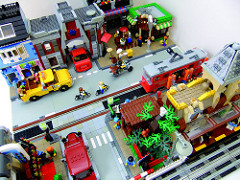
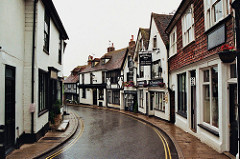
Coming up soon in Expo 1 and a bit later in Mira 1 is that topic of what there is in your town.  Here’s some ideas to make a slightly drab topic slightly more exciting.

Videos

In my town video   This is a great little video for year 7s.  I tend to give them a list of places and they check off the ones they find.  Equally you could give them a variety of spellings and they could select the correct one.  You could then ask pupils to prepare their own version if you have access to smartphones and the like.

Colombia video   Complete with traditional South American music and there is a degree of cultural knowledge to be gleaned.  Perhaps give the pupils a script to gap fill or some questions to answer.

Visit … Advert

23847035544_cd57b6e657_m.jpg

Pupils could make a radio advert using spreaker or audacity.  This is best done at the end of the topic.

Google street-view directions.

9241539678_c910601416_m

I have tried this recently and to an extent it worked.  I made my own using the city of Madrid and getting students to follow the directions I gave them.  I allowed the weaker ones to use LINGRO to turn my exercise sheet into a clickable dictionary.  It can work really well as long as your students have some staying power.  If you’re unsure as to how to put one together then a highly rated example can be found here.

Talk and draw.

Great for practising prepositions, listening and speaking.  Student 1 has a mini-whiteboard and a working pen.  Student 2 has a brain and vocal chords.  Student 2 puts a building in the centre such as a football stadium.  They then begin to describe their town “a la derecha del estadio hay un parque” and the other student starts to draw a plan.

Past and present

6371570767_3851bf1d68_m7166010369_9d02a2cc97_m

Antes había… ahora hay…

Antes era … ahora es …

This is a great way to introduce students to some basic past tense phrases and also go a little cross curricular with a historical picture of their town.

SIM City

SIM City was a simulator game where players had to build a city.  Students could do the same.  They would produce a town map, a description of each building or area of town.  I’m sure some could do it via audio or visual means if you choose to let them have that freedom.


5 Things to try tomorrow

Happy New Year to you all.  With the term imminent I thought I would offer the following 5 things to try tomorrow.

Shake up the seating

Photo Credit: Flowers For Clarence via Compfight cc

College classroom — Image by © H. Armstrong Roberts/CORBIS

Most teachers change the seating plan when the class is not working how they would like.  It happens when they realise that little Brendan and little Alex are a positively toxic combination, or when you realise that little Chardonnay has fallen out with little Sinead.  However, maybe there is a sound pedagogical reason for changing the seating.  This post by David Didau has really caused me to think and I might well experiment with my classes.  I have 8 tables of 4.  What if I rotate them half-termly?  It means the pairings stay the same but the location changes.

Didau writes…

“A few years ago I became aware of a very strange and as far as I know, unresearched phenomena. If I taught a lesson where students knew something in that chair, they would not necessarily know it in this chair. Simply asking students to move seats in the middle of a lesson was enough to disrupt their ability to recall and transfer.”

So give it a go.  Didau himself goes on to say:

“So I started experimenting with moving students about and giving them a greater variety of sight lines and thus a greater and more unstable range of visual cues….And guess what? Their ability to transfer what they’d learned within the classroom improved. Now, I would, of course, hesitate to make a mountain out of this molehill, but it does seem worthy of further investigation.”

As they say on BBC News, more on that story later…

Tarsia

Photo Credit: <a href="https://www.flickr.com/photos/11187240@N08/4497817101/">mickeyono2005</a> via <a href="http://compfight.com">Compfight</a> <a href="https://www.flickr.com/help/general/#147">cc</a>

Photo Credit: mickeyono2005 via Compfight cc

This is one of my favourite plenary activities.  It works particularly well if you are the kind of person who has objectives in the “know”, “understand” and “be able to” format.  You need to download their generator here.  You can then create puzzles like a triangle of triangles.  The aim is to get the English and Spanish words to match up with no text around the outside edge.  Other shapes are possible.  You could equally do sentence halves etc.  Make sure that the format is set to “text” otherwise it will squish (yes that is a word) all your words together.  Allow 5 mins for an able group and 10mins for a less able group.  I might suggest also printing the “solution” tab, or copying it into word to be printed as it will save you massively on photocopying!

Word Association

Simple but great for seeing what vocabulary students can recall over time.  Give them a starting word and see how long they can go for.

Gallery Critique

Photo Credit: <a href="https://www.flickr.com/photos/18658153@N06/3567964617/">Hairlover</a> via <a href="http://compfight.com">Compfight</a> <a href="https://www.flickr.com/help/general/#147">cc</a>

Photo Credit: Hairlover via Compfight cc

I wrote a post on peer-assessment ages ago.  I have always thought that for language teaching peer-assessment is extremely hard to do effectively.  The statistic mentioned by Shaun Allison rings in my head every time someone mentions it.  Even if pupils are trained well, I feel it is risky and potentially detrimental to weaker learners.  One student once wrote “excellent use of connectives”, which was not a bad comment but there were none! MFL is not like English where one can suggest additions to their argument.  And it is not like history or geography where you can examine how closely someone has answered the question.  With gallery critique it is my understanding that Student 1 produces work.  Students 2,3 & 4 comment on it and then student 1 reviews the feedback using it to develop their work.  The same process will be happening with students 2,3 &4.  Hopefully there will be some kind of triangulation that leads to more accurate peer-assessment.  After all, 8 out of 10 cats did prefer Whiskas…

Starters to make them think more.

Photo Credit: <a href="https://www.flickr.com/photos/36157171@N05/4411648645/">sebastianmarcel</a> via <a href="http://compfight.com">Compfight</a> <a href="https://www.flickr.com/help/general/#147">cc</a>

Photo Credit: sebastianmarcel via Compfight cc

I’m a big fan of gap-fills, anagrams, matchups, odd ones out etc but they do get stale after a while.  My new favourite is giving pupils sentences that they have to alter in some way to make their own.

Dans ma ville il y a une gare.  – transform this into a sentence with 10 words.  

No me gusta el inglés porque es aburrido – say something nice

En mi familia hay cinco personas – say it in a different way

No hay una piscina en mi casa – Change this while keeping the sentence on the same topic.   You may not use any words from the original apart from “casa” and “piscina”.


9 ideas para Noel/Navidad/Weihnachten

Christmas is approaching. I’m fairly certain most MFL teachers have done the following over the past few years:

  1. Make a Christmas card
  2. Christmas Wordsearch
  3. Christmas crossword/sudoku etc
  4. Break out the DVDs…if SLT are reading, I didn’t suggest this…

Here’s some ideas that go beyond the minimal with years in brackets as a guide.

Cluedo: who killed Santa? (yr 7,8,9,10,11)

Prepare three columns of phrases on whiteboard.

  • People (Santa, Herod etc)
  • Places (santa’s workshop, lapland)
  • Murder weapons (tinsel, christmas trees, presents, satsumas). You will need to pick one of each in your head. Students then give you their opinion on who killed Santa, where, and what weapon. You tell them only how many they get right or wrong. Brilliant game for teaching deduction and reinforcing opinion phrases such as “a mon avis” or “pienso que”.

Euroclub schools (yr7,8,9)

Take them to an ICT room and complete any of the pdf quiz worksheets on http://www.euroclubschools.org.uk/page2.htm. French, Spanish and Italian are on offer here. Whilst not huge on the TL; it is brilliant for their knowledge of culture. Some exam boards are looking at increasing the cultural side of the new GCSE so it cannot hurt.

La pesadilla antes de la navidad

Video here

Lyrics are in the description, exploit to your hearts content

Gap fills, multiple choice, missing sounds or letters, translate bits. Over to you… Lamentably, months on, all your students will remember are the words ¿qué es? ∏ë

Letter to Santa (Yr 7,8,9,10,11)

The new GCSEs have writing tasks that involve “write a letter to” (at least one of the sample assessments does). Why not introduce this with a letter to Santa. It is also a great opportunity to revise tenses.

El año pasado recibí … aunque quería …

Este año quiero/me gustaría …

Lots of potential and easily transferable between year groups.

Food-tasting

5829330676_ea38ec69d0_m

Some students will never get to try turrón or stollen, why not bring some in? If finances are stretc
hed then you could ask for a voluntary contribution…or hand the receipts to your HoD to claim back under “vital lesson resources”. Serious point: check for nut allergies otherwise a great lesson and experience for the children will end up in the headteacher’s office, putting a downer on any festive season cheer.

Real Christmas (yr 9,10,11)

Animated cartoon telling the story of the nativity.

Madagascar Penguins (7,8,9,10,11)

3025125260_20ae058f42_m

This has been my stock Christmas lesson for a couple of years created by sanferminuk on the TES website who has a number of excellent resources

Link to Madagascar Penguins

I know, I know, I made a comment about DVDs but this is an entire lesson planned around understanding a 20 min video in the target language. Surely that’s a different thing, right?! The video clip can be found on Youtube.

Origami santa (Yr 7,8,9,10,11)

For the grammar-lovers out there some revision of imperatives might be in order…

There are plenty of others out there but this might help get you started. Practice makes perfect so get practising!

The Great British sing off (yr7,8)

With names like that I should clearly get a job naming things… Anyway, team up with a couple of colleagues who teach at the same time as you. Each group learns a song and then a sing off is had with an impartial judge. Plenty of carols and songs can be found on youtube.

5 things to try this week

Half-term – where did that go?!

Anyway, here are 5 simple things to try this week…

Mini-whiteboard Vocab Scrabble

c1e648cf1e7507505599af8fc9c88d48

You need some large tables, mini-whiteboards and pens.  Start by writing a word across the middle (a long one).  Students score points for the following:

  • Point per letter
  • Point per letter of word they create and the word it bisects
  • Double points if the word links to the topic from the previous half term (another way of making it stick).

Alternatively you can use paper but mini-whiteboards are more environmentally friendly 🙂  If you’re feeling nostalgic you can do it with a whole class and an OHP.


Odd-one-out remix.

Photo Credit: david.nikonvscanon via Compfight cc

Photo Credit: david.nikonvscanon via Compfight cc

Give students a line of 4 vocabulary items on the same topic and a big capital letter at the end.  They have to invent the odd one out.  Again you could demand that they recycle knowledge from a previous topic.


livre    cahier   professeur  etudiant           M


Find 5

Great way to build vocabulary.  If you have access to dictionaries, picture dictionaries or Usborne’s first thousand words.  Get students to find 5 of something so they broaden their vocabulary.  Try to avoid them getting hung up on finding the duck!

Taboo

Talk or write about a topic without using certain words.  In the cases of one or two students, I’m going to declare war on the next individual who uses interesante, aburrido, bueno, malo, emocionante.    

Mark – Plan – Teach

I’ve been reading a little too much on the Teacher Toolkit website but I like this one.  It should be the way we approach marking.  I have just marked a set of year 8 assessments and whilst most did what was asked of them, there are a number of errors that I want to sort out.

  • It would appear most of them have great command of possessive apostrophes in English but these do not exist in Spanish yet nowhere in Mira 1,2, or 3 does it cover this.
  • Me gusta + Me encanta are often followed by conjugated verbs so that needs sorting.
  • ie and ei keep getting confused so some phonics drilling is probably in order.

Making it stick!

Possibly the biggest lament of language teachers in my department and across the country is this: why do my students insist on writing “me prefiero”, “me gusta juego” and “mi gusta”?!  Is my teaching really that ineffective?  Are my students so inattentive?  What on earth is going on?!!!

Photo Credit: rnav18 via Compfight cc

Photo Credit: rnav18 via Compfight cc

Making it Stick – 5 ideas for increasing the right kind of retention

Palabras importantes

At the end of the unit I talk my students through the key vocabulary that they need to take into the next one.  I go through on the board what the most important phrases are and put them into groups.  For year 7 Spanish it might look as follows:

Verb phrases Little words Question words Others
(no) Hay el/la/los/las Como y
(no) Tengo un/una/unos/unas Que también
es de Por que
necesito en Cuando

They are then set homework to learn these phrases and tested on them in the subsequent lesson.  I find it gives them value and increases the likelihood of remembering the key vocabulary rather then being able to say “lápiz” and “monedero” but not being able to do anything with them!

Palabras importantes part 2

2-3 weeks later I test them again on the same words.  It adds value and reinforces their importance.

Flowcharts and process

Students are used to these in other subjects.  They use them in technology, science, maths and even history when composing essays.  I have been teaching my year 9s the future tense and the conditional.  They have a sheet in their books that has the endings and the persons along with a table of irregulars.  Breaking it into steps is working even for the weakest ones.  Chris Fuller made a pertinent point in a webinar: the past and present take away from infinitives; whereas futures and conditionals add to them.  Most of them in a middle set can now take the majority of Spanish verbs and turn them into a “will” or a “would”.  On the whiteboard, I put a flowchart which simply says 1) “what is the English action?” 2) “what is the verb in Spansh?” 3) “go to table in book” 4) “who is doing it?” 5) “add that ending”.  The issue now is sorting out the past and present tenses!!

Photo Credit: <a href="https://www.flickr.com/photos/52024700@N00/1241955288/">orangejack</a> via <a href="http://compfight.com">Compfight</a> <a href="https://creativecommons.org/licenses/by-nc-sa/2.0/">cc</a>

Photo Credit: orangejack via Compfight cc  Scarily I can see my students working their way through this process in their minds!

Practice, practice, practice.

I have increased the amount of grammatical practice in my lessons this year and it is gradually working.  There has been a lot of animosity in schools towards textbooks, however they often have some very good exercises and I have seen multiple powerpoints on the TES resources ,which replicate the book word for word.  Even Elodie, Patricia and Gert are still in the exercise on the PowerPoint!  So why not just give the kids the book?!  Again, with my year 9s, I have increased the practice they do using a combination of books, Languagesonline and the Language Gym websites.  It is taking effect with the dedicated ones.  The question is now what to do about the less-dedicated ones but that is another blog post!

Clarity of Explanation

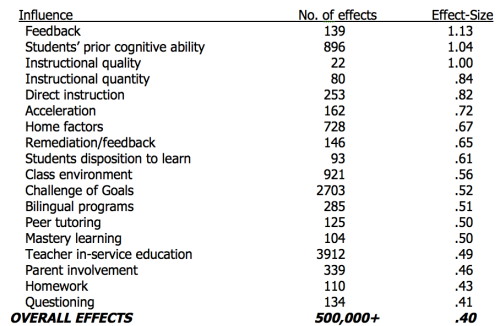
In a survey of teaching by John Hattie, the following things were found to be most effective:

Daniel Willingham writes in his book “Why don’t students like school” (i’ve blogged on this book before) that “deep knowledge must be our goal”.  This is borne out by the effect sizes above of instructional quality and quantity.   Willingham explains the following two principles:

  1. We understand new things in the context of things we already know.
  2. We therefore need to ask “what do students already know that will be a toehold in understanding this new material?”

I teach German and one thing I have been trying to do is to link new learning to old learning at every opportunity.  For example, we tackled weil with a nice animated powerpoint showing the verbs moving to the end of the clause.  We then considered “wenn” and “obwohl” before tackling “ich denke, dass”.  Before I introduced ,weil we looked at what they knew of clauses in English and introduced the idea of a main clause and a sub clause.  This might sound very basic and something that you do all the time but I find that quite often textbook schemes of work do not have this link from one element to the next.  For example: Mira 2 introduces tener que, poder, querer and “le gusta” in the space of two pages.  The next chapter does not reinforce them at all.  Neither do the three after that!

Teaching numbers, dates, days of the week & the basics

Bored of doing the same thing year after year.  Have a look below, be brave, dare to be different!

Numbers

I have blogged  on this before, you can find it here

Photo Credit: <a href=

Photo Credit: Kodjii via Compfight cc

“Burro” – students are in a group of 4 or 5.  They count up to whatever number you choose and down again.  They can say one, two or three numbers at a time.  Any student made to say a number in a particular times-table (of your choosing) gets a letter.  If they spell out “burro” (donkey) then they are out.

Photo Credit: <a href=

Photo Credit: sidewalk flying via Compfight cc

Last man standing – Sometimes called Irish Bingo.  Students write down four numbers in a given range and stand up.  Teacher or a student calls out numbers.  If all four of their numbers are called out, the student sits down.  The aim is to be the last man standing (or woman if you are being politically correct).

Write either side – give students some numbers but they have to note down the numbers either side, rather than the number itself.  This tests comprehension and recall.

Photo Credit: <a href=

Photo Credit: StreetFly JZ via Compfight cc  If M&Ms did calculators….

Sums – make them do maths.  Or better still make them create sums for their partner to do.  Insist that they can be as nice or cruel as they like.  It generally depends on how much they like the person next to them.

Months

Ordering – possibly one of my favourites.  Students put themselves into birthday order using only the TL.  Teach them phrases like “to the left” or “to the right” and how to say their birthday.  Do it by academic year or calendar year.  It allows the July born ones to not feel quite so young!

Class surveys – students go around interviewing people.  Avoid them going straight for their friends by insisting that they cannot talk to people in their tutor group, or their English class, or people with the same colour eyes, hair etc.

Days of the week

Yabba Dabba Doo!!!!!!  The kids will likely have no idea what memories this song evokes but they’ll sing along anyway.

 Repetitive but scarily effective.

Key verbs

Avoir = Mission impossible works for this.  Unfortunately there is not a youtube video, you will have to sing!  Failing that…

Etre = Oh when the saints works reasonably well with this

 It’s that bad it deserved a mention!

Tener

Ser

 Latin American Spanish so misses out vosotros form.

 Catchy and fun song.  Never used this one before so I’m going to give it a whirl this year.

Teaching the alphabet can be found here.  If you’re already ahead of the game and looking at present tenses then try this page.

Is there anything I have missed?  If you can think of something then add a comment and share it with others!

5 things to try tomorrow

It’s the start of the year and perhaps the caffeine is wearing off…  Stuck for something to do with a class? I would say look no further, but that would mean ignoring the rest of this post.  Read on my friend…

Doble identidad.

Photo Credit: <a href="https://www.flickr.com/photos/98115025@N00/3341865537/">stevecadman</a> via <a href="http://compfight.com">Compfight</a> <a href="https://creativecommons.org/licenses/by-nc-sa/2.0/">cc</a>

Photo Credit: stevecadman via Compfight cc

We’ve all done activities where students talk to various people in the class.  Tell your class they are practising their skills for joining MI-5 (not 9-5).  How about having them create an alter-ego, a spy identity.  They have to convince people that they are indeed Bastian from Bremen, that their birthday is 24sten Dezember.

Fonetica con fútbolistas

Photo Credit: <a href="https://www.flickr.com/photos/57511216@N04/6973721008/">daniel0685</a> via <a href="http://compfight.com">Compfight</a> <a href="https://creativecommons.org/licenses/by/2.0/">cc</a>

Photo Credit: daniel0685 via Compfight cc

I have tried introducing more phonics this year to some boy-heavy classes to hopefully eradicate “choo ay go” (juego) and various verbalised atrocities.  La Liga has been immensely useful.  Teach them the vowels first and see how long it is before they realise they’ve been saying the names wrong.

Bomb Defusal

bomb

High stakes activity.  Students are given 4 questions on the screen.  Each question has 3 possible answers. Their partner selects an answer for each.  They have 5 attempts to guess their partner’s selected answers or the bomb goes off.

¿Adónde vas normalmente de vacaciones? + 3 more similar questions.

  • Voy a la playa con mis amigos
  • Voy al campo con mis padres
  • Voy al extranjero con mi familia

Alphabet Song

Year 7s absolutely love it!

If you have VLC media player then use the dial in the bottom right hand corner to speed up or slow down as appropriate.  You will hear this in your head all day, guaranteed.  “Ah Bay Say Day Uf Eff gzay Ash…” etc

Deny Everything Baldrick

Taking inspiration from a British comedy classic.  The start of Mira 2 has students practising verbs with questions and answers e.g: “¿escuchas música?”  “¿Sales con amigos?” etc.  Give your class the command to deny everything and introduce them to negatives such as no, nunca, ya no, jamás, nadie, ni…ni….  Insist they use each over the course of their answers.  More advanced groups could add reasons.

  • ¿escuchas música?  Ya no escucho música
  •  ¿chateas por internet?  Nunca chateo por internet

The Return of the Roleplay

When i was in year 8 (a long time ago, in a galaxy far far away) we looked at how to order from an Eisdiele. It proved to be a useful lesson as two years later in Germany i was ordering ice creams and surprising my classmates with my ability to make sprinkles, cream and flakes appear. Their 99s looked pitiful in comparison. It made the language come alive. I’m happy that it would appear that roleplays are making a return. I remember doing them at GCSEs.  I remember the school coach had broken down and I had to explain where I was on the autobahn and get help (in the the role play -my school trips have been largely incident free).

I have recently been forced to attempt some typical roleplay situations in my third and weakest language such as visiting the chemists after being a mosquito banquet, hiring a car and buying stamps in a tabac. My experiences of this lead me to think that as teachers we are faced with two questions.

  1. What do students need in order to perform well?
  2. What activities might help them?

Transferable language.

Pour students need to be in e habit of transferring language between situations. I often remind students that unlike science, languages require recycling knowledge. Science lessons seem to cover space one half term before moving to plants the next, languages requires a constant revisiting of key structures and vocabulary.  My plan would be that students at he end of each half term have a bank of words they can apply to a variety of topics. Rachel Hawkes’ saco mágico is a good idea here – a page in students’ books where they note down phrases they need to reuse. It should probably b tested regularly to give it value in the eyes of the students.

Confidence

Students need to feel they can talk and they can get out of situations. This needs to be without using je ne sais pas for every situation encountered! Below are some activities that might help in developing confidence.

Schwindler/Trampa – students write cards with key phrases and some cards with just the word trampa. They play the cards face down reading the phrase but if they play a trampa card then they have to improvise a phrase. This developed he abilities of my bottom set yr 11s and saved me from some silent oral exams.

Dialogue chop up – Exactly as the name suggests. Give students a dialogue to rearrange either in terms of words or sentence.

KS3 drama – I have always done dramas when we have covered buying food and drink, buying clothes or going to the doctors. Make it more challenging by giving groups certain challenges to complete eg broken leg – explain how it happened. Sometimes i have included curveballs at the last minute in the restaurant drama such as “lo siento señor pero no tenemos pizza”, it forces thinking and improvisation. Students also feel a greater sense of achievement if they can do something real life. They may not get to talk about their school subjects on holiday but they will likely order food.

Face/shoulder/diagonal partner – Make students practice with everyone. The more practice the do and feedback they receive; the likelier a successful outcome. Face partner is the person opposite and shoulder partner are the people next to them. I never use the terms but it is a helpful distinction for the blog.

If this is the answer what is the question – Borrowed from Mock the Week, students need to know what they are asking if they have to pose a question and equally they need an understanding of what they are being asked. Take the breakdown situation earlier, we do not want students answering blau when the question was “wo ist dein Auto jetzt?”

What do you do? Share what works as it is coming and we’re all in this together. Be the first to leave a comment!

5 ideas to try this week

Sorry for the lack of posts, things got busy at work so here is a double whammy.  One of the 5 ideas to try series and the other is a collection of thoughts on GCSE revision.

1) No ICT at all

I think we can become too dependent on computers.  The phrase “death by Powerpoint” is not a new one.  Kids are largely unsurprised by anything we can do with a computer.  So how about turning it off for a lesson (apart from your register of course).  The other day with my French class we had a lesson with no ICT at all.  They did not have to even look at a screen.  It was great!  Everything was old-school.  We had flashcards, card sorts and all manner of activities but nothing involved a computer.

2) Giant scrabble

Great way of stretching pupils thinking skills and knowledge of vocabulary on a particular topic.  Put as many mini-whiteboards together as you can.  Start with a word in the middle.  Pupils get a point per letter for their word and a point per letter from any word it bisects.  You could make it a team effort if you have large classes so two pupils work cooperatively.  My old German teacher used to do this on an OHP, we loved it but the mini-whiteboard version allows everybody to be involved.  I’ve also tried adding challenges such as: include words on the theme of … (double word score), include a particular grammar item (triple word score).  The possibilities are not endless, as that is a cliché, but there are quite a few.

3) Differentiated dice speaking.

I might have posted this one before but it keeps with the no-ICT theme above.  Give pupils dice.  If you can buy some D12s (12-sided dice) then do.  You then have the following options.

  • Put 2 sets of  numbers 1-6 with vocabulary (eg me gusta and school subjects) pupils roll the dice twice, say the phrase and their partner translates
  • Give them a task per number of the dice to revise material covered over the year.
  • Give them a task per number of the 6 sided dice and then a modifying element with the twelve sided (heavyH on prep but great for stretching the kids).

4) 50-50 Hands up/hands down

I’ve seen some classes where the rule is no hands up and others where the rule is hands up all the time.  I’ve been trying a mixture of both recently and it’s working.  It maintains the engagement as both other methods have two distinct problems.  The no hands up rule is great but only if the teacher makes a point of picking on all class members.  It can easily lead to picking on the brighter ones,  further the learning and progress of a class.  The latter has an issue as it allows the quieter members of our class to hide.  I find this one neatly counters both.  It shows you who is keen but allows you to keep all members of the class on their toes.

5) Murder mystery  https://www.tes.co.uk/teaching-resource/murder-mystery-lesson–food-and-drink-6091212

Brilliant resource by the exceptional rosaespanola  on TES revising foods, likes and dislikes.  My only concern is that my bottom set did a better job than my top set.  The language was quite challenging  and the task is not particularly easy.  If you use it then give it the 5* rating it merits.

“Sir! When are we going to the computer room?”

Whilst not a pre-requisite to good teaching or good learning, some ICT room input is useful every now and again.  Students enjoy the occasional trip to the computer room.  I should use it more and my classes often remind me to do so!   Here are my regular ICT room lessons.  If you have a good idea drop one in the comments section below.

Sell your sibling (thanks to a former colleague for this one)

https://www.tes.co.uk/teaching-resource/Sell-your-brother-on-Ebay-6193621

Surprisingly, I have never got into trouble for this and the kids love it.  If they are an only child like the writer of this blog then suggest they sell their teacher.  Currently I am for sale on the wall of my own classroom.  In the event that your pursue the latter course, you may wish to correct any factual inaccuracies that ensue from the pupils description of you (which can often best be described as skewed, misinformed or just wrong).  If you’re wondering, I went for €1500.

WANTED

Great way to reinforce descriptions.  Give the pupils a helpsheet with phrases like “armed and dangerous”, “do not approach”, “reward” and then get them to find a celebrity and go for it.  A good plan is to tell them they are doing this lesson and have them think of someone beforehand, otherwise the normal battle of pictures vs content ensues and content loses out.  Ideally, they should probably avoid doing one of their teachers but if they’re learning and being creative with the language don’t stop them.  Display it in the corridor for maximum effect!

Gap Year

ANIMATEDGLOBE

Students plan a gap year using the future tense.  They need to explain where they are going to go, would like to go, intend to go etc and why.  If you have access to www.youtube.com then “where the hell is matt 2008” could provide some inspiration, although it might have more of an effect on your travel plans this summer.

Students could add more details and description.  The trick is to get them to focus on the language first and the pictures later.

Lebenslauf

Designing a CV.  Great way of teaching a range of vocabulary and revising a variety of topics.  Microsoft word has some good templates for this that can be customised.  You could set homework prior to this lesson so the pupils find the vocabulary they need and then produce the CV, or equally do it the other way around and teach them how to use http://www.wordreference.com properly.

Audio guide using audacity

Students produce a radio advert to encourage people to visit their town.  This can be done using the program audacity (free to download – or it used to be).  The difficulty is recording it.  Most students will happily do it but in an ICT room it does mean there is a lot of background noise.  Maybe suggest they do it at home or if your school allows then use http://www.spreaker.com/

Past listening exam papers

If you have a mixed ability group the ICT room is a great place for these.  Give the pupils the papers and put the listening tracks on the system or intranet where they can access them.  It also allows them to control volume and work through at their own pace.  This is good when you are developing exam technique.  Obviously some in-class or exam hall practice is good but this helps build confidence.  It allows you to cater to higher and foundation students if you have a mixed group.

Google Earth Directions

Why not create some directions that the pupils have to use google-earth to follow.  They could also create directions for their friends.  If they get to the right place then clearly they understood the directions – very easy way to evidence progress. There is a good resource on the TES for this but if you know where you are and where you are going then do your own.  I tried some with Madrid and got pupils going around the main square before being dropped elsewhere in the city and having to find the Bernabeu stadium.

Languagesonline.org.uk and samlearning.com

Both of these are superb websites and are improving all the time.  The former has recently been improved to facilitate use of tablet and smartphone.  The latter is gradually building up its stock of listening practice.  Languages online is free to use and has a lot of good exercises for practising grammar.  It also offers the explanations and hints to remind students of the rules they are practising and links well to Key Stage 3 schemes of work.

Little explorers picture dictionary

Great resource for early years or lower school.  My students have recently found this a great help on the house and home topic.  Whilst they see the title of “little explorers” as patronising, the website is very good.  Useful resource for weaker learners and perhaps getting students to make their own vocabulary lists.

Christmas Webquest 

Worksheets 1 and 2 are great for developing cultural knowledge.  I’ve only just discovered the rest of the site and there looks to be some really good material for French, German and Spanish.

The MFL Games

I was told by one of my students that they do more games with their Spanish teacher and “lessons are more fun because we spend about 15minutes playing games”.  I have nothing against games but they have to have a purpose and some kind of learning gain.  Here are some favourites with purpose:

If you have the patience to keep reading,

Battleships (submarinos)

Phrases along the top and going down.  Students copy table and put in ships.  Read out along top, say “y” and then read down.  If students get the square where the boat is then they sink it.

Hit : tocado
Miss: agua
Sink: hundido

Scenes we’d like to see/Would I lie to you

Great for teaching tenses or negatives.  Give students a topic and see what they can come up with on mini-whiteboards, award prizes for the funniest/most grammatically sound/most advanced.  E.g  “what her majesty will do at the weekend”  or “things that <insert teacher/student name here> will never do”.

¿Qué falta?

After introducing vocabulary – which one is missing?  Simple and easy to do with pictures

Last man standing

Students write down 4 items of vocabulary that they have learnt from the lesson.  Teacher or student calls them out.  Students cross off the ones called out.  The aim is to be the last man standing.

Speed-dating

Always good for any paired speaking activities.

Reading race

Excellent for pronunciation.  In pairs get students to race to see who can finish the text first whilst saying every word.  To spice it up, get one of them to start when the other reaches the 5th,6th,7th word.

Best sentence/paragraph competition

If you have your students grouped in fours get them competing for best sentence on a mini-whiteboard.  Works with any topic and any ability group

Noughts and crosses

Put the English in the boxes on your board, force pupils to say the TL

Heads down thumbs up

I know I said learning gain and this one only has one if you want to practice mixing tenses and giving opinions

Pienso que es … – I think it’s    Pensaba que fue – I thought it was.    Pienso que va a ser … – I think it’s going to be (get students to guess beforehand).

Infinitive running charades.

Have two lists of infinitives.  Students come to you and you give them one, they act it to their team, team guesses in TL and you work through the list until one team finishes.  For higher level sets use adverbs “passionately”, “slowly” etc

For further ideas look at the following:

Teaching School Subjects

Before I start, thank you to the handful of regular readers and the ones who shared me on twitter (something I have never used) , it precipitated a massive spike in viewings in the UK and further afield so thank you!  I hope the material and ideas are useful.  Enjoy half-term.

School is a topic we cover a number of times.  If you’re following Mira then it comes up in years 7 and 9.  I find in year 9 it is a lot harder to make it engaging.  The students are going through that stage where school means hard work, drudgery and the novelty value the topic had in year 7 is all but lost.  We then often revisit it on GCSE syllabuses so I guess it is worth having some good ideas.

Here is a selection of things I’ve tried with both years.

Options discussion.

Great way to revise school subjects, opinions and reasons without it seeming like repeating year 7 material.  ¿Qué vas a estudiar el año que viene? or ¿Vas a estudiar …? This lends itself to a nice discussion in fours where the students have to see which group can keep discussing options the longest in Spanish.  If you have done various activities to revise the subjects, opinion phrases and reasons, they should be able to keep this going.  A speaking frame is also helpful.

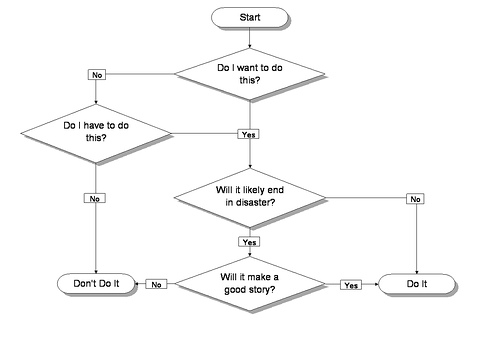
Options discussion in pairs with flowchart.

Give students a flowchart on powerpoint.  They can then work through the various stages

I’m (not) going to study… because…

it is … (positives)                               it is … (negatives)

and

the teacher is ….  (positives)               the teacher is … (negatives)

Hopefully the flowchart makes sense although wordpress does not permit the use of lines and arrows, just imagine they are there.

Good student/bad student

A lot of textbooks take the opportunity to teach verbs with this topic.  Why not have a diary of a good student or a bad student and simply get your students (presumably good and bad) to create the opposite one?

Describing your school

Students in year 9 seemed very happy to do this once I said you can talk about Waterloo Road or your primary.  They spend every day at your school, the difference made it more fun for them somehow

Rate your teacher/favourite subject

Very simple activity probably for year 9 although for year 7s following Mira it could work.  Who is your favourite teacher and why.  Conduct a class survey and note the responses.  For those of you facing OFSTED and having to evidence numeracy, get some graph paper from your maths or science department and get them to produce a graph.  You could equally do this with school subjects.

Harry Potter Extension

Very simply give any year 7 a timetable that looks like it came from Hogwarts and tell them you want to know what subjects are when.

aritmancia, estudios muggles, adivinación, estudio de runas antiguas y cuidado de criaturas mágicas, transformaciones, encantamientos, pociones, historia de la magia, defensa contra las Artes oscuras, astronomía y herbología.

Then they can also pretend to be the characters and explain their like or dislike for various subjects.

Say something else

Ban the following words if students are relatively able: “good”, “nice”, “interesting”, “boring” and “fun”.  Your English department probably already operates on this policy but it is a good opportunity to use dictionaries and make their language more interesting.

Teaching House and Home

Whilst it may not be up there with my preferred topics of food, holidays, media and Christmas, house and home always makes its way on to a year 7 or year 10 course.  Here’s a few of my favourite activities.

Origami houses (massive thanks to Mrs Shepherd and Mrs Cotton on my teacher training course)

This is tricky but kids love it and there are plenty of youtube videos showing how to make morecomplicated ones.  Once you have the technique nailed you can produce it year in year out.

Try this.

  1. Get A4 sheet
  2. Hold it so it is landscape
  3. Fold it in half to make it like a birthday card.
  4. Fold in half to make it like a small birthday card but don’t press all the way down the fold, just make a crease
  5. Open out  6)
  6. Fold from edge into crease on both side and press down the fold.  At this point it should look like a wardrobe.
  7. This is the really tricky bit to explain.
  8. Where the tops of the wardrobe are you need to put your thumbs in and pull down on the paper.  It will make a triangular roof   http://www.youtube.com/watch?v=OZioO5aeHhY   2mins 30 explains what I am aiming at here.
  9. Students are then free to decorate the outside and inside, label it in French/Spanish/German and you have some excellent display work or a good revision activity.

Luxury House

Independent learning is the order of the day.  After teaching the house topic, students have to produce an A3 brochure page for a luxury house.  One half must be the pictures and students can get these from magazines or the internet.  the other half has to be a description.  Put students in pairs.  You have of course the normal options here

  • Friendship pairings – often produces good results but naff results in other cases as they chat too much
  • Single -sex pairings – same as above
  • Mixed pairings – careful the brighter one does not do all the work.
  • Abiliity pairings – pair together students of similar ability

“I can’t help noticing I am considerably richer than you”

Based on the Harry Enfield sketch.  This is essentially the shops game.  Students try to out compete each other as to the features their house has.  This is great for practising plurals and numbers too.

Student 1: En mi casa hay un baño grande.

Student 2: En mi casa hay tres baños grandes, dos aseos and a partridge in a pear tree  etc…

Chocolate eclairs prepositions mini-plenary

I remember this lesson from when I was in school a long time ago.  Our teacher had taught us the prepositions but to test us, she had glued or placed a number of Cadburys chocolate eccairs in positions around the room.  Any one who could use it in a sentence got one.  The nature of toffee is that it keeps kids quiet for a while.  Genuis!  Make sure your most disruptive student is not lactose intolerant 😉

Sherlock

If you have seen the TV programme of the same name.  You will notice the hero’s ability to remember and remark upon every feature of a room.  Give students a picture and get them to do the same

12 days of House-mas

Great practice of rooms in house, phrases like il y a, numbers and plural endings.  Using the 12 days of Christmas as a model get students to describe a house.  Then get them to draw a floorplan of their partner’s house and label it accurately.

En mi casa hay doce …

En mi casa hay once ..

En mi casa hay nueve…

Before and after. 

Exactly what it says and there is not much of a leap between il y a and il y’avait or es gibt and es gab  Give students  two pictures of the same rooms and get them to comment on before and after.

Spot the difference

Again exactly what it says, try and find two pictures of a similar room on google.  Or compare a double and a single room from a hotel website

Famous houses

Essentially the same as the Sherlock activity above however you can recycle language previously taught by bringing in family vocabulary.

Dans ma maison au premier etage il y a la chambre de mes parents.  Mes parents s’appellent Robert et Carla.

Stretching your best students

Whatever your view of G+T, it is clear that the brightest students in your class need pushing to achieve.  In a climate where languages takeup at GCSE is rising as a result of performance 8 or EBACC measures, A-level and university courses are experiencing decline.  A simple google search shows that in 2012,2013 and 2014 a major newspaper reported on the decline in A-level languages. Our best students should be the ones going on to study it yet most are not. There are blogs which explore and consider why.  Rather than do that, I thought I would share some of the things that I have tried, with varying successes.

Before looking at some ideas there are three questions you need to consider with extension work:

  1. Is the work I am giving them going to deepen their understanding?
  2. Is the work I am giving them going to consolidate their understanding?
  3. Is the work I am giving them suitably challenging and is there a suitable time frame in which to complete it?

Ideas for the classroom or outside of the classroom

Reading

  • Encourage regular independent reading in TL – encourage use of sites such as http://www.cuentosinfantiles.net
  • Authentic materials – what is there that they can go and get and work on if they finish early?  Can they spot the grammar point in a real-life context?
  • For boys encourage them to read www.juanmata8.com , the lethal mediocampista (midfielder) has a bilingual blog.

Writing

  • Picture response activities really allow for creativity. Show students a picture, they could then…
    • write the conversation that is taking place
    • write the events that are taking place  (present tense)
    • write what they think will happen next (future tense)
    • write what would happen if … (conditionals and hypothetical statements)
    • write what happened before (past tense)
    • do a mixture of the above (combining tenses)
    • write what the people should do (modal verbs)
  • Never settle for anything less than their best.  Insist on expanded answers in any plenaries/activities involving mini-whiteboards
  • Dictionary usage – encourage use of dictionary to improve and develop all written work.  Do you have a TL thesaurus?
  • French/Spanish penfriend scheme – get them involved if you can.

Listening

  • What else can they listen for?  Could they do a dictee from the listening recording if they get the answers first time around?
  • www.rtve.es/noticias/directo/canal-24h/    – Spanish news
  • www.france24.com/fr/  – French news     (opportunity to watch live on right hand side of page – pop up window opens
  • www.ard.de – same as the two above  Tagesschau is good short snappy news burst
  • Encourage listening to musicians: Manu Chao (FR/SP), Juanes (SP), Amaral (SP), El Tri (SP), MC SOLAR (FR), WISE GUYS (GER).
  • Encourage them to try a foreign film with subtitles in the TL and the audio in the TL.

Speaking

  • Interviews with TL speaking person are always good.
  • Insist on TL in the corridor, in class and if they have to use it then they will.  It will also develop habits and confidence.
  • Run a twilight session with a focus on improvisation and spontaneity.  They really do benefit from this.
  • Insist on elongated answers comparisons, contrasts, subordinate clauses, do not accept them lowering their standards to fit in.  If you have to then do the speaking test with them in the class but have everyone else working.
  • If playing the trampa game mentioned on this blog,  quietly challenge one to cheat on every go, or alternatively stack the deck.  I tried the former with one student and the intellectual challenge was something that they thrived on.  The morals are debateable but then the game is called cheat.

2 final salient points

1)  Encourage use of previously learnt language in all written and spoken assessments.  G&T students always want to do something new but the challenge should also be to include EVERYTHING they already know as a means of consolidation and a showcase of their abilities.

2) Check they are not sprinting before they can walk.  It goes against everything I have said above but they if they are playing around with subjunctives and still struggling with present tense forms, then you might want to sort the foundations out before building any more of the house.

Teaching holidays – 9 things to try

Holidays.  It is the quintessential topic all MFL teachers have to be capable of doing and most cover on a bi-yearly basis.  Most holiday modules in textbooks tend to deal with the past tense so this seemed like a good place to start but there will be other tenses below.  Aiming at 9 things you can try tomorrow, here goes…

1) Consequences. 

If you know how this works great.  If not try the following:

  • Students write their name at the bottom of a piece of paper.  That’s right, at the bottom.
  • Write where you went (fui a…) fold over and pass on
  • Write who you went with, fold over and pass on
  • Say one thing you did, fold over and pass on
  • Add an opinion with “fue”, fold over and pass on
  • Say another thing you did, fold over and pass on
  • Add opinion, fold over and pass on
  • Keep going until you have a full page of text.

Bottom sets like it because it seems like less work.  Top sets can get creative.  Everyone wins unless they start to get mean…

2) Trapdoor/mindread/paired speaking thing.

Sentences on whiteboard with multiple options at various points.  Students have to say the sentence out loud that their partner is thinking.  Partner can shake head to indicate wrong choice.  The other has to keep talking until the get the right answer to carry on.

Fui a Italia    Alemania     con     mis padres     mis amigos

Grecia  Suiza                     mi familia       mis abuelos

3) Postcards – it is a great homework and you get some creative efforts.  Use it at the end of a holidays topic.  Tell them it has to look authentic and you will get some great efforts.  One teacher I know hangs them from a washing line in her classroom.  Both ends of the ability spectrum tend to enjoy this.  The less artistic ones can use a computer.

4) Quiz Quiz Trade

Not technically my activity but get pupils to write a question on a whiteboard.  They go around the class and must ask and answer a question before swapping whiteboards.  Excellent practice of questions and answers as long as TL is maintained.

5) 50 places to visit before you die/Plan a gap year

You’ve seen the books but to reinforce the future tense why not get them to plan a year out using “voy a” and infinitives.  Allows for creativity and personal interest.  Lower abilities could do it on a powerpoint and add pictures.  Tricky bit is if they spend more time looking at places than writing Spanish.  Be careful there.

6) Hotel Review (GCSE)

Tripadvisor is one of the best known hotel reviewing sites.  Give half of your students some pictures of New York’s Plaza hotel (last seen in Home Alone 2) and for the other half the worst hotel you can find on google.  Students then have to produce a review using as much subject specific vocab as possible (or as edexcel calls them “complex lexical items”) such as service, personnel, concierge etc.  For a broader task, give them the title holidays from hell and a starter with some more powerful adjectives (dilapidated, depressing, disastrous etc)

7) Dice speaking (borrowed from a Rachel Hawkes ppt)

9 boxes each with a starting sentence and 6 options.  One student rolls dice and says the phrases while the other produces a translation on a mini-whiteboard.  Tried it with a yr9 bottom set the other day and they enjoyed it!  I could not quite believe what I was seeing.

8) Voki.com

Use the postcard idea above or the hotel idea but get voki.com to convert it into speech.  No need to sign up but fun and then allows students to practise pronunciation.

9) No personal experience allowed.

Sometimes we tell students to use their personal experiences.  What about if we encouraged creativity and imagination by insisting they cannot use anything they have already done.  The entire past holiday has to be imagined.  Not so much an idea to use tomorrow but a thought.  Would they be more creative and would it lead to better work?

Lessons learnt teaching MFL to KS3 bottom sets

I’ve not quite cracked it with KS4 yet but i’ll have a go at ideas for key stage 3.

Having taught a number of bottom sets in the past 3 years I’ve learnt the following:

1) The next level is quite a big jump in their minds

2) Memorisation, literacy, behaviour and confidence are your main battlegrounds

3) Positive reinforcement has to be relentless – yep even for that kid you just thought of. 🙂

4) Relationships and rules are of equal importance.

5) They are reluctant to use the TL.

Some teaching ideas that regularly work:

1) Writing challenge (adapted from Rachel Hawkes)

Rachel Hawkes’ idea is to give an answer to a question that is exactly … words long 9/11/13.  The idea was to get students extending sentences with ,weil.   I’ve changed it a little.  Get a student to pick a number between 35 and 55 (whatever range you choose).  Then tell them that whoever can write a piece using everything they’ve learnt, the textbook and their exercise book gets a merit or whatever reward system you run with.  80-90% of kids will give it a good shot and be surprised that they can be quite successful.

2) Running dictations

Really good way of practising speaking, listening and writing.  Just make sure the runner does not have a pen or they will write the difficult words on their hand.  Caught a budding tattoo artist the other day.  Another thought: don’t make them too long.  Or if they must be longer put part II on another piece of paper somewhere else in the room and that way it doesn’t look like so much!

3) Bingo/Last man standing bingo

Bingo is exactly what it says.  Last man standing bingo is similar.  Write down four items of vocabulary on topic then stand up.  One student is a caller and goes through words.  If you have all four crossed out then you are out and sit down.  Winners are the last few left standing.  Good mini-test of listening skills and injects some fun into the lesson.  Think it might work well with Queen’s “another one bites the dust” music as they start to be “out”

4) Speaking bingo grid. 

You make a 4×4 grid of phrases you want them to use.  Students then have a time limit to use as many as possible making sure they make sense.  Their partner notes the ones that they use.  The person who uses the most  in the time wins.

5) Points for speaking/writing. 

You make another grid but the top row has various point allocations for what they say.  So depending on what you want them to use then give them various points (keep scores in 2 or 5 times table for easy adding).  Again give a time limit and set them off.  Award winners appropriately.

6) Teams idea (massive thanks to Bill Rogers “tackling the tough class). 

Get the students to write down someone they respect and someone they like.  Put your class into teams and give them points for everything: uniform, presentation, work rate, use of TL in lessons, helping others, helping put out equipment, being kind, answering questions, winning team games etc.  Take off points if they talk when you are or break other rules.  Keep this going over a term with a prize for winners at the end of the term.  Seems laborious at first but can engender really good habits and cooperative/collaborative learning.  Allow students to submit transfer requests at end of term that you will “consider”. Have done this 3 years in a row with tough groups and find I have far less bad behaviour and far less detentions.  Kids, particularly boys are used to team sports and it plays to their sense of competitiveness.

7) Reading reduction paper (thanks to my HoD although he swears he can’t remember having this idea). 

If students with weak literacy are tackling a tough reading text then give them a post-it note or an opaque ruler and encourage them to tackle it line by line.  I have found that the reduction of information bombardment helps and they can then work at their own pace.  It is a simple way of catering to students who find reading difficult.  It is also successful with dyslexics.

I think this post requires a part II sometime.  I’ve enjoyed writing it, hope you’ve enjoyed reading it and have something you can use.

Teaching the alphabet

Again it’s that time of year.  Letters of the alphabet!  It’s like pencil case items, you simply cannot do year 7 without it.  Anyway for help with this mfl-learner rite of passage, look below…

French

Teachers need look no further than here:

https://www.youtube.com/watch?v=sMhbDUn041s

Year 7s love it!  If you happen to have the programme VLC media player then look in the bottom corner near the volume control and you can speed it up using the slider that is there.  Great fun!

Spanish

https://www.youtube.com/watch?v=5MJbHmgaeDM             Even better if… it had a cat not a dog

https://www.youtube.com/watch?v=KjhrOgJxuJY     Probably best used a punishment…

https://www.youtube.com/watch?v=Xyn8ZDiqcyU  Possibly my favourite.  Students like it, also see VLC media player comment above.

Generic ideas for all languages

  • Spelling names of classmates, teachers, famous people, film titles, book titles etc
  • Reading race.  Who can spell out a name the quickest?
  • Get one person to transcribe and the other to spell out.  It is a great way for one student to check they are pronouncing the letters correctly and the other is forced to listen carefully.  Speaking, listening, peer assessment and pair-work all in one.  Happy days
  • Learn the songs and perform them is always good.