15 years of MFL teaching and I’m now on my third GCSE. I watched the sun rise and set on controlled assessment. I welcomed the spontaneous conversation in the “new gcse” only to seemingly now bid it “adieu”. The current GCSE, in my mind, actually only required minor tweaks. If I had my way the bullet points would be in English, the roleplays would have been purely confined to typical holiday occurrences and speaking would have been worth 30%.
I’m not a Head of Department but have worked previously as a Second in MFL. Currently, I’m just an everyday language teacher but here are my thoughts on the “new new GCSE.”

Thought 1: The New GCSE needs to be seen as evolution not revolution.
The new GCSE contains plenty of stuff we have already done and are already doing. Photocards, roleplays, 90 word writing tasks, 150 word writing tasks, translations, listening and reading tasks are all things we have been doing for the past few years and all still in there.
One line that caught my eye was “It should be noted that learners are expected to know all
items on the vocabulary list, not just the ‘required’ ones.”
It may be worth at some point just looking through the list by topic and making sure any words without clear obvious meaning (e.g: tamaño) are taught or brought up somewhere in teaching. I imagine that the list before long will appear on Quizlet or similar apps. Given that the list is accessible to students there is nothing to stop them using it as part of their revision. For example, a student could do a mind map using the celebrity culture topic with Taylor Swift at the middle and a fair amount of vocabulary from that list could easily build up around it. Again, I would encourage students to focus on the non-cognates. Most students will work out “conflicto” (especially if they study history) or famoso, however words like “impuesto” might need teaching and/or revising.

Thought 2: Beware the washback effect
I’m not entirely sure who coined the phrase “washback effect”, it may have been on a Steve Smith blog. I think there can be a tendency within MFL to make sure things such as our assessments and resources align with the GCSE the pupils will ultimately take. It sounds like a reasonable premise and it is well-intentioned. Inevitably, resources on TES and books from various publishers will appear aligning with the new GCSE and contain the types of task that the new GCSE is demanding.
Over time, I have come to believe that there must be a happy middle ground that it can be found. A place where Key Stage 3 gives students the tools, language and confidence to succeed later on but doesn’t batter them with GCSE style assessments in Years 7, 8 and 9, which reduce their confidence. Describing a photo is not a life skill. It can wait until Year 10 and 11 and still be done well. Similarly, does a Year 7 need to be able to describe their house in a roleplay-esque fashion to their Venezuelan friend? If we define learning as “knowing and remembering more” (current ofsted vernacular) then we need to be assessing what they know in a reasonable way that allows the student to show what they know. Why complicate it in Years 7 and 8 by adding in the description of a photo or a roleplay? Do we just simply assess their pronunciation when they talk rather than adding in some sentences to read aloud?
With respect to writing, it is great if a Year 7 can manage 50 words but does it need to be in the format of a blog with three bullet points? The answer is: probably not. In the AQA new GCSE there are grammar questions worth 5 marks. Do these need to feature in your Key Stage 3 assessments? Again, they may be part of your grammar teaching but do not need to form part of their assessment.
Jess Lund once said in a conference “Year 7 is where the magic happens” and I’ve never forgotten her saying that. Let’s not make Year 7 – and I would argue Key Stage 3 – too much like Year 11. We can train them in exam technique when they get to Key Stage 4. The only caveat to the above is that sometimes Year 9s at a particular point benefit from feeling that they “can do” GCSE style activities, which then helps with those options conversations and Year 9 parents evening.

Thought 3: Phonics/Sentence builders
Our trust will be using AQA so I am not sure quite how relevant this next point will be to Pearson/Edexcel users.
One of the new elements is the reading aloud task. Allow me to explain why i don’t think it should faze us as teachers nor faze our students.
The “reading aloud task” is worth 15 marks however it includes 4 questions on the topic the text is about. The actual reading aloud bit is only worth 5 marks. The main thing for this task is making sure that students are capable of pronouncing common words with the sounds that non-native speakers find trickier. Looking at the AQA sample materials in Spanish, you will encounter at least one of the following: “j” “ll” “ce” “ci” “ge” “gi” “gui” “ñ” and the word “que”. Pronouncing the latter as “cue” will cost marks. Train them out of it, now! There is also a definite lean towards words that are linked to the topics students are already studying. Those Js will almost inevitably come with any part of the jugar word family. Similarly, any mention of festivals is likely to include frequency adverbs “cada año” or “a veces”. However you teach your students phonics, be it via explicit phonics teaching or implicitly via sentence builders, there are a few key sounds such as the ones above that you need to prioritise and trust that your students will be ok with the rest. Phrases such as “mucho dinero”, “amigo cubano”, “en el campo” should provide little challenge. Again, be mindful of the backwash effect further down the school. Could you just “live mark” their speaking in class? If you’re unsure what i mean then this post here explains just how you could do that.

Thought 4: Don’t lose the good stuff
If you have good resources, keep using them. If you have good activities that help the pupils learn then please keep doing it. Sometimes a new course can lead to throwing the baby out with the bath water. Don’t do it. Resist the temptation. Your department will have good practices so continue to lean into those. If you get good results on the roleplays then keep doing what you are doing. If what you do gets great listening results then keep doing it! And, perhaps consider getting in touch and submitting a guest blog? A lot of schools seem to use a PALMW approach for photocards (position, actions, locations, mood, weather). If it works, keep it. It is worth drawing pupils attention to the commonalities we have seen in the photos over the past few years:
- Where there is a nature scene, the weather is invariably good.
- Where they are people, they are almost always family or colleagues and seem happy, interested, excited or smiling (learn those four words: happy, interested, excited, smiling).
- Where there is a table, there is almost always food (learn phrase “a variety of food/drink” in case individual food items not known).
- Where there is a school, it is almost always a canteen or classroom.
- Phones, recycling, houses, shops, sports pitches and “a group of” are good words to know.
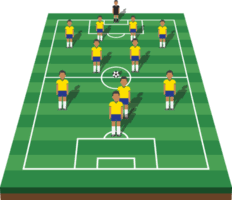
Thought 5: Tactics
Maybe this is the armchair football fan speaking but there are some tactics our students can use to approach aspects of this new exam:
Roleplay -In the words of the pundit and superb former player Roy Keane (yes Everydaymfl is a Manchester United fan) ” just do your job”. This task is 100% no fuss no frills, just remember a verb.
Reading aloud – Write it in bad English if you need to “hwaygo” in your prep time and then go for it. You can still score 3/5 with “major and minor errors”.
Post reading Questions– Aim for 3/4 qs answered and 2 longer answers. Use your prep time wisely on this.
Writing – pick the right question – Pick the question you can do best. Divide the word count by the bullet points, 90/3 = 30 words per bullet point. Whilst the exam board say equal coverage is not necessary, 3 x 30 word short sections will inevitably feel more manageable for students. 3 tenses is a must to achieve the top marks (AQA) along with complex language and having a game plan will be crucial. Whilst that game plan from Vincent Everett’s blog is for speaking, It works really well for the new writing too. The mix of verb + infinitive structures could also be key.
Writing – know your table – A Head of Department I used to work with introduced me to this for French and I’ve converted it into Spanish. This table works for regular verbs in the past and present and the majority of verbs in the future. The little minus signs next to past and present are to remind students that they are “taking away tenses” (think that was a Rachel Hawkes idea) where the verb ending is removed. The plus is to show that you add to the verb by putting something either before or after it but leaving the verb itself alone.
In my university days, I memorised the adjective endings and der/die/das/die tables for German and copied them out at the start of exams. I can imagine most students would be able to manage with the table below. 2mins of writing out ensures that the majority of verbs are used correctly.
| Past – | Present – | Future + | |||||
| AR | ER/IR | AR | ER/IR | ||||
| I | É | Í | O | O | VOY A | + VERB | going to |
| HE/SHE/ IT | Ó | IÓ | A | E | ME GUSTARIA | +VERB | would like |
| THEY | ARON | IERON | AN | EN | VERB + | É | will |

Thought 6 – Don’t be limited to one language’s sample materials (if you are in a school that teaches 1-2 languages)
Your exam board will have produced resources for French, Spanish, German etc. If you are in a school that teaches one language then your sample assessment materials have actually just trebled.
Photocards in the other languages will give you an idea of potential photocards that could be given.
Open Google Translate on your phone (yep, i said it, eeek…despite this post). Use the camera mode and hold it over the questions and it will translate them for you. I will advise that this mode occasionally has its limitations (it translated “bacon” in Croatian as “violated ham” once) but it should give you a good idea.
The same can apply to the writing tasks and suddenly you have a load more practice materials for your Year 11s.

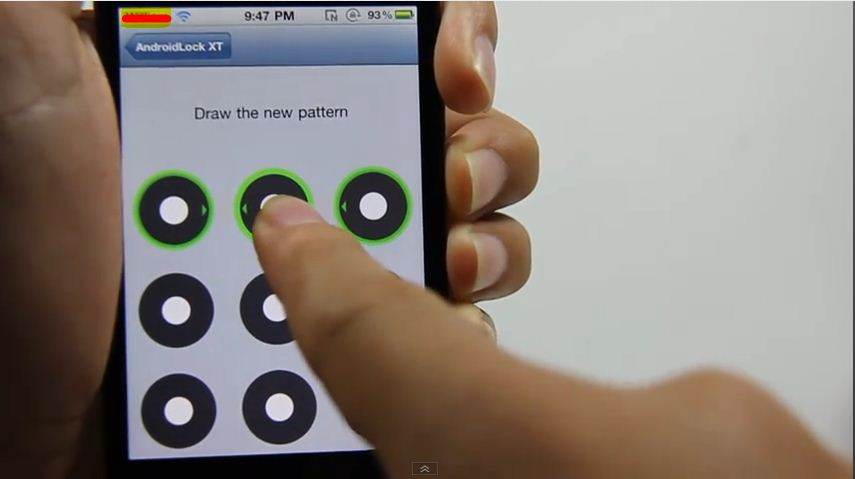
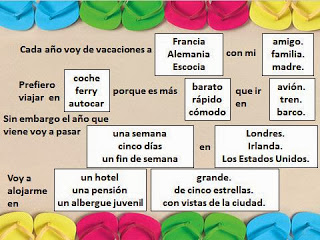
 Again using the same principal as the trapdoor activity above. Students have to guess what their partner is thinking. They can only tell their partner how many they get right. Place a table on the board with 3-4 columns. The original game to the left uses four. Personally, I prefer three for MFL lessons. One student writes the target phrases in their book. The other tries to guess the phrases that they have written. This can be made quicker by giving students a number of lives. It also means both students are likely to get a go. Students seem to enjoy this one.





 Everyday MFL